Using budgets to devalue public spaces and their patrons was one of segregationists’ key moves. Their legacy still plagues our public bathrooms.


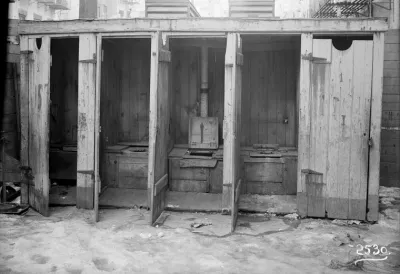
In the years after the civil rights marches in Birmingham and Selma, elected officials in the South and other parts of the country imposed a kind of budgetary famine on now-integrated bathrooms, an early preview of a critical governing tactic in the Reagan years and beyond of starving the beast. City officials slashed maintenance appropriations for public toilets. They didn’t replace worn-out sinks, broken towel dispensers, or faulty stall-door locks. Neglect brought on another wave of retreat. It created another layer of policy-made dirt and led more people to associate public bathrooms with the uncleanliness of their patrons — often Black and Brown patrons barred from new neighborhoods by redlining and left behind in cities cutting back on services to make up for the tax dollars that had fled to the suburbs. The pullback started another cycle of retreat. The disregard on display in public bathrooms invited abuse and vandalism, which in turn invited more neglect. Why fix things that were intentionally broken by ungrateful users?
Calculated inattention and strategic disinvestment had the effect of turning people’s bodies against themselves. Not cleaning and not maintaining public bathrooms transformed them into foul-smelling places with dirt crusted in the sinks and on the floors. And it created updated Jim Crow narratives that portrayed patrons as not in control of their bodily discharges. That story, in turn, informed accounts about who warranted intimate infrastructural investments and who didn’t.
Using budgets to devalue public spaces and their patrons was one of segregationists’ key moves. But by the 1980s race alone didn’t determine the targets for the place-based disparagement. Poverty increasingly did. In the desegregated, increasingly privatized world of the post-civil rights era, public officials, north and south, seemed to tag anyone who needed a public bathroom as unworthy of investment and the costs of upkeep to ensure bodily public privacy. None of this was openly acknowledged. It was articulated through things, through restroom objects.
Toilet seats were a bare minimum for public excretion, an expected layer separating unknown bodies and bodily waste. Leaving them broken or damaged wasn’t just negligent, but hostile. In the 1980s some municipalities took this a step further. They removed toilet seats from public bathrooms as a punishment for vandalism. Other times seats were removed, by officials with no medical training, to stop the spread of disease. This happened in response to the AIDS crisis and the stirring of new, and unfounded, fears about the bodies and sexual practices of strangers. In 1985 a Midwesterner asked a doctor if queer sex in public bathrooms could leave behind the deadly virus, while a sixty-three-year-old South Carolinian wondered aloud if he could become mortally ill from unseen germs left on a toilet seat.
Replaying older, made-up fears of Black sexuality, city after city closed public bathrooms in the 1980s, using a gay panic to disappear and shame people whose illnesses and deaths had nothing to do with sharing restrooms. The alarm over AIDS did lead to an increased demand for toilet seat covers, another cost that cash-strapped cities did not want to take on and another reason some localities closed public bathrooms for everyone. But really it led to an uptick in inequality. Communities gripped by fears of disease tend to be less willing to share public toilets, resources, and trust.
The impulse to retreat stirred again with the outbreak of the COVID-19 pandemic. With misinformation and hastily drawn conclusions swirling around, newspapers advised readers to avoid public bathrooms. They talked about them and the people who used them as incubators for illness. Once again, a drop in social trust led to a decline in support for government action and further tolerance of inequality.
But COVID also exposed just how broken the public sector was in the United States. During the two decades leading up to the pandemic, not many communities wanted to be in the public bathroom business. Most cut maintenance and balked at building new facilities, except at sports stadiums, nature preserves, and leisure spots for the better off. When officials in the tony Southern California towns of Laguna Beach and Encino proposed reopening shuttered public restrooms, alarmed citizens showed up in a panic at planning meetings to say they didn’t want their taxes supporting these accommodations. In 2002 a group of Queens residents “vehemently objected” to the opening of a public bathroom at a nearby park. They didn’t want the kinds of people they thought these places would attract loitering around their kids, and they didn’t want anything to do with the germs and diseases that the users of public facilities might leave behind.
While doing fieldwork for his 1999 study of unsheltered book sellers in Lower Manhattan, sociologist Mitchell Duneier learned firsthand about the post–Jim Crow regime of bathroom governance and disparagement. He asked one his collaborators why he urinated in an alley or endured scrutiny and abuse from fast-food workers to use a nearby McDonald’s where the sign on the door read “Restrooms for McDonald’s Customers Only.”
Why not take advantage of the free public bathroom a few blocks away in Washington Square Park? Duneier asked.
“It’s too nasty,” Mudrick told him. “The toilet bowl has no seat on it. You have to sit on the little rim. And there’s shit all around the rim. Now, who’s going to sit their asses where there is shit all around the fucking rim?”
Mudrick took Duneier to see this public bathroom for himself. Trash was strewn across the floor. A single roll of toilet paper hung from a chain on the wall. Next to it stood a line of five toilets. One was covered in plastic and didn’t work. There were no stall doors or toilet seats.
“You go in there,” Mudrick said to Duneier, “you ain’t got no privacy.”
“Washington fucking Square Park,” Mudrick continued, “and they can’t put toilet seats right here? They could, but they don’t want to fix it.”
After gagging on the smells, Mudrick and Duneier went to talk to the park manager. They pressed him about the lack of stall walls and toilet seats. He insisted that if his staff installed toilet seats, “they’d be ripped off the minute we put them down.”
Would he ever consider mounting seats again? Mudrick and Duneier asked.
“I think that’s the kind of gravy,” he answered, “that’s the kind of minutiae you’d be shooting for—is to be able to leave toilet seats on there, and then maybe even have walls for privacy.”
What the park manager hoped, it seemed, was that without privacy and basic amenities, the poor and unhoused faced a choice: humiliate themselves in a public bathroom without toilet seats or go someplace else.
“They want to keep our ass out of there,” Mudrick declared.
Washington Square Park wasn’t the only corner of New York City that used infrastructure to disparage and disappear the poor. According to a report by the Office of Oversight and Investigation, 82 percent of bathrooms in city parks suffered from “deficiencies in basic cleanliness.” Almost a quarter had no toilet paper, and 80 percent had no soap. The numbers were even worse in the subways, where three-quarters of the washrooms had no toilet paper and 90 percent lacked soap.
In 1984 New York opened a few new public bathrooms. Most lacked what the assistant parks commissioner called “amenities: heat, light, hot water, electricity, mirrors, towels, or toilet paper.” Customers were expected to bring their own toilet paper. But the “centerpiece” of these new facilities, as a one reporter wrote, was a heavy-duty stainless-steel toilet that had been used “with success” in city prisons. With this finishing touch, public bathrooms were being reimagined, again, as spaces to stigmatize users. But now they went one step further to suggest that public bathroom patrons were on par with criminals.
–
This piece was excerpted and adapted from For Customers Only: Public Bathrooms and the Making of Inequality by Bryant Simon. © 2026 by Bryant Simon. Published by the University of Chicago Press. All rights reserved. Reprinted with permission.
Bryant Simon is the Laura H. Carnell Professor of History and the academic chair of the honors program at Temple University. He is the author most recently of The Hamlet Fire: The Tragic Story of Cheap Food, Cheap Government, and Cheap Lives, as well as Everything but the Coffee: Learning about America from Starbucks. He is a regular guest on the History Channel and a contributor to outlets like the New York Daily News, Washington Post, and Philadelphia Inquirer. Simon splits his time between Philadelphia and the Jersey Shore.

Watch: Segregation's Terrible Legacy in U.S. Cities
"Segregation by Design" is a new film available to the public on Vimeo.
This Thai city is the 'global capital of toilet access'
The Global Public Toilet Index ranks cities by per capita public restrooms.
Study: 55% of Atlanta restrooms are inaccessible to the public
More than half of bathrooms that should be publicly accessible are not available, according to a study from Georgia State University.

Planetizen Federal Action Tracker
A weekly monitor of how Trump’s orders and actions are impacting planners and planning in America.

Chicago breaks ground on $3 billion megadevelopment
The new neighborhood, titled Foundry Park, will one day host 3,700 residences.

This MA town is drowning in its own sewage — and residents like it that way
Susan Murcott, a waste water expert, said if Carlisle didn't address their leaking sewage, the problem could turn “deadly.”

Home batteries are ushering in an energy revolution
Batteries capable of storing solar energy can stabilize the grid during peaks and keep homes running on cloudy days.

A sneak peek at NYC’s Midtown Bus Terminal rebuild
The city will turn a deck used for storage during the construction process into a park once construction is complete.

Air taxis to connect Texas airports to business hubs
Archer Aviation says its taxis will turn 90 minute drives into 20 minute flights.

FREE Course: Walkable City 1: Why Walkability?
After describing his path towards focusing on walkability as the essence of good planning, Jeff Speck marches through his five principal reasons for making more walkable places.
Reinventing Malls: Planning Alchemy—Turning Gray Fields Into Gold
The course focuses on the opportunities and imperatives that shape reinvention of mall sites.

City of Rosemead
Rutgers University, Edward J. Bloustein School of Planning and Public Policy
One Hundred Miles
The Architects Foundation
University of Cincinnati Online
Montrose County
The Pocatello Development Authority
The Urban Renewal Agency of the City of Pocatello

