The city's roadside rain gardens soak up stormwater and filter out dozens of harmful micropollutants.


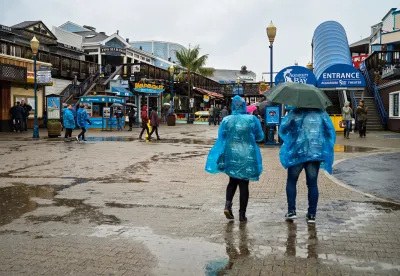
A study funded by the San Francisco Public Utilities Commission found that hundreds of rain gardens installed throughout the city are having a major positive impact on San Francisco Bay, keeping out over 90% of many common pollutants.
As Carl Smith explains in Governing, the PUC has funded nature-based approaches to stormwater management to reduce the chance that stormwater will overwhelm its sewer system, which is one of the few in the nation that combines wastewater and stormwater. "The city has built or initiated 575 green infrastructure projects that put it a third of the way toward a goal of capturing 1 billion gallons of stormwater each year."
A study of contaminants found that water coming out of rain gardens reduced 21 contaminants by significant margins, often of more than 90%. The gardens were found to filter out 99% of tire wear particles, a major source of micropollution. The rain gardens also filtered out 95% of 6PPD-quinone, a preservative found in car tires that kills coho salmon in the Pacific Northwest.
Read the full story: San Francisco’s Rain Gardens Mean Fewer Chemicals in the Bay

Soaking Up Runoff For a Greener Street
The city of Santa Monica has just unveiled its first segment of green street, one where rainwater runoff seeps into porous pavement and landscaping.

Seattle Builds Subway-Sized Tunnel — for Stormwater
The $700 million ‘stormwater subway’ is designed to handle overflows during storms, which contain toxic runoff from roadways and vehicles.
How Capturing Rainwater Can Make Cities Safer, More Resilient
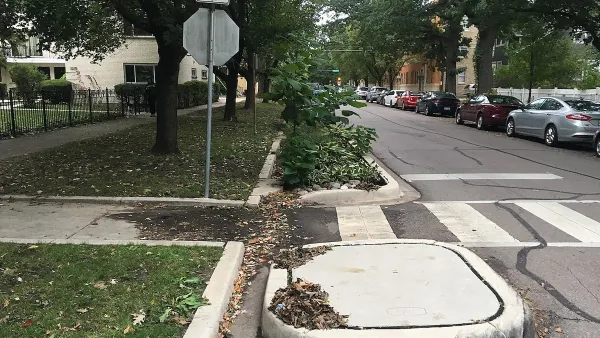
Green infrastructure can help prevent flooding and replenish groundwater supplies, preventing subsidence that makes land sink.

Planetizen Federal Action Tracker
A weekly monitor of how Trump’s orders and actions are impacting planners and planning in America.

Amtrak, CN end decades-long dispute with eight-year agreement
The new operating agreement establishes an updated framework for the companies to work together, including processes to resolve disputes.

Northwest rail fans eager for Sept. 30 debut of Amtrak’s Airo fleet
Get ready for that new train smell and more seats. But they won’t go faster or run more frequently on the Cascades route in Washington and Oregon.

LAX SkyLink opening delayed again, contractor won’t commit to new deadline
The project was supposed to open its doors to the public in 2023.

Caltrain may slash over one-third of its stations
If Bay Area voters reject two transit tax measures, Caltrain, BART and AC Transit will see steep service cuts.

A 'dangerous' precedent: North Carolina successfully pressures communities into voting for toll roads
Two mayors resigned from the Charlotte Regional Transportation Planning Organization after it voted in favor of the toll roads.

FREE Course: Walkable City 1: Why Walkability?
After describing his path towards focusing on walkability as the essence of good planning, Jeff Speck marches through his five principal reasons for making more walkable places.
Reinventing Malls: Planning Alchemy—Turning Gray Fields Into Gold
The course focuses on the opportunities and imperatives that shape reinvention of mall sites.

City of Thousand Oaks
City of Wisconsin Rapids
Harvard University Graduate School of Design
The Architects Foundation
University of Cincinnati Online
The Pocatello Development Authority
The Urban Renewal Agency of the City of Pocatello