False claims about the potential drawbacks of solar farms are prompting some communities to reject potentially lucrative energy projects.


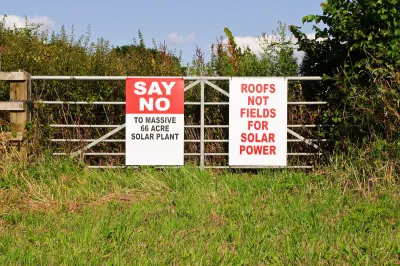
A glut of misinformation and AI-generated graphics are jeopardizing the development of solar installations in rural America, writes Delaney Nolan in The Lens.
Scare tactics from the threat of cancer to poisoned farmland to homegrown tornadoes, almost all entirely unfounded, are prompting some communities to outlaw solar farms, eschewing sorely needed tax revenue and clean energy. "Rural parishes that may otherwise see little investment are reaping massive tax benefits by embracing solar projects, researchers at UL-Lafayette say. Even if solar facilities are granted massive tax exemptions, they’ll generate at least 40 times more local property tax than farmland."
The same generic AI-generated graphics warn "Once [state] is gone, there's no way to get it back" on online forums and Facebook groups. "The accounts have been linked to a network of “AI slop machine” accounts, per an analysis released earlier this month by the threat intelligence company Alethea."
In some places, where oil and gas exploration did cause damage, locals are understandably wary of new development on agricultural land. Experts are working to counter false claims with studies and research that shows that solar panels do not leach chemicals into the surrounding land and do not pose a fire hazard. Once built, solar projects "tend to sit quietly with very little activity, generating significant, steady, predictable stream of tax revenue."
Read the full story: In Rural Communities, Fears Amplified by ‘AI slop’ and Social Media Hamper Solar Boom

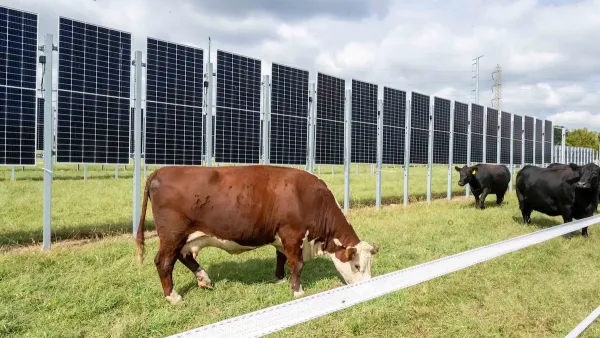
New Jersey Agrivoltaic Project Combines Solar Energy With Farming
A Rutgers University-New Brunswick demonstration farm will evaluate solar array designs to understand how they can best support grazing and agriculture on the same site.
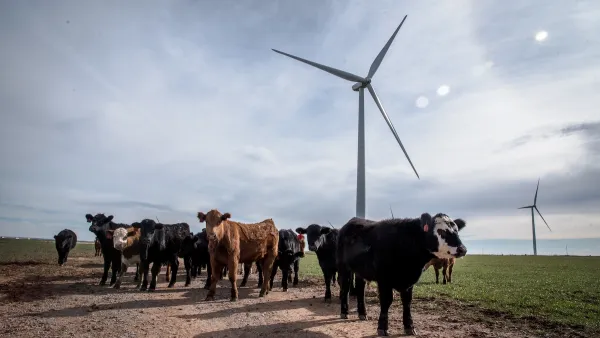
Renewable Energy Overtakes Coal for First Time
Solar and wind power generated close to a third of U.S. electricity supplies in 2024.
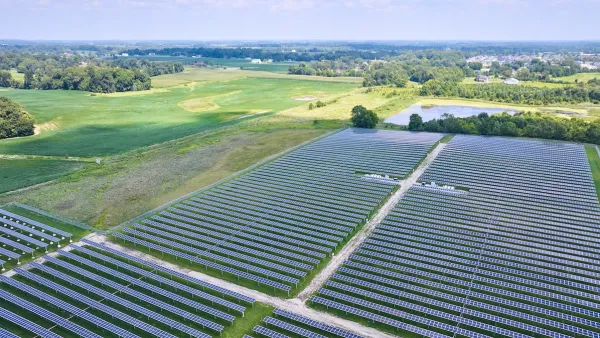
Study: Midwest Property Values Unaffected by Nearby Solar Farms
Despite concerns that solar projects could lower property values, new research finds they actually rose slightly in areas near utility-scale solar installations.

Planetizen Federal Action Tracker
A weekly monitor of how Trump’s orders and actions are impacting planners and planning in America.

Amtrak, CN end decades-long dispute with eight-year agreement
The new operating agreement establishes an updated framework for the companies to work together, including processes to resolve disputes.

Judges permit Denver to divert 77,000 acre feet from the Colorado River for reservoir expansion
Overuse and climate change have caused the Colorado River’s water levels to plummet.

Philadelphia to invest $2 billion into upgrading city airports as PHL places last in customer satisfaction
Modernizations to Philadelphia's airports will include baggage system upgrades and a new automated parking garage guidance system.

The LA housing policies making developers turn away from the city
Despite LA’s housing shortage, developers say the city’s "mansion-tax" and pandemic-era policies make it an unappealing place to build housing.

New density bill would require 7 California cities to establish regional transit hubs
The bill would also require major cities in California to permit high-rise residential buildings.

FREE Course: Walkable City 1: Why Walkability?
After describing his path towards focusing on walkability as the essence of good planning, Jeff Speck marches through his five principal reasons for making more walkable places.
Reinventing Malls: Planning Alchemy—Turning Gray Fields Into Gold
The course focuses on the opportunities and imperatives that shape reinvention of mall sites.

City of Wisconsin Rapids
Harvard University Graduate School of Design
KFH Group Inc.
The Architects Foundation
University of Cincinnati Online
The Pocatello Development Authority
The Urban Renewal Agency of the City of Pocatello