In 2020, California wildfires destroyed nearly a fifth of homes they came in contact with.


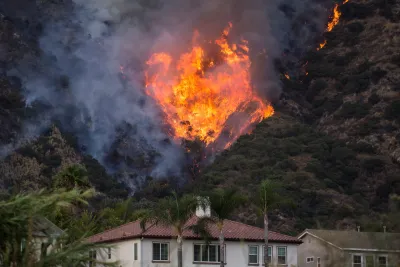
Fewer homes in California are surviving wildfires, indicating that increasingly destructive wildfires and continued construction in hazardous areas are overtaking efforts to protect homes from fires, writes Noah Haggerty in the Los Angeles Times.
"While the entire American West saw a decrease in the percentage of homes surviving wildfire, California saw a particularly pronounced drop." According to experts, this shows that landscaping rules and building codes aimed at improving fire safety have worked for individual homes, but have not reduced the overall devastation.
Meanwhile, hotter and faster-moving fires reduce the chances that homes will survive, making it harder for firefighters to reach properties in time. And of new properties built in California between 2020 and 2022, 80% were located in areas with high fire risk (compared with just 28% in the 1920s). This counteracts any steps a homeowner may take to protect their property, Haggery notes. "A home’s location can often override the steps residents take to protect their properties."
Read the full story: The percentage of homes surviving wildfires is dropping


Nearly a third of US housing is in the wildland-urban interface — and at growing risk of wildfire
As suburbs increasingly mingle with undeveloped land, homes face a higher risk from destructive fires.
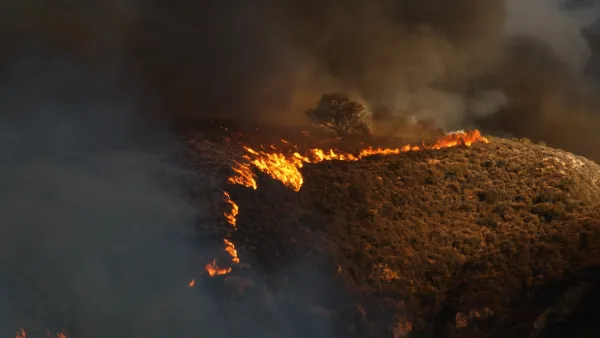
December Wildfires Could Signal Shifting Fire Season
A mix of strong seasonal Santa Ana winds and an unusually dry year is fueling winter wildfires in California.
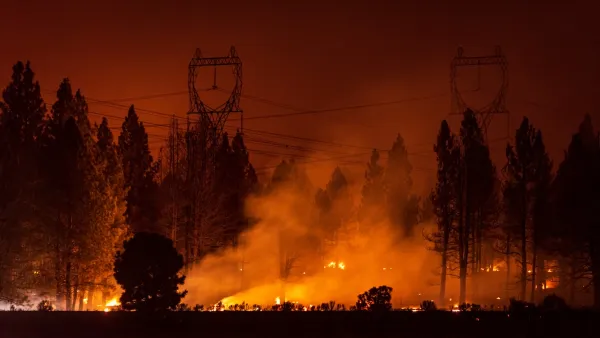
Intense October Heat Wave Raises Fire Risk in California
Unusually high temperatures across the state are prompting power shutoffs and could fuel more destructive wildfires.

Planetizen Federal Action Tracker
A weekly monitor of how Trump’s orders and actions are impacting planners and planning in America.

Colorado’s Largest Data Center Could Rise Next to Homes — Without a Public Hearing
The proposed campus would consume 11 times the power of Denver International Airport; as it has across the country, opposition mounts.

US to reduce Colorado River water deliveries to Mexico
A new Colorado Treaty amendment reduces Mexico’s Colorado River water allocation by 250,000 acre feet.

'This is going to be painful:’ Virginia stares down $1.7 billion funding gap for highway maintenance
The state may address the deficit by shifting $290 million from its construction budget to maintenance projects.

Judges permit Denver to divert 77,000 acre feet from the Colorado River for reservoir expansion
Overuse and climate change have caused the Colorado River’s water levels to plummet.

Amtrak, CN end decades-long dispute with eight-year agreement
The new operating agreement establishes an updated framework for the companies to work together, including processes to resolve disputes.

FREE Course: Walkable City 1: Why Walkability?
After describing his path towards focusing on walkability as the essence of good planning, Jeff Speck marches through his five principal reasons for making more walkable places.
Reinventing Malls: Planning Alchemy—Turning Gray Fields Into Gold
The course focuses on the opportunities and imperatives that shape reinvention of mall sites.

KFH Group Inc.
Greater Baltimore Committee
Eagle County Government
The Architects Foundation
University of Cincinnati Online
The Pocatello Development Authority
The Urban Renewal Agency of the City of Pocatello