Gov. Newsom's return-to-office mandate impacts roughly 109,000 state workers.


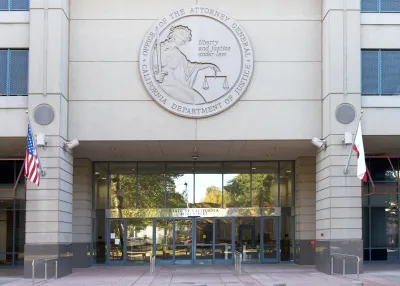
As tens of thousands of California state workers return to the office for four days a week, some experts question the adequacy of the state's office buildings to accommodate changing views on work environments. As Joe Burns explains in Smart Cities Dive, "Research in the years since workers started returning to the office after the COVID-19 pandemic shows workers and managers have changing views of what productive office environments look like."
A 2025 report from the California State Auditor said California could save as much as $225 million per year by letting employees only work in-office twice a week, allowing the state to shrink its office footprint by 30%.
Additionally, changes in workers' expectations about flexible workplaces — and the gap between that and reality — could impact worker performance and give "employees a reason to disengage the moment they walk through the door," says Adam Morgan, co-founder of furniture and design company Bureau. "The question isn’t whether people show up, it’s whether the buildings are built for how people actually work," Morgan says.
Read the full story: California return-to-office mandate puts state buildings to the test

Remote Work is Dying in the Bay Area — and Tech is Leading the Charge
Roughly two-thirds of Bay Area workers are back in the office full-time.

Office conversion is picking up steam in San Francisco
The city spent five years streamlining approval processes and reducing fees to encourage more adaptive reuse of vacant office buildings.
Co-living ‘Microapartments’ Cost Half as Much to Build as Typical Studios
In 10 major U.S. metros, an analysis found that converting office buildings to small co-living units could dramatically cut the costs of construction.

Planetizen Federal Action Tracker
A weekly monitor of how Trump’s orders and actions are impacting planners and planning in America.

California plans to bury El Niño’s downpour
If the state plays its cards right, it may be able to store a billion acre-feet of El Niño’s water in aquifers.

Desperate measures: Advocates weigh draining Lake Powell to fill Colorado River
Draining the reservoir could reduce evaporation losses by a couple hundred thousand acre-feet.

How a Chicago-sized wind farm beat the odds and powered on
The project spanned five presidential administrations and a standoff with a U.S. military base.

MTA gives itself 30 days to transform pit into basketball court
The site has been under construction since 2022; the city originally estimated it would finish the court in 2024.

Non-stop party: Chicago voters weigh permanent festival grounds
A stable place for bleachers, stages and drainage may streamline the setup and teardown of large events.

FREE Course: Walkable City 1: Why Walkability?
After describing his path towards focusing on walkability as the essence of good planning, Jeff Speck marches through his five principal reasons for making more walkable places.
Reinventing Malls: Planning Alchemy—Turning Gray Fields Into Gold
The course focuses on the opportunities and imperatives that shape reinvention of mall sites.

City of Rosemead
Rutgers University, Edward J. Bloustein School of Planning and Public Policy
One Hundred Miles
Hunter College, City University of New York (CUNY)
The Architects Foundation
University of Cincinnati Online
City of Cambridge
Montrose County
The Pocatello Development Authority