Reservoirs along the Colorado River are seeing some of the lowest water flows ever, prompting questions about the future of communities in the basin.


Water levels in Lake Powell have reached the lowest summer levels ever recorded, around 100 feet, reports Bradlyn Oakes in Meteored US.
"Currently, Lake Powell is around 24 percent full. The last time it was completely full was in 1983. Since then, water levels have fluctuated, but in 2026, they have fallen to a critical point. And there are multiple concerns if the water levels continue to drop." One includes reaching "dead pool," the point at which water levels are so low that water can no longer move across the dam and into the Grand Canyon, which would cause significant ecological impacts and reduce the capacity for hydroelectricity.
According to Oakes, "Lake Mead is also at low levels, currently sitting at around 29 percent full and below the Tier 1 shortage level. Heading into the hottest months, the drought and dry conditions are likely to persist."
Read the full story: Lake Powell Hits Lowest Summer Level Ever As Colorado River Basin Faces Critical Water Issues
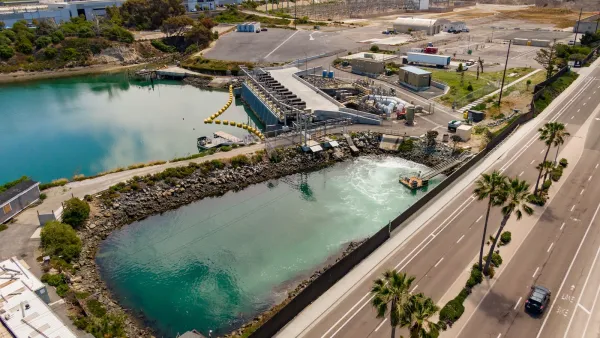
New agreement would let Arizona, Nevada use water from California desalination plant
The plan will help reduce strain on Lake Mead during extreme drought periods.
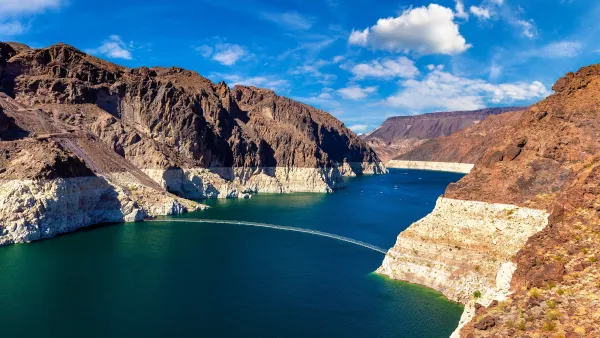
Deadline Nears for Colorado River Water Sharing Agreement
Water officials from the seven Colorado River Basin states are still at odds over how to manage dwindling water resources as current regulations are set to expire in February.
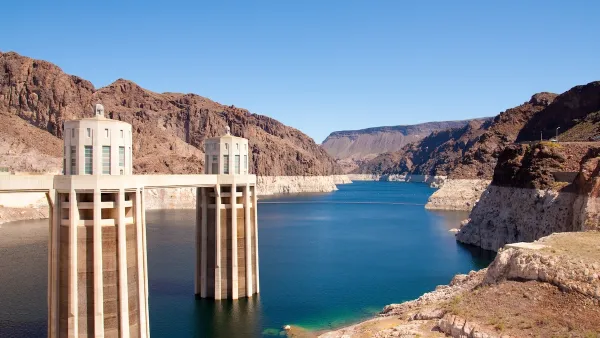
Western States Face New Round of Water Cuts
In Nevada, efforts to conserve water include a ban on ornamental grass and regulations on swimming pool sizes.

Planetizen Federal Action Tracker
A weekly monitor of how Trump’s orders and actions are impacting planners and planning in America.

Eastern Nebraska is running out of electricity
Data centers and electrification are straining eastern Nebraska’s grid, throttling economic development.

Study reveals best places in the U.S. for cycling, walking
New research from Streetlight Data examines bicycle and pedestrian miles per capita in the 100 largest U.S. cities by population.

Next-generation nuclear reactors are coming to Texas
The reactors will not require towering containment structures thanks to new safety features.

California distributes $1.3 billion to prevent transit service cuts, bolster projects
Twenty-eight projects across California received a portion of the funding.

Pennsylvania Democrats have 15 affordability, clean energy bills for flipped state Senate
Bills in consideration include a bill supporting geothermal energy and a bill supporting solar on warehouses.

FREE Course: Walkable City 1: Why Walkability?
After describing his path towards focusing on walkability as the essence of good planning, Jeff Speck marches through his five principal reasons for making more walkable places.
Reinventing Malls: Planning Alchemy—Turning Gray Fields Into Gold
The course focuses on the opportunities and imperatives that shape reinvention of mall sites.

City of Charlotte
City of Rosemead
Rutgers University, Edward J. Bloustein School of Planning and Public Policy
University of Michigan School for Environment and Sustainability (SEAS)
Hunter College, City University of New York (CUNY)
The Architects Foundation
City of Cambridge
The Pocatello Development Authority
The Urban Renewal Agency of the City of Pocatello