An executive order from Mayor Andre Dickens bans new self-storage facilities as part of an effort to protect 'critical development opportunities' in the city.


Atlanta Mayor Andre Dickens announced an executive order that will put a temporary moratorium on new self-storage facilities in the city, reports Josh Green in Urbanize Atlanta. "The goal, according to Dickens’ office, is to protect “critical development opportunities” in a growing city where parcels of sizable, available land are increasingly scarce," Green adds.
Some recent self-storage projects have drawn backlash, including two adjacent to the Beltline corridor. The executive order prevents new permits for self-storage facilities, noting that "In communities where families need housing, grocery stores, jobs, and gathering spaces, we cannot afford to lose critical land without asking whether that development advances our vision for a stronger, healthier Atlanta."
The order is in place until July 6, when the city council is expected to approve a 180-day moratorium. "During that time, the city council would consider zoning updates that could require additional review—and a Special Use Permit process—for self-storage ventures."
Read the full story: Mayor puts clampdown on new self-storage projects across Atlanta
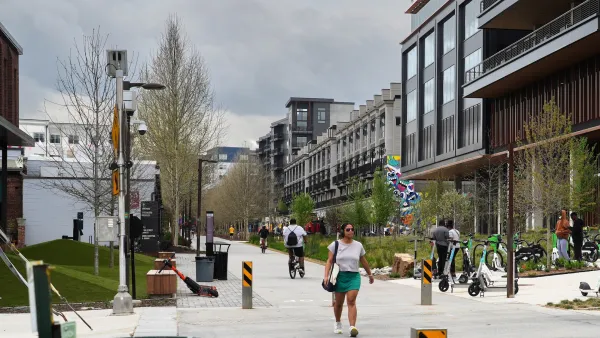
Atlanta's Beltline hits 79% of its affordable housing goal
The walking, biking, and transit corridor set a goal to create 5,600 affordable housing units in the area by 2030.

How Atlanta Built 7,000 Housing Units in 3 Years
The city’s comprehensive, neighborhood-focused housing strategy focuses on identifying properties and land that can be repurposed for housing and encouraging development in underserved neighborhoods.
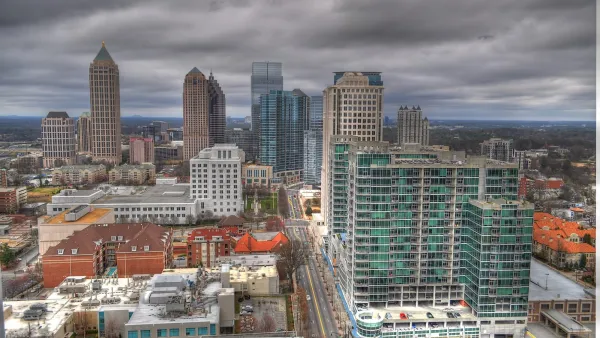
Metro Atlanta Cities Weigh Zoning Changes
The southern city’s growth is prompting questions about how to increase the housing supply, maintain affordability, and accommodate new residents.

Planetizen Federal Action Tracker
A weekly monitor of how Trump’s orders and actions are impacting planners and planning in America.

Eastern Nebraska is running out of electricity
Data centers and electrification are straining eastern Nebraska’s grid, throttling economic development.

Move over, LA: St. Louis gears up for Olympics, invests millions in downtown redevelopment
The Missouri city will host the 2028 Olympic soccer group stage and knockout matches.

Dallas releases zoning code overhaul to officials
The drafted overhaul is over 400 pages long.

NYC renovations for dangerous, ‘mercilessly crammed’ street delayed until 2027
Construction was supposed to begin this fall.

San Diego’s Midway Rising project gets greenlight from city council
The project looks to become the largest affordable housing development in California's history.

FREE Course: Walkable City 1: Why Walkability?
After describing his path towards focusing on walkability as the essence of good planning, Jeff Speck marches through his five principal reasons for making more walkable places.
Reinventing Malls: Planning Alchemy—Turning Gray Fields Into Gold
The course focuses on the opportunities and imperatives that shape reinvention of mall sites.

City of Rosemead
Rutgers University, Edward J. Bloustein School of Planning and Public Policy
One Hundred Miles
University of Michigan School for Environment and Sustainability (SEAS)
Hunter College, City University of New York (CUNY)
The Architects Foundation
City of Cambridge
The Pocatello Development Authority
The Urban Renewal Agency of the City of Pocatello