Transportation officials are closely monitoring travel patterns during the World Cup to understand how the city's transit system can be improved as the population grows.



Transportation planners in Kansas City, Missouri are studying World Cup-related travel patterns to understand bottlenecks in the city's transit system and inform planning efforts, reports Josh Merchant for KCUR.
As Merchant explains, "Over the next few weeks, the region’s transportation system will face a stress test of thousands of extra cars on the highway, passengers on buses and streetcars, bikes on trails and pedestrians wandering the streets downtown." In a way, this offers a glimpse into what the city's mobility needs will look like as it continues to grow.
As World Cup games continue over the next month, officials from the Mid-America Regional Council will collect data about travel behavior. "Transportation planners hope that the results will help local governments around the metro build out a more reliable road, bike and transit network for the next chapter of Kansas City’s growth."
Planners hope the data will reveal gaps in the city's transit network and which lines are the most well-used, as well as where dedicated bus lanes could help improve bus reliability and speed. Bobby Evans, a transportation planner at MARC, says he hopes the World Cup games will offer some residents an opportunity to use transit for the first time — and hopefully not the last.
Read the full story: Kansas City's World Cup traffic jams and bus delays could actually help future transit planning
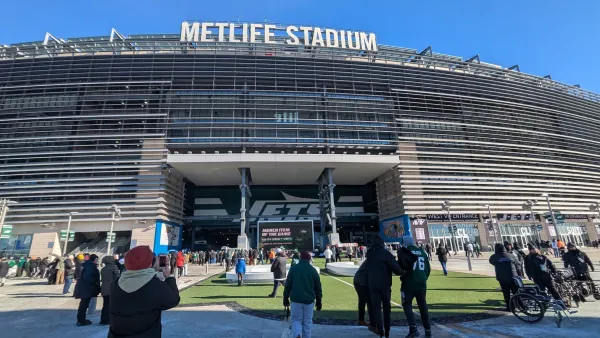
New Jersey FIFA transit will cost $6 million per match
World Cup host cities are bracing for an influx of visitors — and transit users.

Dallas area transit prepares for World Cup, asks locals to drive
DART is adding a special shuttle service and creating back-up mechanisms to ensure it can serve all of this summer's World Cup attendees.
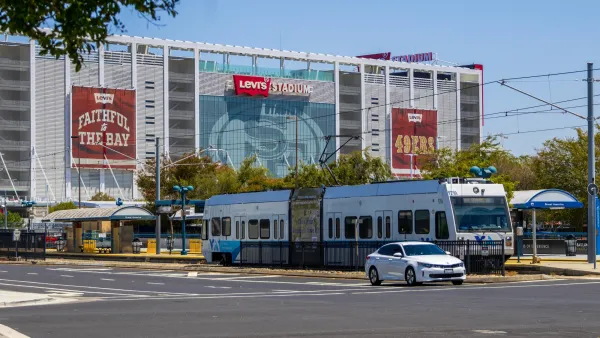
FTA Offers $100 Million in Transit Grants to World Cup Host Cities
Championship soccer games will be held in 11 U.S. cities this summer as part of the 2026 FIFA World Cup.

Planetizen Federal Action Tracker
A weekly monitor of how Trump’s orders and actions are impacting planners and planning in America.

California plans to bury El Niño’s downpour
If the state plays its cards right, it may be able to store a billion acre-feet of El Niño’s water in aquifers.

Desperate measures: Advocates weigh draining Lake Powell to fill Colorado River
Draining the reservoir could reduce evaporation losses by a couple hundred thousand acre-feet.

Housing is the top priority of Seattle’s sole new councilmember
Jenks campaigned on building 1,000 new units of affordable housing.

New tax cuts may slash $1.5 billion in funding for Miami transit, public parks
Amendment 3 will save Miami-Dade homeowners $2,700 in 2028.

Arizona, Wisconsin, Pennsylvania hope to finally advance climate goals post-midterms
The three states have spent years under Republican or divided control.

FREE Course: Walkable City 1: Why Walkability?
After describing his path towards focusing on walkability as the essence of good planning, Jeff Speck marches through his five principal reasons for making more walkable places.
Reinventing Malls: Planning Alchemy—Turning Gray Fields Into Gold
The course focuses on the opportunities and imperatives that shape reinvention of mall sites.

City of Rosemead
Rutgers University, Edward J. Bloustein School of Planning and Public Policy
One Hundred Miles
University of Michigan School for Environment and Sustainability (SEAS)
Hunter College, City University of New York (CUNY)
The Architects Foundation
City of Cambridge
Montrose County
The Pocatello Development Authority