In spite of popular perceptions, crime on many US transit systems is steadily dropping.


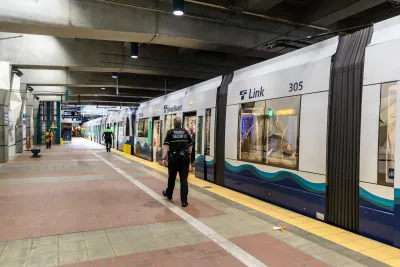
Despite recent high-profile incidents that prompted concerns about security on public transit, crime rates on U.S. transit systems are actually dropping, writes Alan Ehrenhalt in Governing.
In New York City, "Transit crimes declined by 14.4 percent between 2019 and 2025. Overall crime on the subways in 2025 recorded its lowest rate in 16 years." Moreover, half of subway crimes happen at just 30 of the system's 472 stations, pointing to relatively easy solutions: increased security and enforcement at those smaller stations with low ridership.
According to Ehrenhalt, "Much of the crime that takes place in large cities is difficult for local governments to control. Transit crime isn’t one of them. You put two officers on each train between 9 at night and 5 in the morning. You light the stations better. You install protective barriers on the platforms to make it much harder for a miscreant to push someone onto the tracks. You put in tougher fare gates to deter turnstile jumping, and you pay more attention to people squeezing through the emergency exits."
Read the full story: Transit Crime Phobia and Statistical Reality

MBTA threatens to use eminent domain to pedestrianize Boston streets during World Cup
Boston city hall has been unusually reluctant to align with MassDOT and MBTA's proposed crowd management plans.
Chicago Transit Authority to Boost Policing Hours by 75%
In December, federal officials tasked the CTA to develop an enhanced security plan or risk losing federal funding.
The Vast Majority of Riders Suspended by Chicago Transit Agencies are Black or Latino
The agencies are allowed to ban riders who are accused of violent or threatening behavior.

Planetizen Federal Action Tracker
A weekly monitor of how Trump’s orders and actions are impacting planners and planning in America.

Amtrak, CN end decades-long dispute with eight-year agreement
The new operating agreement establishes an updated framework for the companies to work together, including processes to resolve disputes.

Judges permit Denver to divert 77,000 acre feet from the Colorado River for reservoir expansion
Overuse and climate change have caused the Colorado River’s water levels to plummet.

A ‘shady’ deal: Chicagoans rally against planned Amtrak maintenance facility
The $900 million facility would allow Amtrak to maintain entire trains in one building, which the company says will reduce delays.

NYC releases high-tech public restrooms — with a 10 minute time limit
The $4 million pilot program aims to make it easier for people to find public restrooms in New York City.

Alabama scores up to $2.5 billion federal loan for largest infrastructure project in state’s history
The Mobile River Bridge and Bayway Project aims to ease congestion at Alabama’s worst bottleneck.

FREE Course: Walkable City 1: Why Walkability?
After describing his path towards focusing on walkability as the essence of good planning, Jeff Speck marches through his five principal reasons for making more walkable places.
Reinventing Malls: Planning Alchemy—Turning Gray Fields Into Gold
The course focuses on the opportunities and imperatives that shape reinvention of mall sites.

KFH Group Inc.
Greater Baltimore Committee
Eagle County Government
The Architects Foundation
University of Cincinnati Online
The Pocatello Development Authority
The Urban Renewal Agency of the City of Pocatello