Author Charles T. Brown explains how his experience growing up in rural Mississippi shaped his worldview and his current work for equitable transportation.


This interview was edited by Laurie Mazur, and published in partnership with Island Press — now an imprint of Princeton University Press.
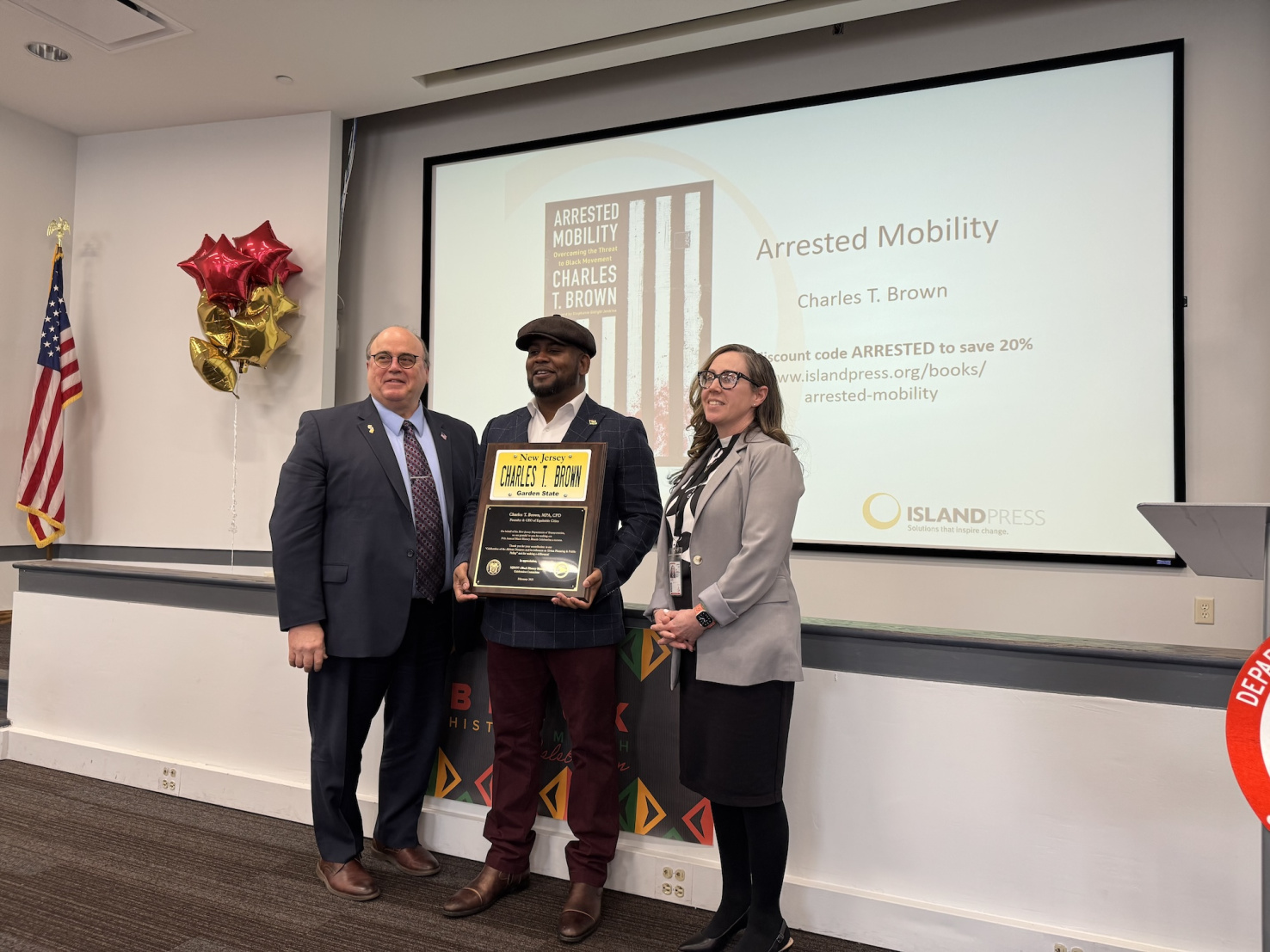
"Mobility is power," says Charles T. Brown. "When you restrict someone's ability to move — physically, economically, or socially — you're restricting someone’s freedom." As Brown explained in his book, "Arrested Mobility: Overcoming the Threat to Black Movement" (Island Press, 2025), restriction has had devastating economic, health and emotional impacts on disadvantaged Americans. Charles T. Brown is the founder and principal of Horizon 54, a minority- and veteran-owned urban planning, public policy and research firm focused at the intersection of transportation, health and equity. He is also an adjunct professor at the Edward J. Bloustein School of Planning and Public Policy at Rutgers University.
In this interview, Brown explores how his childhood in rural Mississippi shaped his worldview, and discusses his work to ensure mobility and opportunity for all.
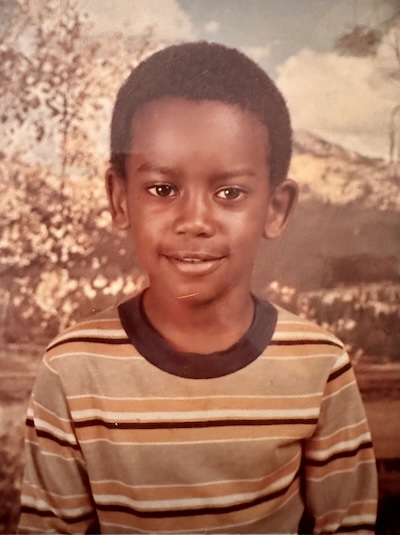
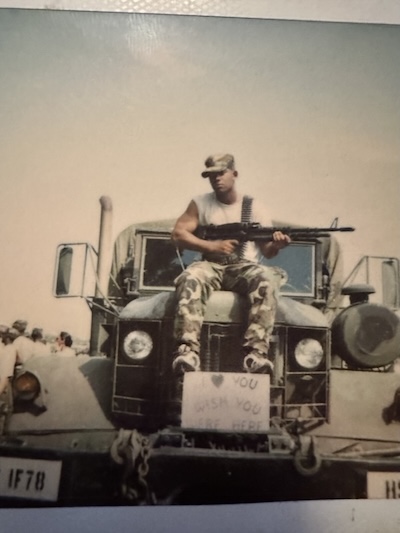
Jen Hawse: How did growing up in Shuqualak, Mississippi shape your vision for the work you do? And how did your time in the military, where you earned the Mississippi Commendation Medal and the Global War on Terrorism Service Medal, affect the way you see places?
Charles Brown: Growing up in Shuqualak, a town of about 500 people, taught me early what it means to live in a place that's been overlooked — not ignored by accident, but shaped by policy and investment decisions that determine who gets access and who doesn't. I didn't have the language for it then, but I was living in what I now call arrested mobility.
In a place like that, you learn quickly that where you live can expand your world or shrink it. My time in the military sharpened that awareness. It gave me structure, discipline and exposure to how systems are designed to function when they're aligned around a mission. I also saw how infrastructure was intentionally designed for efficiency, safety and movement. That stood in stark contrast to the communities I knew growing up, where systems felt fragmented or even hostile to me and others. So now when I look at places, I don't just see the roads and the buildings; I see intent. I see whether a place was designed for people to move, thrive or to be contained. That's why I now focus on unarresting people's mobility.
Hawse: How did those experiences lead to the creation of Equitable Cities — and the shift to Horizon 54 (formerly Equitable Cities)?
Brown: Equitable Cities was born out of urgency. At the time, equity wasn't a buzzword. It was a gap. Communities were being planned for, not with. Data was being used without context, and engagement often felt performative. I built Equitable Cities to challenge that. Horizon 54 represents evolution. It's not a departure from equity; it's an expansion of it. Horizon speaks to where we're going, while the "54" grounds us in where we've come from. Think 1854 and 1954.
Our work has to get bigger. We can't just critique systems anymore; we have to design them. We can't just center equity as we've done in the past. We have to deliver outcomes at scale that include transportation, housing, health and climate. Horizon 54 positions us to sit at bigger tables, influence policy at higher levels and still remain deeply rooted in community.
Hawse: How is your work at Horizon 54 different from other professional work, and how does it speak to the importance of resilience, health, connections and people and place?
Brown: We integrate our engagement with people with the technical work. The same team that's in the community is shaping the strategy, the policy and the recommendations. We also bring what I call a pracademic approach, which means that our work is grounded in research but is proven in practice.
And we tell the story, through videos, podcasts and data visualization. We make sure communities can see themselves in the work and decisionmakers can't ignore it. At the core, we're focused on people centered, place-based outcomes. And that's where resilience comes from. That's where health comes from. That's where real connections happen. And that's not just between people, but between people and the places where they live.
Hawse: You’ve noted that the physical design of our communities — their infrastructure and transportation systems — can have inequitable impacts on mobility. Can you share a project where you saw this happening and how you addressed it?
Brown: The work we did in Syracuse as part of the HUD Thriving Communities program is a clear example of this work. In Syracuse, the construction of Interstate 81 displaced over 1,200 Black families and destroyed a thriving community. Decades later, we're still dealing with the consequences. Our job was to come in and not just engage the community, but to actually rebuild trust. We worked to align housing redevelopment with transportation decisions. We spearheaded coordination across agencies and ultimately created a unified engagement strategy so that residents weren't being asked the same questions by different entities with no follow-through. That's what repair requires: not just removing harm, but intentionally rebuilding what was lost. A big part of what has been lost in our communities is trust. And it takes a lot of work to rebuild and repair trust.
Hawse: Can you put a timeline on how long it takes to rebuild trust?
Brown: No, you cannot. We move at the speed of trust, and that speed is determined by the community, by the people who were harmed. As professionals, we need to find a healthy balance between getting it done on time and on budget while also continuing to rebuild trust within the community. And one way to do that is to let the community control the process.
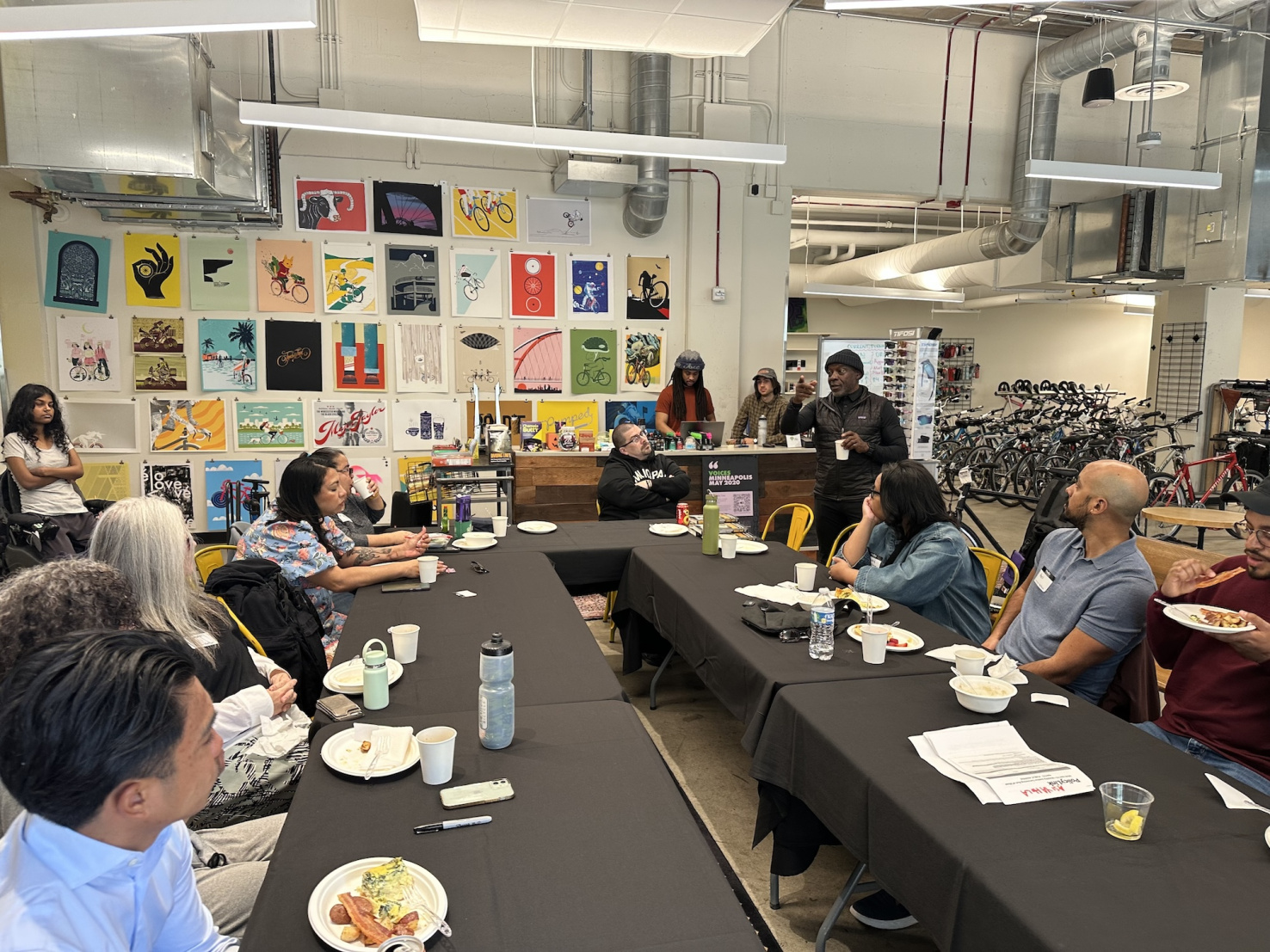
Hawse: Do you ever have to exit a community because of time and budget constraints?
Brown: We don't exit a community. When we go into a place, we are looking to establish something authentic, something that is lifelong. We don't just see ourselves as professionals. We see ourselves as friends, as colleagues. I don't believe in engaging with you and then there’s an expiration date. As long as I have life in my body, my firm is going to continue to work with that community, paid or unpaid. We don't do that for profit. We do that because we center and elevate people, because we know what it's like to not be seen. We know what it’s like to be victims of policy and infrastructure decisions.
Hawse: Your book, "Arrested Mobility: Overcoming the Threat to Black Movement", shows how hindered mobility has devastating economic, health and emotional impacts for Black Americans. In the last two years, people of color have been arrested as they move about — going to work, to school and to immigration appointments. How can we apply what we have learned about arrested mobility for Black Americans in this present moment?
Brown: I chose to center the Black experience because I am a Black man living in America and I felt most qualified to speak about arrested mobility due to that. However, arrested mobility isn't just about Black Americans. It's a framework for understanding how systems restrict movement for certain groups. What we're seeing now — whether it's immigration enforcement, overpolicing or even policies that limit access to basic services — it's the same pattern.
Mobility is power. When you restrict someone's ability to move, physically, economically or socially, you're restricting someone’s freedom. In this moment, the book’s message can be applied more broadly. I want people to ask: who can move freely, who can't and why. And then I want to work with them to design systems that protect, not punish, movement for everyone.
Hawse: How is physical mobility linked to social mobility?
Brown: You can't separate the two. If you can't physically get to a job, you don't have economic mobility. Most Americans don't have the privilege of working virtually. I saw this with my own mother, who didn't have a car for most of my childhood. She couldn’t take advantage of jobs that were nearby but completely out of reach for her without a car.
Secondly, if you can't safely walk in your neighborhood, your health suffers. When you go to a doctor, one of the first things they say is "get more physical activity." What I want my doctor friends to understand is that you could be prescribing death for people in a place where they can't safely walk because their mobility is arrested. Not just in terms of traffic violence, but personal violence. Violence that happens because of prejudice, bigotry, racism and discriminatory practices. And if you're overpoliced while moving through your space, your sense of belonging erodes.
Physical mobility determines access to opportunity, to education, to health care and to community. When we talk about roads, transit, sidewalks, we're not just talking about infrastructure. We're literally talking about life outcomes. That's why you can't disconnect the two.
Hawse: Could you share more about what overpolicing looks like?
Brown: People in Black, brown, and low-income communities are disproportionately stopped by the police when riding a bike, taking public transit, walking or driving. And there is no evidence to show that these individuals are committing crimes at a higher rate than their counterparts. There are a number of concerns with this, including people's sense of belonging but also the very real threat of death. Black Americans make up roughly 12% of the population but account for 24% of those killed by police as recently as in 2025. And now when you look at the immigrants who are being stopped at a higher rate, it's clear that race and ethnicity is behind the overpolicing.
Hawse: How do you see AI tools impacting work within the urban planning field? You talked about building trust in communities — will AI help or hurt that effort?
Brown: AI is changing everything, but not for the better if we're not intentional. On one hand AI can accelerate the analysis that we do. It can improve traffic modeling and it has helped me see patterns that I've missed in the past. It can make planning more efficient and potentially more responsive. But AI is only as good as the data is trained on. And we know that data reflects historical bias. So, if we're not careful, AI with bad data can automate inequity at scale much more rapidly, much more efficiently, in a very scary way. The opportunity and the responsibility is to use AI as a tool for accountability. We need to use it to test assumptions, to identify disparities faster, and to simulate better outcomes.
At Horizon 54, I'm less interested in AI replacing planners, engineers and policy people. I'm more interested in it strengthening our ability to serve communities that have been historically excluded from decisionmaking. On the question of trust, I need an AI that detects bias quickly and — this is going to be the first time I curse in an interview — that detects bullshit quickly. I need to know when you're coming through the door to engage with us, to plan with us, that you've come to help, not to harm. That's the best use of AI I can think of.
Hawse: Why is it so important for you to give back as a mentor and in the communities where you work?
Brown: I grew up extremely poor, and I never forget where I come from. Everything I've built personally and professionally is connected to people who didn't have access to what I have now. For me, giving back isn't charity, it's responsibility: making sure that the next kid growing up in a place like Shuqualak sees possibility, not limitation.
My mother is still in rural Mississippi. My father is buried there. Many of my closest friends are still there, either above or below ground. Some of them are in prison. I feel like if my trajectory, my work, doesn't reach them, then it doesn't matter because I have a responsibility to be an example of what's possible for the people I grew up around.
When people ask me, "Hey Charles, how is work?" I can't identify with that question. I haven't worked since I started my career because I'm literally living out a dream. I get a chance to go anywhere in the world, connect with as many people as I want, and my friends look like the United Nations in terms of racial and ethnic makeup. So, I don't know what work is, but I know what living my dream is. I never for a moment want to take that for granted, which is why I'm doing this work. And man, it's been a great life so far.

Linking Transportation Access and Public Health
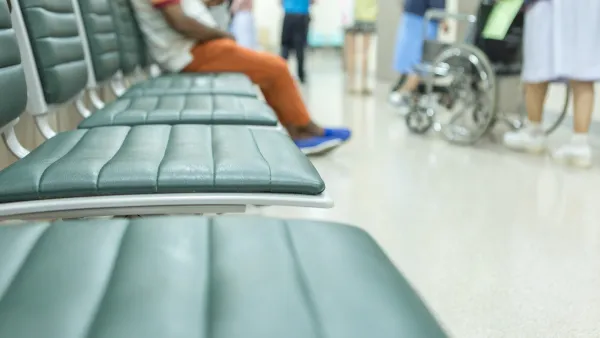
Millions of Americans miss medical care and other important day-to-day appointments due to a lack of access to reliable transportation.

State DOTs Don’t Resemble Their Constituencies — And That’s a Problem
Streetsblog calls attention to the lack of representation of women, people of color, and other groups in state departments of transportation that are largely dominated by white men.

Study: Equity in Car Share Programs Requires Low Cost, Broad Coverage
Data from a Los Angeles car share program showed its impact on underserved communities was ‘limited by its small footprint.’

Planetizen Federal Action Tracker
A weekly monitor of how Trump’s orders and actions are impacting planners and planning in America.

California plans to bury El Niño’s downpour
If the state plays its cards right, it may be able to store a billion acre-feet of El Niño’s water in aquifers.

Chicago breaks ground on $3 billion megadevelopment
The new neighborhood, titled Foundry Park, will one day host 3,700 residences.

California High-Speed Rail Authority CEO resigns after $600,000 scandal
Under Ian Choudri, the authority used taxpayer dollars to fund first class flights and trips to nightclubs.

Want to study the Missouri River? Soon, you may need unanimous approval from 10 states
Legislation would require 10 governors’ permission to study or build projects moving water outside the basin.

Desperate measures: Advocates weigh draining Lake Powell to fill Colorado River
Draining the reservoir could reduce evaporation losses by a couple hundred thousand acre-feet.

FREE Course: Walkable City 1: Why Walkability?
After describing his path towards focusing on walkability as the essence of good planning, Jeff Speck marches through his five principal reasons for making more walkable places.
Reinventing Malls: Planning Alchemy—Turning Gray Fields Into Gold
The course focuses on the opportunities and imperatives that shape reinvention of mall sites.

City of Rosemead
Rutgers University, Edward J. Bloustein School of Planning and Public Policy
One Hundred Miles
Hunter College, City University of New York (CUNY)
The Architects Foundation
University of Cincinnati Online
City of Cambridge
Montrose County
The Pocatello Development Authority

