Today, the 'futuristic' ride still spews out gas fumes. Disney says it is testing new electric prototypes.


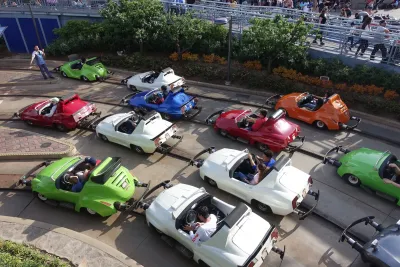
Disneyland will soon begin testing electric prototypes on its Autopia ride, an attraction in Tomorrowland that lets riders "drive" tiny cars around a track. For Matt Novak of Gizmodo, this begs the question: what took so long?
Autopia was born in 1955, when Tomorrowland purported to portray the future of 1986. "But the Autopia ride has largely remained the same since it was first introduced, with a few incremental improvements here and there. In 1977, for example, a Disney engineer replaced the bearings of the cars’ axles with a more durable bearing material, according to an annual report from NASA highlighting how space tech has improved private industry."
But aside from adding guardrails to prevent the ride from being a free-for-all, little else has changed. The cars have remained gas-powered, even though other parks switched: Hong Kong Disneyland's Autopia ride was fully electric before it closed in 2016. In 2024, Disneyland said the ride would go fully electric by 2026, but no progress was made on that plan. Even if the ride switches to hybrid vehicles, is it truly a vision of the "future"?
Read the full story: Why the Hell Has It Taken So Long for Disneyland’s Autopia to Go Electric?

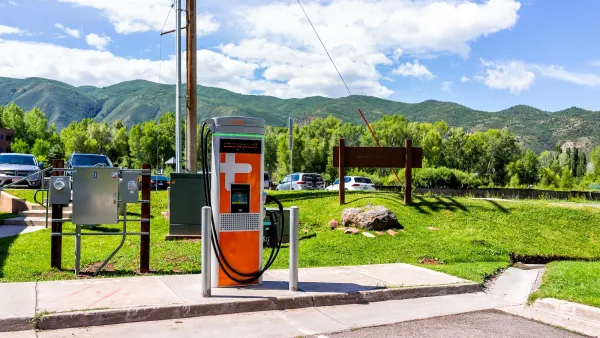
USDOT Cancels Over $100 Million in Sustainable Transportation Funds for Colorado
The administration is pulling funding for what it calls “woke” and “redundant” clean energy projects including EV charging infrastructure.
How New Federal Rule Could Impact EV Adoption
An adjustment to federal pollution limits will require a greater share of low-carbon vehicles, but the rule also gives automakers some flexibility in deploying electric and hybrid cars.
Hybrids Regain in Popularity Amid EV Cost and and Charging Concerns
After their sales dropped thanks to the introduction of all-electric vehicles, hybrid gas-electric cars are seeing a renaissance among consumers.

Planetizen Federal Action Tracker
A weekly monitor of how Trump’s orders and actions are impacting planners and planning in America.

California plans to bury El Niño’s downpour
If the state plays its cards right, it may be able to store a billion acre-feet of El Niño’s water in aquifers.

Chicago breaks ground on $3 billion megadevelopment
The new neighborhood, titled Foundry Park, will one day host 3,700 residences.

Satanic Place Names
From streams and lakes to valleys and canyons, I mapped more than 1,000 places named after the Devil.

California High-Speed Rail Authority CEO resigns after $600,000 scandal
Under Ian Choudri, the authority used taxpayer dollars to fund first class flights and trips to nightclubs.

Want to study the Missouri River? Soon, you may need unanimous approval from 10 states
Legislation would require 10 governors’ permission to study or build projects moving water outside the basin.

FREE Course: Walkable City 1: Why Walkability?
After describing his path towards focusing on walkability as the essence of good planning, Jeff Speck marches through his five principal reasons for making more walkable places.
Reinventing Malls: Planning Alchemy—Turning Gray Fields Into Gold
The course focuses on the opportunities and imperatives that shape reinvention of mall sites.


City of Rosemead
Rutgers University, Edward J. Bloustein School of Planning and Public Policy
One Hundred Miles
Hunter College, City University of New York (CUNY)
The Architects Foundation
University of Cincinnati Online
City of Cambridge
Montrose County
The Pocatello Development Authority