A grocery store developer is asking to build more off-street parking than the city's new regulations allow, as well as 6 curbside spots that would replace an existing bus lane.


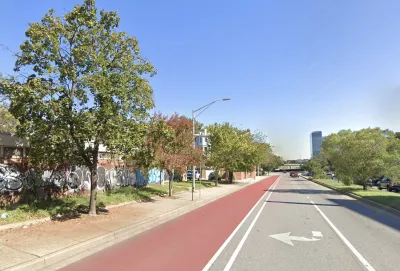
Baltimore residents showed up at a public meeting to protest the high number of parking spots proposed for a new development, reports Fern Shen in BaltimoreBrew.
According to Shen, residents said that they supported the new supermarket, but do not believe it needs the 65 off-street parking spaces requested by the developer, which would require a zoning variance.
The city recently repealed its parking minimums, and new regulations would only allow for 36 spots at the planned project. However, the developer is asking for extra parking and for the city to give up part of a bus lane on North Avenue in favor of parking spots.
"I’m quite sure 90% of the neighborhoods in Reservoir Hill, the students from MICA, the people of Bolton Hill will be walking to this grocery store," one resident said. Others argued that removing the bus lane would increase bus travel times by over 1,100 hours each day. "Residents pointed to their own experience of hazardous traffic condition, in addition to DOT data showing North Avenue as the the city’s second worst location for traffic crashes."
The city's Department of Transportation initially agreed, saying in a statement, "Proposed on-street parking was rejected over concerns that it would diminish the effectiveness of dedicated bus lanes and create new conflicts between MTA buses and parked cars, potentially contributing to crashes." However, the department posted a contradicting statement one day before the hearing, saying it "has no concerns and requests a favorable report."
The developer, head of MCB Real Estate, was a major campaign donor for Baltimore Mayor Brandon Scott.
FULL STORY: Parking-averse City Council is put to the test as prominent developer asks for more of it

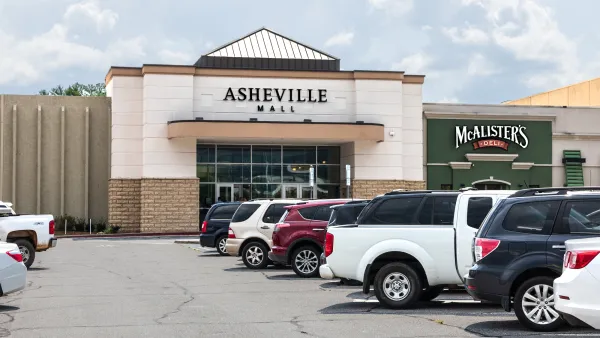
Asheville reconsiders parking minimums as surface parking eats up over a third of downtown real estate
Housing advocates say parking requirements are unnecessary and induce sprawl.
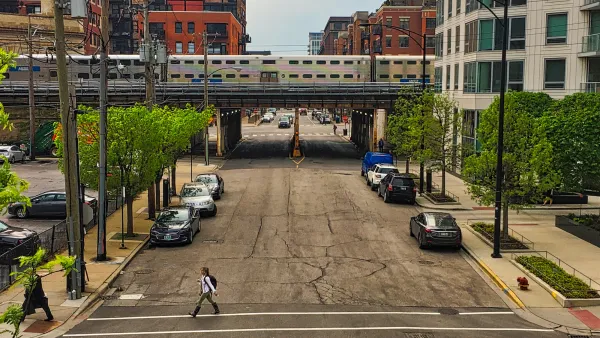
Chicago eliminates parking requirements near transit
In 2025, Illinois barred cities from mandating parking near train and bus stations.
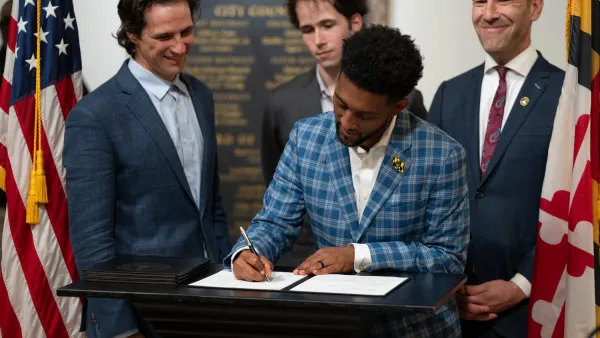
Baltimore Seeks to Stem Population Loss by Eliminating Parking Requirements, Legalizing Single-Stair Buildings
A package of zoning reforms is aimed at making it easier to build and redevelop housing to draw people back to the city, which has been losing population steadily.

The state-sanctioned urbicide of Austin
People don’t kill cities. Freeways do.

US to reduce Colorado River water deliveries to Mexico
A new Colorado Treaty amendment reduces Mexico’s Colorado River water allocation by 250,000 acre feet.

New Jersey’s second-largest city bans standalone data centers
Jersey City will continue to allow co-location facilities, such as those meant for research institutions that store their own data.

Amtrak not solely to blame for New Jersey commuter rail's unreliability, report finds
A new study from the Garden State Initiative found that NJ Transit’s budget grew 20% across a 4 year period, but reliability declined significantly over the same period.

EPA erases limits on planet-warming pollution from power plants
Under Monday’s plan, power plants would still have some limits on how much mercury, arsenic and other contaminants they can emit.

Phoenix announces new on-demand transit service, more frequent RAPID buses
Both new services will launch in October, and are part of Phoenix's Project Effective Access Solutions for Easing Congestion.

FREE Course: Walkable City 1: Why Walkability?
After describing his path towards focusing on walkability as the essence of good planning, Jeff Speck marches through his five principal reasons for making more walkable places.
Reinventing Malls: Planning Alchemy—Turning Gray Fields Into Gold
The course focuses on the opportunities and imperatives that shape reinvention of mall sites.

Eagle County Government
Harvard University Graduate School of Design
Nashville Planning Department
The Architects Foundation
University of Cincinnati Online
The Pocatello Development Authority
The Urban Renewal Agency of the City of Pocatello
Journal of the American Planning Association