A neighborhood 25 years in the making blends Flemish vernacular architecture with walkability and affordability.


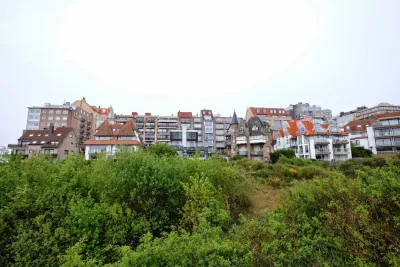
An 'urban village' in a Belgian city is proving that social housing can be beautiful, writes Robert Steuteville in CNU's Public Square. According to Steuteville, "The Village of Heulebrug is a 66-acre urban village, an extension of the City of Knokke-Heist, Belgium, that delivers social and affordable housing along with exceptionally competent vernacular architecture."
The village is built around a central tower, with narrow streets emanating out in a modified grid. "Northern and western edges of Heulebrug seamlessly connect to the existing urban fabric, while the southern and eastern edges face the City’s greenbelt. A trail and right-of-way preserve views of the open space, which the planners describe as a 'second coastline.'"
Heulebrug offers both market-rate and affordable housing, including publicly owned social housing. The first phase of the project began in 2002 with 185 building plots, 26 social housing units, and 124 private apartments, some of which are income-restricted. Plots in the second phase, begun in 2017, were allocated to young resident families and include conditions such as a 20-year ban on resale to discourage speculation. At present, "The village is about 80 percent built out with 851 living spaces, civic uses, and a small amount of commercial space."
While Modernist design is now more popular, former mayor Leopold Lippens supported the idea of using vernacular Flemish architecture for Heulebrug. The design team developed a "simple yet precise one-page code of urban and architectural standards" that govern aspects like roofs, windows, doors, exterior walls and other elements. For Steuteville, "This village demonstrates that a municipally-sponsored development designed to address the housing needs of lower-income residents can transcend the conventional perception of a 'housing project.'"
The success of the village has also prompted a more ambitious affordable housing policy for the whole city, said engineer-architect Mathias Delrue.
Read the full story: Neighborhood combines affordable housing with design excellence


Seattle social housing agency can now issue bonds
The new Seattle Social Housing Developer funds affordable housing through a tax on the city's highest-paying companies.
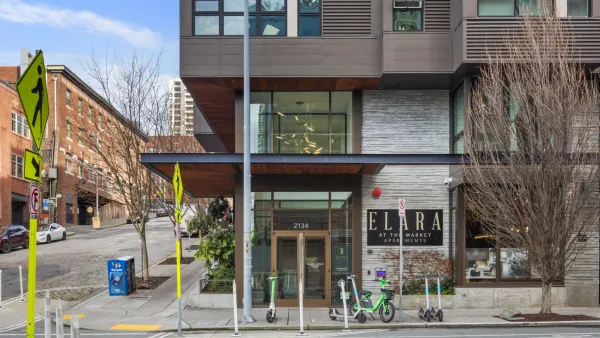
Seattle's first social housing building gets 10,000 resident applications
The Elara at the Market development includes 150 affordable housing units.

Richmond's new 'stadium district' will include hundreds of homes, offices, jobs
The city is planning for a neighborhood revival in the area around a new baseball stadium.

Planetizen Federal Action Tracker
A weekly monitor of how Trump’s orders and actions are impacting planners and planning in America.

California plans to bury El Niño’s downpour
If the state plays its cards right, it may be able to store a billion acre-feet of El Niño’s water in aquifers.

Chicago breaks ground on $3 billion megadevelopment
The new neighborhood, titled Foundry Park, will one day host 3,700 residences.

Satanic place names
From streams and lakes to valleys and canyons, I mapped more than 1,000 places named after the Devil.

California High-Speed Rail Authority CEO resigns after $600,000 scandal
Under Ian Choudri, the authority used taxpayer dollars to fund first class flights and trips to nightclubs.

Want to study the Missouri River? Soon, you may need unanimous approval from 10 states
Legislation would require 10 governors’ permission to study or build projects moving water outside the basin.

FREE Course: Walkable City 1: Why Walkability?
After describing his path towards focusing on walkability as the essence of good planning, Jeff Speck marches through his five principal reasons for making more walkable places.
Reinventing Malls: Planning Alchemy—Turning Gray Fields Into Gold
The course focuses on the opportunities and imperatives that shape reinvention of mall sites.


City of Rosemead
Rutgers University, Edward J. Bloustein School of Planning and Public Policy
One Hundred Miles
Hunter College, City University of New York (CUNY)
The Architects Foundation
University of Cincinnati Online
City of Cambridge
Montrose County
The Pocatello Development Authority