The Secure Water Arizona Program will allow participating cities to use a reserve of water or make agreements to buy it from other jurisdictions.


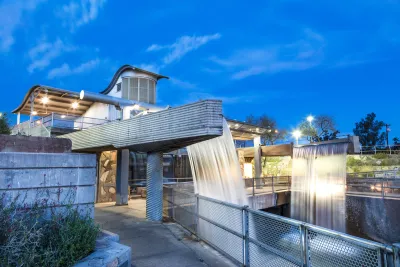
The cities of Phoenix and Tucson are creating a new, voluntary water sharing system designed to help Arizona cities in emergencies, reports Alex Hager for KJZZ.
"The program, which will be called the 'Secure Water Arizona Program' or 'SWAP' will create an emergency reserve of water and connect cities that are interested in buying and selling water from other cities and businesses," Hager explains.
Cities who join the program would be able to use a pool of reserve water to ensure their taps don't go dry in short-term emergencies or make agreements to purchase water from agricultural districts, mining companies, or other cities.
The plan is in part a response to a high-profile 2023 incident when Rio Verde Foothills, a community north of Scottsdale, ran out of water and had to have it delivered by trucks. A similar crisis would be less likely to happen in other Arizona cities, which, unlike Rio Verde Foothills, have traditional water delivery systems.
But the reserve could help towns like Cave Creek, which gets 95% of its water from the Colorado River and faces cuts of 50% as new restrictions kick in. "Instead of building a new system of wells and pipelines to bring that water to Cave Creek, the town is planning to enter an agreement with the city of Phoenix and two other nearby cities that would help keep water flowing for five to eight years."
FULL STORY: As Arizona faces Colorado River cuts, Phoenix and Tucson set up a system for cities to share water

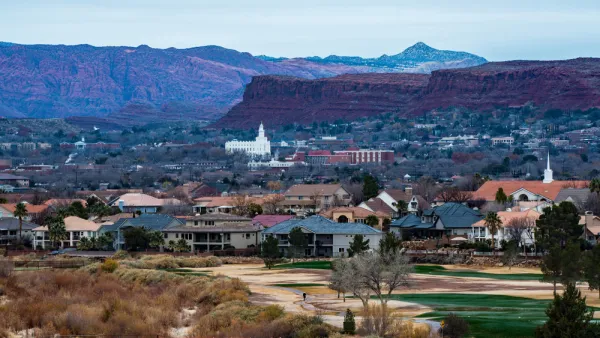
Can Southwest Utah’s Water Supply Handle its Explosive Growth?
A remote corner of the state is the nation’s fastest-growing metro area, but concerns about water supplies across the Southwest signal an uncertain future.

Despite Water Crisis, Desert Golf Courses Thrive
Officials in the Coachella Valley seem reluctant to restrict water supplies to the many golf courses and ornamental lakes that dot the region, opting instead to cut water deliveries to a groundwater recharge facility.
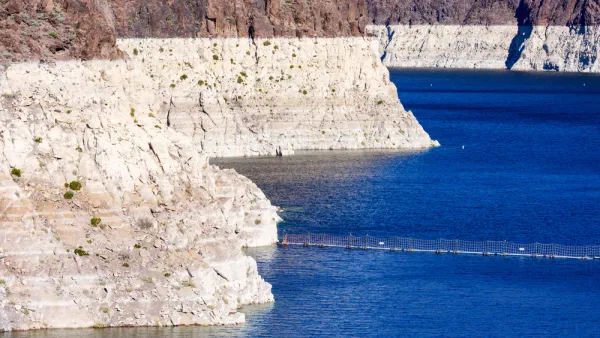
Colorado River Water Crisis Deepens
The states that rely on the Colorado’s water must make drastic cuts in water usage to maintain use of the West’s most important—and most threatened—water source.

The state-sanctioned urbicide of Austin
People don’t kill cities. Freeways do.

US to reduce Colorado River water deliveries to Mexico
A new Colorado Treaty amendment reduces Mexico’s Colorado River water allocation by 250,000 acre feet.

New Jersey’s second-largest city bans standalone data centers
Jersey City will continue to allow co-location facilities, such as those meant for research institutions that store their own data.

Amtrak not solely to blame for New Jersey commuter rail's unreliability, report finds
A new study from the Garden State Initiative found that NJ Transit’s budget grew 20% across a 4 year period, but reliability declined significantly over the same period.

EPA erases limits on planet-warming pollution from power plants
Under Monday’s plan, power plants would still have some limits on how much mercury, arsenic and other contaminants they can emit.

Phoenix announces new on-demand transit service, more frequent RAPID buses
Both new services will launch in October, and are part of Phoenix's Project Effective Access Solutions for Easing Congestion.

FREE Course: Walkable City 1: Why Walkability?
After describing his path towards focusing on walkability as the essence of good planning, Jeff Speck marches through his five principal reasons for making more walkable places.
Reinventing Malls: Planning Alchemy—Turning Gray Fields Into Gold
The course focuses on the opportunities and imperatives that shape reinvention of mall sites.

Eagle County Government
Harvard University Graduate School of Design
Nashville Planning Department
The Architects Foundation
University of Cincinnati Online
The Pocatello Development Authority
The Urban Renewal Agency of the City of Pocatello
Journal of the American Planning Association