The Modal Parity in Permitting Act aims to reduce a “structural disadvantage in the permitting process” and level the playing field between transit, rail and highway projects.


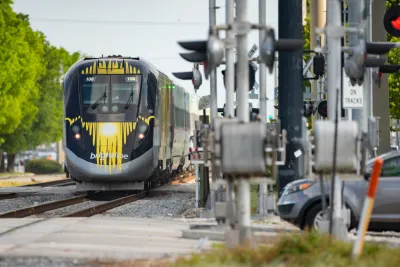
Last week, Rep. Dina Titus, D-Nev, introduced a new bipartisan bill in the U.S. House of Representatives aimed at aligning the permitting process for transit and passenger rail projects more closely with procedures already in place for highway construction. As reported by Constructionowners.com, the Modal Parity in Permitting Act “would allow transit and rail projects to acquire property before completing the National Environmental Policy Act review process — a step currently permitted for highway projects but not for transit initiatives.”
“The bill… is expected to be considered as part of the next surface transportation legislation package, which will outline federal funding and policy priorities for highways and mass transit systems,” Constructionowners.com reports. It aims to reduce the relative disadvantage current rules place transit and rail projects at in comparison to highway projects. The bill was co-sponsored by Rep. Robert Bresnahan Jr., R-Pa., and Rep. Laura Friedman, D-Calif, and has garnered backing by advocacy organizations including the American Public Transportation Association, The Bus Coalition and others.
“For too long, public transit and passenger rail projects have faced a structural disadvantage in the permitting process — highway projects can acquire land before NEPA is complete, while [Federal Transit Administration] and [Federal Railroad Administration] projects cannot,” said APTA president and CEO Paul Skoutelas.
Read the full story below.
FULL STORY: House Bill Seeks to Streamline Transit and Rail Permitting Process


Planetizen Federal Action Tracker
A weekly monitor of how Trump’s orders and actions are impacting planners and planning in America.

The state-sanctioned urbicide of Austin
People don’t kill cities. Freeways do.

US to reduce Colorado River water deliveries to Mexico
A new Colorado Treaty amendment reduces Mexico’s Colorado River water allocation by 250,000 acre feet.

5 New England states march closer to 800 megawatt wind energy project
Securing federal approval for the project may be complicated under the Trump administration, which has historically been hostile towards domestic wind power.

Baltimore to break ground on $50 million Transit Priority Project
The project will bring faster bus trips, safer streets and better bike connections to Baltimore.

Airbnb launches $250 million 'last-dollar financing' housing accelerator, makes first investment in Austin
The company will put $6.4 million towards affordable housing development in Texas’ capital.

FREE Course: Walkable City 1: Why Walkability?
After describing his path towards focusing on walkability as the essence of good planning, Jeff Speck marches through his five principal reasons for making more walkable places.
Reinventing Malls: Planning Alchemy—Turning Gray Fields Into Gold
The course focuses on the opportunities and imperatives that shape reinvention of mall sites.

Eagle County Government
Harvard University Graduate School of Design
Nashville Planning Department
The Architects Foundation
University of Cincinnati Online
The Pocatello Development Authority
The Urban Renewal Agency of the City of Pocatello
Journal of the American Planning Association