The Berkeley Station development used modular construction to build the project on a nine-month timeline.


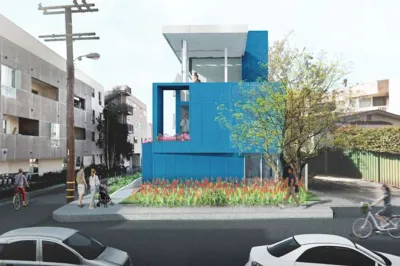
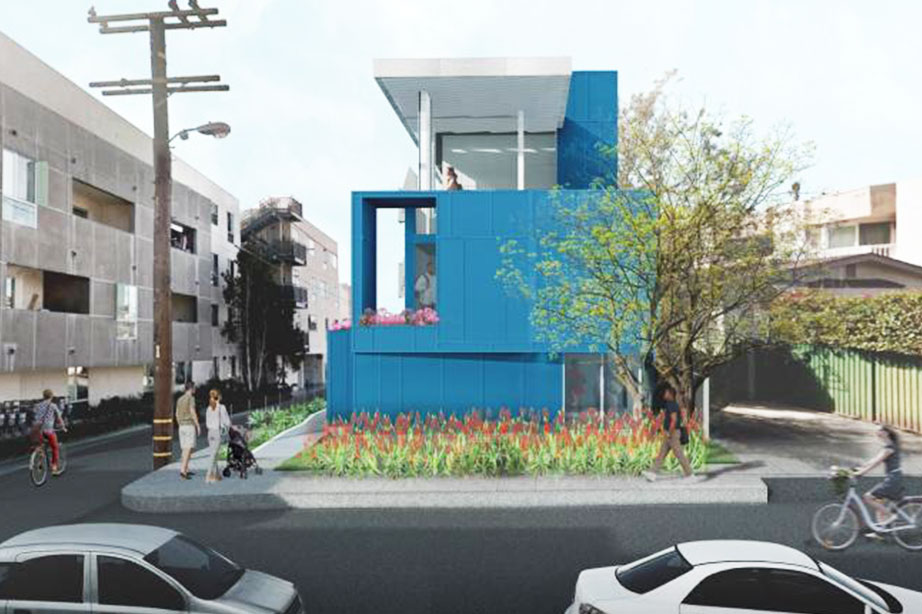
A Santa Monica affordable housing project overcame the odds in a low-density, coastal California town, offering lessons for affordable housing developers across the state.
According to reporting by Dan Walters for CalMatters, the 13-unit Berkeley Station apartment complex is made of modular units that were assembled in three days, with the entire construction process lasting nine months as compared with the typical 20 months. Despite its reduced costs, the project required a significant amount of public loans, costing $1 million per unit. As Walters explains, “The key to making modular construction more cost-efficient would be adopting it more fully, thus achieving economies of scale. That would involve changing some state laws, persuading housing lenders to be more accommodating and overcoming resistance from construction unions.”
Three state bills introduced by Assembly member Buffy Wicks would amend building codes to support modular buildings, prevent local governments from blocking modular housing in local codes, and make it easier to transport modular housing on state highways.
FULL STORY: Santa Monica project points the way to easing California’s housing shortage


The Trouble With QUIMBY
The idea of “quality urbanism in my back yard” has its uses, but should not be used to limit housing supply.

DC Residents Want Affordability Over ‘Character’
A poll finds that most residents want to see changes in zoning and land use laws that unlock more housing construction in the District and improve affordability.
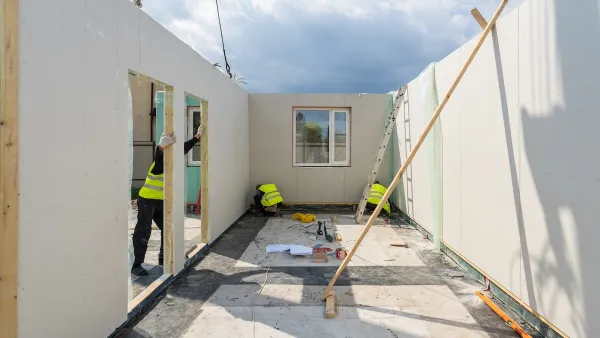
Modular Workforce Housing Offers a Lifeline for Western Towns
Rapidly rising housing costs are pushing out the residents at the heart of local economies in resort towns across the country.

Planetizen Federal Action Tracker
A weekly monitor of how Trump’s orders and actions are impacting planners and planning in America.

The state-sanctioned urbicide of Austin
People don’t kill cities. Freeways do.

US to reduce Colorado River water deliveries to Mexico
A new Colorado Treaty amendment reduces Mexico’s Colorado River water allocation by 250,000 acre feet.

5 New England states march closer to 800 megawatt wind energy project
Securing federal approval for the project may be complicated under the Trump administration, which has historically been hostile towards domestic wind power.

Baltimore to break ground on $50 million Transit Priority Project
The project will bring faster bus trips, safer streets and better bike connections to Baltimore.

Airbnb launches $250 million 'last-dollar financing' housing accelerator, makes first investment in Austin
The company will put $6.4 million towards affordable housing development in Texas’ capital.

FREE Course: Walkable City 1: Why Walkability?
After describing his path towards focusing on walkability as the essence of good planning, Jeff Speck marches through his five principal reasons for making more walkable places.
Reinventing Malls: Planning Alchemy—Turning Gray Fields Into Gold
The course focuses on the opportunities and imperatives that shape reinvention of mall sites.

Eagle County Government
Harvard University Graduate School of Design
Nashville Planning Department
The Architects Foundation
University of Cincinnati Online
The Pocatello Development Authority
The Urban Renewal Agency of the City of Pocatello
Journal of the American Planning Association