Phoenix’s unsheltered homeless population grew by 28 percent last year.


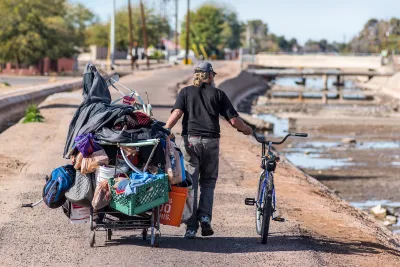
Phoenix and Oakland both recently issued draft action plans to reduce homelessness focused on permanent housing, reports Ryan Kushner in Smart Cities Dive.
Oakland’s plan sets a goal of cutting homelessness in half by 2031 and aims to provide an additional 3,630 housing units or vouchers over the next five years. “The overall plan has a funding goal of $406 million annually, with $122 million to potentially come from the city and county.” The plan includes proposals to increase outreach and trash removals at encampment sites and enforcing priority no-camping zones.
Phoenix’s updated strategic plan calls for “developing new housing models” but dedicates no funding to that initiative. “Over the past three years, Phoenix has added more than 1,200 shelter beds, but much of its funding for homelessness solutions has come from federal pandemic-era grants set to expire soon, KJZZ reported.” The new plan calls for a “coordinated, humane enforcement approach” and new rules for the use of public space.
Read the full story: 2 major cities update homelessness plans to focus on permanent housing

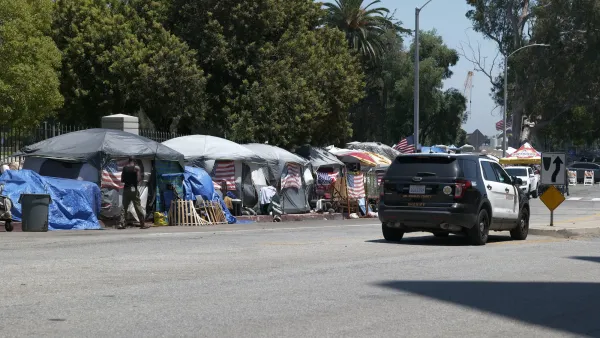
Study: LA’s Homelessness Program Displaced 5 People for Every One it Helped
Researchers say a city program designed to help people access housing and services “does not live up to its name” and has caused more harm than good.
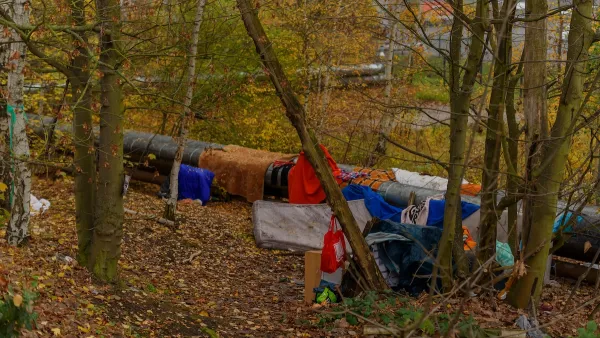
Rural Homelessness Could Be Vastly Underestimated, Study Finds
The annual ‘point in time’ count fails to capture the diverse types of situations experienced by unhoused people in rural communities.
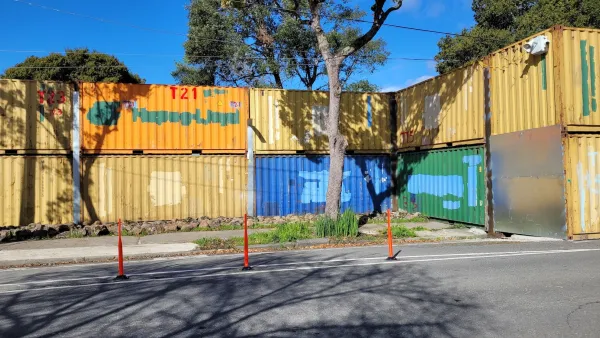
Berkeley promised to build supportive housing in People's Park. Where is it?
More than two years after People's Park was cordoned off, there is no word on a timeline for a promised affordable housing project.

Planetizen Federal Action Tracker
A weekly monitor of how Trump’s orders and actions are impacting planners and planning in America.

California plans to bury El Niño’s downpour
If the state plays its cards right, it may be able to store a billion acre-feet of El Niño’s water in aquifers.

Desperate measures: Advocates weigh draining Lake Powell to fill Colorado River
Draining the reservoir could reduce evaporation losses by a couple hundred thousand acre-feet.

Chicago Avenue bridge construction delays enrages city leaders
The bridge has been closed since 2025. The city originally aimed to re-open it in December, and now expects to finish construction in 2027.

NYC bus network redesign speeds up Queens buses
Rush routes have seen a 4.6% speed increase after the redesign.

California High-Speed Rail Authority picks trainset manufacturer
The California High-Speed Rail Authority aims to start servicing passengers by 2033.

FREE Course: Walkable City 1: Why Walkability?
After describing his path towards focusing on walkability as the essence of good planning, Jeff Speck marches through his five principal reasons for making more walkable places.
Reinventing Malls: Planning Alchemy—Turning Gray Fields Into Gold
The course focuses on the opportunities and imperatives that shape reinvention of mall sites.

City of Rosemead
Rutgers University, Edward J. Bloustein School of Planning and Public Policy
One Hundred Miles
Hunter College, City University of New York (CUNY)
The Architects Foundation
University of Cincinnati Online
City of Cambridge
Montrose County
The Pocatello Development Authority