The city’s housing authority says it often takes months to renovate apartments for new tenants, leading to hundreds of empty units that pose safety risks to neighbors.


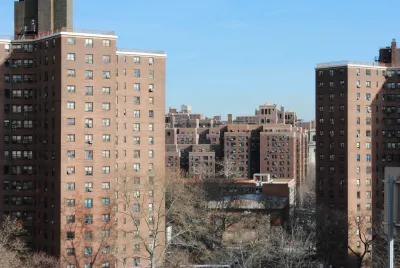
A new report from New York City’s Department of Investigation reveals that vacant apartments in buildings operated by the New York City Housing Authority are creating safety risks and opportunities for squatters and trespassers to use them, reports Jeanmarie Evelly in City Limits. “The report, published Tuesday, calls for NYCHA to keep better tabs on its vacant homes, the majority of which are awaiting—often extensive, and legally required—remediation work after the prior tenant moved out and before they can be rented again,” Evelly adds.
The report found over 6,800 unoccupied units as of January (including 751 apartments with tenants waiting to move in). Vacancies in NYCHA properties have more than doubled since 2022, while 165,000 applicants are on the agency’s wait list. “Investigators issued several recommendations, including that the housing authority conduct monthly inspections of empty units—to ‘check for signs of unauthorized occupants’—and that it look into upgrading its locks to avoid multiple vacant apartments being accessible via the same key, as is NYCHA’s current practice.”
According to NYCHA, vacancies often result from the need to make extensive renovations before units can be leased out when a prior tenant leaves. “That frequently includes costly lead paint and asbestos abatement—required by local law and under NYCHA’s federal monitorship—work which takes an average of four to six months to complete, officials have said. In general, it takes the housing authority an average of 326 days to “turnaround” a vacant apartment for new occupancy, according to the most recent public data.”
FULL STORY: Empty NYCHA Apartments Pose Safety Risks, Opportunities for Squatters: Report

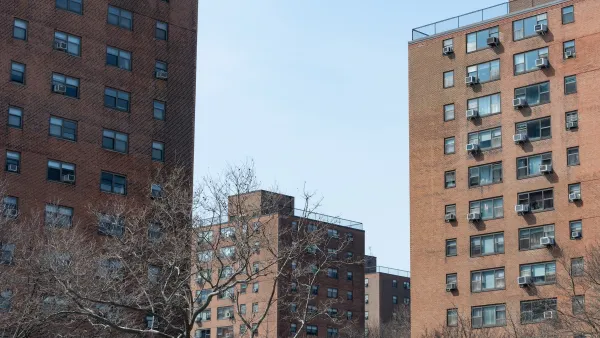
NYC mayor announces plan to repair, restore and build new public housing
Roughly 300,000 New Yorkers live in the city's public housing system.
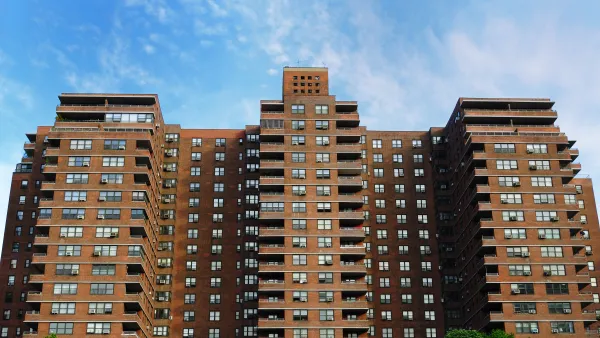
New York Public Housing Needs $78 Billion in Repairs
A new assessment from the city’s housing agency calls for $60 billion in needed repairs over the next five years.
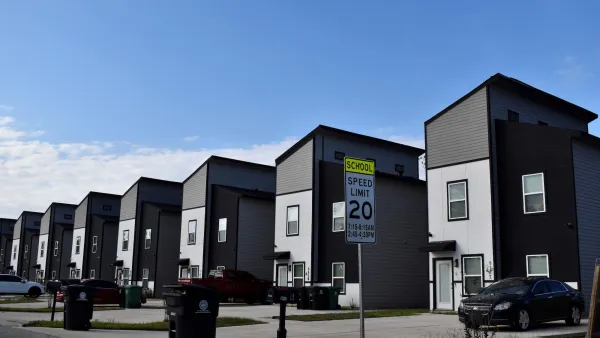
Troubled Houston housing agency announces plan to resolve 'material deficiencies'
The newly renamed Housing Alliance Houston has created a new accounting team and instituted new tenant file inspections, per a recent update required by HUD.

Planetizen Federal Action Tracker
A weekly monitor of how Trump’s orders and actions are impacting planners and planning in America.

The state-sanctioned urbicide of Austin
People don’t kill cities. Freeways do.

US to reduce Colorado River water deliveries to Mexico
A new Colorado Treaty amendment reduces Mexico’s Colorado River water allocation by 250,000 acre feet.

5 New England states march closer to 800 megawatt wind energy project
Securing federal approval for the project may be complicated under the Trump administration, which has historically been hostile towards domestic wind power.

Baltimore to break ground on $50 million Transit Priority Project
The project will bring faster bus trips, safer streets and better bike connections to Baltimore.

Airbnb launches $250 million 'last-dollar financing' housing accelerator, makes first investment in Austin
The company will put $6.4 million towards affordable housing development in Texas’ capital.

FREE Course: Walkable City 1: Why Walkability?
After describing his path towards focusing on walkability as the essence of good planning, Jeff Speck marches through his five principal reasons for making more walkable places.
Reinventing Malls: Planning Alchemy—Turning Gray Fields Into Gold
The course focuses on the opportunities and imperatives that shape reinvention of mall sites.

Eagle County Government
Harvard University Graduate School of Design
Nashville Planning Department
The Architects Foundation
University of Cincinnati Online
The Pocatello Development Authority
The Urban Renewal Agency of the City of Pocatello
Journal of the American Planning Association