A proposed budget eliminates funding for a key urban forestry program that funds greening efforts across the state.


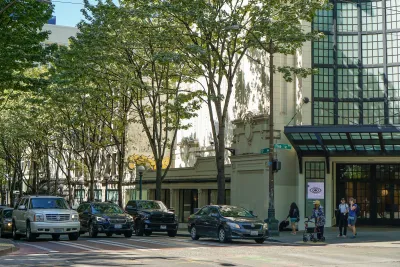
Proposed budget cuts in the Washington state legislature would effectively kill the state’s urban forestry program, advocates warn.
According to an article in The Urbanist by Ryan Packer, “The Washington State Urban and Community Forestry (UCF) Program provides technical assistance to local governments, tribes, and nonprofits across the state when it comes to work to plant and sustain trees and other vegetation, and directly provides grant funding for them to advance that work.”
Now, a proposed supplemental budget zeroes out funding for the program, Packer writes. “Not only would the elimination of DNR’s program make it much harder for these communities to access federal tree funding in the future, zeroing out the program right now could require those local partners to pay back any funds tied to work that isn’t able to be wrapped up by the time the state budget takes effect on July 1.”
The program’s $3 million in funding is a small part of the state’s $79.2 billion total budget, Packer adds. “But those dollars pay large dividends across the state and almost certainly bring in more dollars from outside the state than what it costs to administer.”
FULL STORY: ‘Existential’ Budget Cut Would Wipe Out State Urban Forestry Program

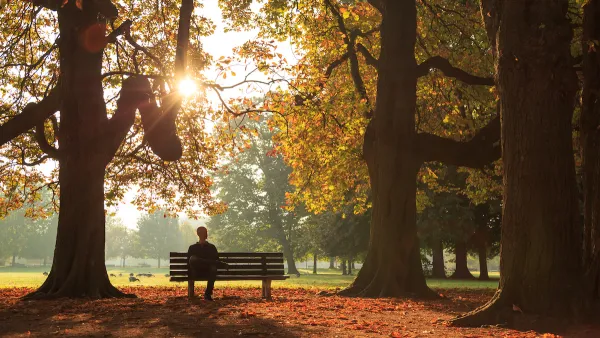
‘Smart Surfaces’ Policy Guide Offers Advice for Building and Maintaining Urban Tree Canopies
Healthy, robust tree canopies can reduce the impacts of extreme heat and improve air quality.
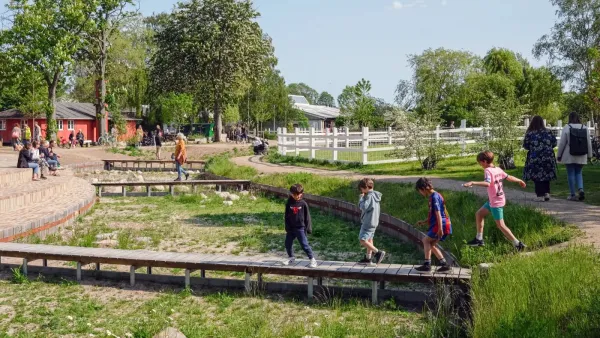
Copenhagen is losing its cool
In a city long designed to maximize light during dark Scandinavian winters, climate change is forcing the Danish capital to rethink its relationship with the sun.
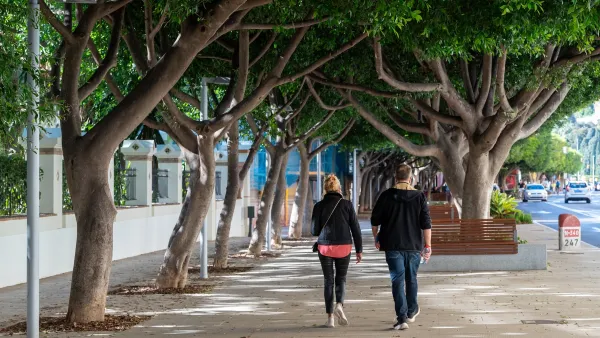
Green blocks are up to 4 degrees cooler than treeless streets
The difference in temperature created by urban trees can translate to as much as 40% less excess heat.

The state-sanctioned urbicide of Austin
People don’t kill cities. Freeways do.

US to reduce Colorado River water deliveries to Mexico
A new Colorado Treaty amendment reduces Mexico’s Colorado River water allocation by 250,000 acre feet.

New Jersey’s second-largest city bans standalone data centers
Jersey City will continue to allow co-location facilities, such as those meant for research institutions that store their own data.

Amtrak not solely to blame for New Jersey commuter rail's unreliability, report finds
A new study from the Garden State Initiative found that NJ Transit’s budget grew 20% across a 4 year period, but reliability declined significantly over the same period.

EPA erases limits on planet-warming pollution from power plants
Under Monday’s plan, power plants would still have some limits on how much mercury, arsenic and other contaminants they can emit.

Phoenix announces new on-demand transit service, more frequent RAPID buses
Both new services will launch in October, and are part of Phoenix's Project Effective Access Solutions for Easing Congestion.

FREE Course: Walkable City 1: Why Walkability?
After describing his path towards focusing on walkability as the essence of good planning, Jeff Speck marches through his five principal reasons for making more walkable places.
Reinventing Malls: Planning Alchemy—Turning Gray Fields Into Gold
The course focuses on the opportunities and imperatives that shape reinvention of mall sites.

Eagle County Government
Harvard University Graduate School of Design
Nashville Planning Department
The Architects Foundation
University of Cincinnati Online
The Pocatello Development Authority
The Urban Renewal Agency of the City of Pocatello
Journal of the American Planning Association