A North Carolina study sheds light on inequities in road safety interventions.


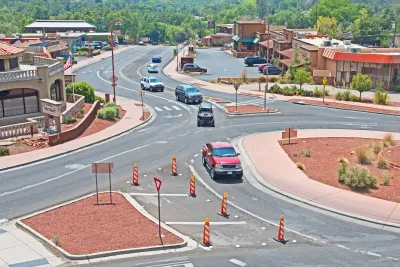
A new study from UNC Chapel Hill reveals that roundabouts, the circular intersection design shown to reduce injury crashes by 80 percent, are disproportionately sited in wealthy neighborhoods in North Carolina.
According to an article by Kea Wilson in Streetsblog USA, the study’s authors wanted to assess whether patterns of inequity are reproduced in transportation planning. “But for study author Matthew Bhagat-Conway, the distribution of roundabouts is only an example of larger inequalities in transportation planning, albeit one that's particularly easy to study in statewide databases – and it likely extends beyond the college-town streets that initially inspired the study.”
The inequity stems in part from the way transportation funding is allocated. Safety innovations are more likely to be implemented when new roads are built or existing roads are expanded. “And since policymakers don't always pay the same attention to the safety concerns from the very poor as they do to, say, rich campaign donors, low-income residents tend to remain stuck in aging neighborhoods with the same kind of traffic signals and signs they've always had, rather than cutting-edge safety initiatives like roundabouts — even though their neighborhoods tend to have the highest crash rates, particularly for pedestrians.”
Read the full story: Are Roundabouts Just For Rich People?

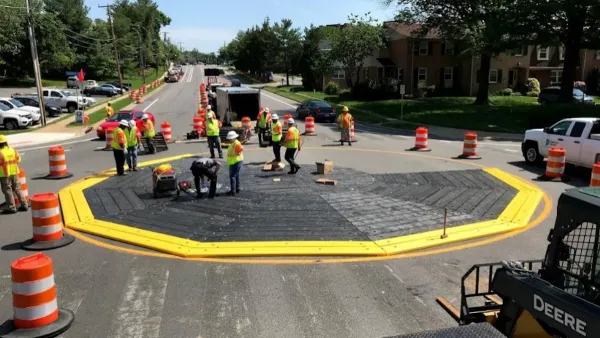
‘Modular Roundabouts’ Offer Quick-Build Traffic Safety Solution
The prefabricated roundabouts can be installed more quickly and at a much lower cost than traditional concrete traffic circles.
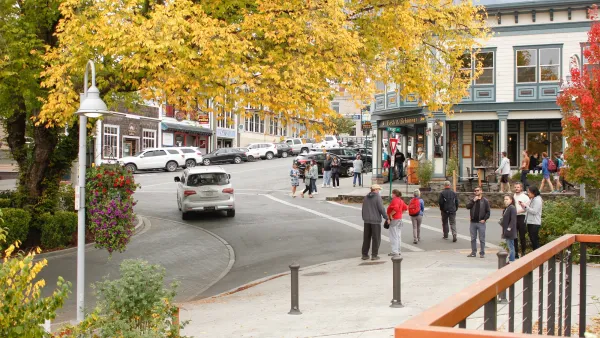
Washington state has quietly built over 600 roundabouts
Nationwide data shows that roundabouts reduce injuries in crashes by 72%.

How I Learned to Stop Worrying and Love the Roundabout
What drives the U.S. backlash to roundabouts — objectively safer and more efficient than stop-and-go intersections?

Planetizen Federal Action Tracker
A weekly monitor of how Trump’s orders and actions are impacting planners and planning in America.

California plans to bury El Niño’s downpour
If the state plays its cards right, it may be able to store a billion acre-feet of El Niño’s water in aquifers.

Chicago breaks ground on $3 billion megadevelopment
The new neighborhood, titled Foundry Park, will one day host 3,700 residences.

Satanic Place Names
From streams and lakes to valleys and canyons, I mapped more than 1,000 places named after the Devil.

California High-Speed Rail Authority CEO resigns after $600,000 scandal
Under Ian Choudri, the authority used taxpayer dollars to fund first class flights and trips to nightclubs.

Want to study the Missouri River? Soon, you may need unanimous approval from 10 states
Legislation would require 10 governors’ permission to study or build projects moving water outside the basin.

FREE Course: Walkable City 1: Why Walkability?
After describing his path towards focusing on walkability as the essence of good planning, Jeff Speck marches through his five principal reasons for making more walkable places.
Reinventing Malls: Planning Alchemy—Turning Gray Fields Into Gold
The course focuses on the opportunities and imperatives that shape reinvention of mall sites.

City of Rosemead
Rutgers University, Edward J. Bloustein School of Planning and Public Policy
One Hundred Miles
Hunter College, City University of New York (CUNY)
The Architects Foundation
University of Cincinnati Online
City of Cambridge
Montrose County
The Pocatello Development Authority