City leaders hope the new incentive will spur the redevelopment of some of the city’s 30,000 square feet of vacant office space into housing.



Over the last four years, San Francisco’s efforts to encourage the redevelopment of office buildings into housing through relaxed zoning regulations, reduced fees, and other incentives have yielded no results.
Now, as the city stares down 30 million square feet of vacant office space, Mayor Dan Lurie announced “one last big juicy incentive” that could turn things around: “On Thursday Lurie signed legislation that establishes a special financing district to support residential conversions,” reports J.K. Dineen in the San Francisco Chronicle.
Eligible projects in the new district, which spans the Financial District, Union Square, parts of SoMa, and part of the Market Street corridor, will receive 30 years of annual incentive payments backed by future increases in property tax revenue. The program could save developers between 10 and 20 percent on building and development costs.
According to Dineen, “City Planners think there are about 48 buildings ripe to take advantage of the incentive program — mostly historic Class B and C structures with operable windows and small enough floorplates to give the units ample natural light.” If all 48 buildings were to convert to apartments or condos, it could create roughly 4,400 new units of housing.
FULL STORY: S.F. has zero office conversion projects. Could this new legislation make a difference?

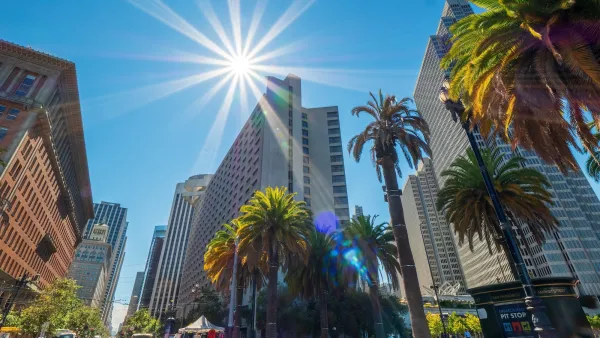
Office conversion is picking up steam in San Francisco
The city spent five years streamlining approval processes and reducing fees to encourage more adaptive reuse of vacant office buildings.
Minnesota Seeks State Support for Office Conversions
The 30% “CUB credit” would support the conversion of buildings 15 years or older into any use that “will return that vacant area to an income-producing, habitable condition.”
California Law Would Streamline Adaptive Reuse Process
A bill passed by the state senate would ease the permitting process for office conversions in central city neighborhoods.

The state-sanctioned urbicide of Austin
People don’t kill cities. Freeways do.

US to reduce Colorado River water deliveries to Mexico
A new Colorado Treaty amendment reduces Mexico’s Colorado River water allocation by 250,000 acre feet.

New Jersey’s second-largest city bans standalone data centers
Jersey City will continue to allow co-location facilities, such as those meant for research institutions that store their own data.

Amtrak not solely to blame for New Jersey commuter rail's unreliability, report finds
A new study from the Garden State Initiative found that NJ Transit’s budget grew 20% across a 4 year period, but reliability declined significantly over the same period.

EPA erases limits on planet-warming pollution from power plants
Under Monday’s plan, power plants would still have some limits on how much mercury, arsenic and other contaminants they can emit.

Phoenix announces new on-demand transit service, more frequent RAPID buses
Both new services will launch in October, and are part of Phoenix's Project Effective Access Solutions for Easing Congestion.

FREE Course: Walkable City 1: Why Walkability?
After describing his path towards focusing on walkability as the essence of good planning, Jeff Speck marches through his five principal reasons for making more walkable places.
Reinventing Malls: Planning Alchemy—Turning Gray Fields Into Gold
The course focuses on the opportunities and imperatives that shape reinvention of mall sites.

Eagle County Government
Harvard University Graduate School of Design
Nashville Planning Department
The Architects Foundation
University of Cincinnati Online
The Pocatello Development Authority
The Urban Renewal Agency of the City of Pocatello
Journal of the American Planning Association