While officials tout the return of coal power as the answer to the affordability crisis, critics point to America’s aging coal infrastructure as a pain point in its return.


The Trump administration has vowed to keep coal plants open in an effort to meet surging electricity and consumer costs, MSN reports. “The goal is 100% open,” Jennifer A. Dlouhy and Will Wade reported Interior Secretary Doug Burgum stating.
US coal consumption has experienced significant decline due to the shift toward cheaper alternatives, like natural gas, wind and solar. Coal once accounted for more than half of American electricity generation. In 2025 it accounted for 17 percent.
Andy Blumenfeld, director of data analytics at McCloskey by Opis weighed in, noting that continuing coal power generation is only a short term strategy due to the significant maintenance required to maintain the nation’s stable of aging plants, which the Department of Energy has already set aside $525 million to begin addressing. “We need the power, and the coal units are there now. But in the long term, they’re up against an aging coal fleet,” said Blumenfeld.
Read the full story below.
FULL STORY: Trump Officials Vow to Keep All US Coal Plants Running

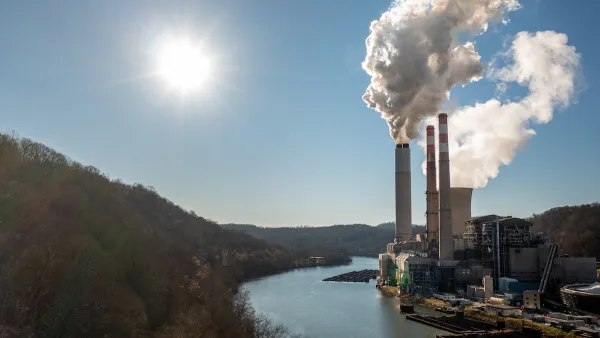
Red States Challenge Biden Rules That Threaten Coal Power Plants
The publication in the Federal Register on May 9 of the Environmental Protection Agency's New Source Performance Standards for Greenhouse Gas Emissions from new power plants triggered the filing of 25 lawsuits from Republican-led states.
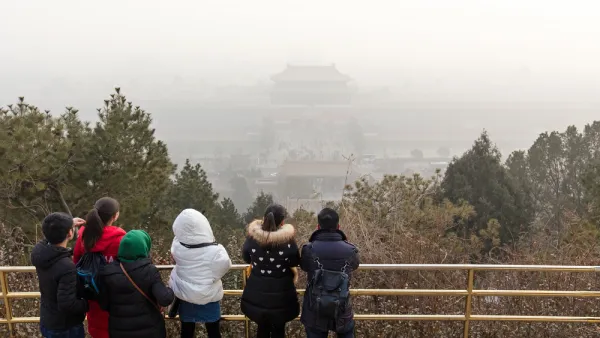
Spare the Air: Beijing to Drastically Reduce Coal Use
Beijing promises "extraordinary" measures to reduce pollution in the infamously smoggy city.
Coal Industry: Down but Not Out
It's easy to focus on the shrinking market share and layoffs in the coal industry and see the demise of the industry, but construction of new coal burning power plants is still booming in countries like China and India.

Planetizen Federal Action Tracker
A weekly monitor of how Trump’s orders and actions are impacting planners and planning in America.

The state-sanctioned urbicide of Austin
People don’t kill cities. Freeways do.

US to reduce Colorado River water deliveries to Mexico
A new Colorado Treaty amendment reduces Mexico’s Colorado River water allocation by 250,000 acre feet.

5 New England states march closer to 800 megawatt wind energy project
Securing federal approval for the project may be complicated under the Trump administration, which has historically been hostile towards domestic wind power.

Baltimore to break ground on $50 million Transit Priority Project
The project will bring faster bus trips, safer streets and better bike connections to Baltimore.

Airbnb launches $250 million 'last-dollar financing' housing accelerator, makes first investment in Austin
The company will put $6.4 million towards affordable housing development in Texas’ capital.

FREE Course: Walkable City 1: Why Walkability?
After describing his path towards focusing on walkability as the essence of good planning, Jeff Speck marches through his five principal reasons for making more walkable places.
Reinventing Malls: Planning Alchemy—Turning Gray Fields Into Gold
The course focuses on the opportunities and imperatives that shape reinvention of mall sites.


Eagle County Government
Harvard University Graduate School of Design
Nashville Planning Department
The Architects Foundation
University of Cincinnati Online
The Pocatello Development Authority
The Urban Renewal Agency of the City of Pocatello
Journal of the American Planning Association