The city’s Missing Middle Infill Housing program supports development in distressed neighborhoods.


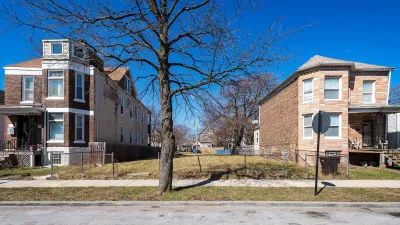
The first project approved as part of Chicago’s Missing Middle Infill Housing Initiative broke ground in the North Lawndale neighborhood, a development that will bring seven two-flats to several vacant lots.
As Michael Liptrot explains in Block Club Chicago, “The Missing Middle initiative looks to revitalize and repopulate neighborhoods by building new, for-sale housing attainable to families looking to own in areas where such housing stock has been hollowed out. The initiative sells city-owned lots in the program to developers for $1, with the city subsidizing up to $150,000 per unit to develop for-sale housing.”
The first series of projects by Austin developer Citizens Building a Better Community is underway, and four more projects are expected to break ground this year.
According to Liptrot, “Funding for subsidies comes from Mayor Brandon Johnson’s $1.25 billion housing and economic development bond.”
Read the full story: ‘Missing Middle’ Housing Program Breaks Ground On 1st Project In North Lawndale

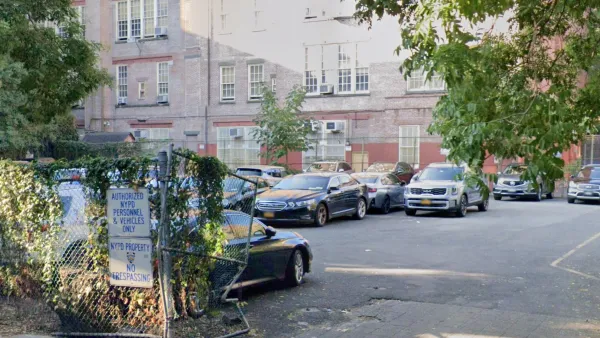
NYPD parking lot to become affordable housing as part of Mamdani's Block by Block initiative
The city awarded the lot to a group of developers to build a mixed-use project with 131 housing units.
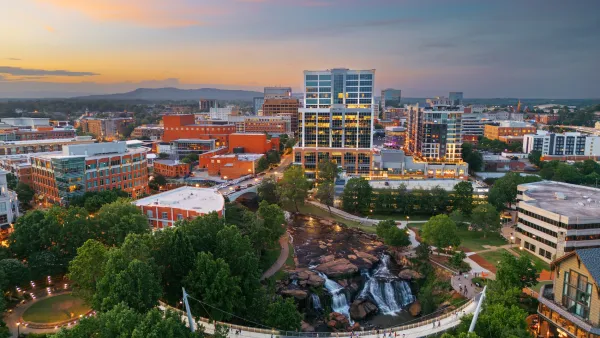
Greenville, SC pushes for missing middle housing
The city recently overhauled its zoning rules to permit more 'low-intensity' housing options.
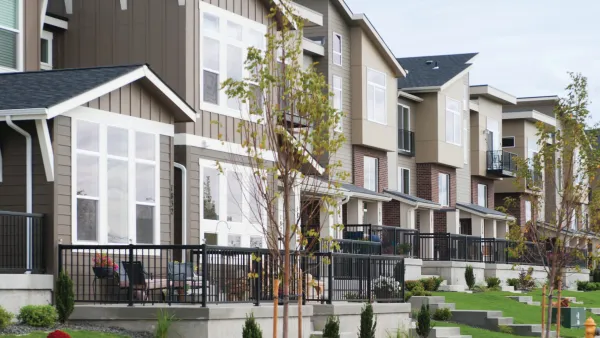
'Missing middle housing' accounted for nearly 20% of Spokane permits in 2025
Recent laws making it easier and less costly to build smaller residential buildings are having their intended effect.

Planetizen Federal Action Tracker
A weekly monitor of how Trump’s orders and actions are impacting planners and planning in America.

The state-sanctioned urbicide of Austin
People don’t kill cities. Freeways do.

US to reduce Colorado River water deliveries to Mexico
A new Colorado Treaty amendment reduces Mexico’s Colorado River water allocation by 250,000 acre feet.

Brightline West’s future may rely on $6 billion federal loan
The company has until Nov. 2 to make a $400 million equity investment into its proposed high-speed rail line.

LA Metro’s ultimatum: no extra buses for LA28 if federal funding isn’t imminently secured
If Metro does not provide additional buses, LA28 organizers will have to find a new way to manage Olympic traffic. LA28’s budget does not include a line item for transit.

Colorado’s Largest Data Center Could Rise Next to Homes — Without a Public Hearing
The proposed campus would consume 11 times the power of Denver International Airport; as it has across the country, opposition mounts.

FREE Course: Walkable City 1: Why Walkability?
After describing his path towards focusing on walkability as the essence of good planning, Jeff Speck marches through his five principal reasons for making more walkable places.
Reinventing Malls: Planning Alchemy—Turning Gray Fields Into Gold
The course focuses on the opportunities and imperatives that shape reinvention of mall sites.

Eagle County Government
Harvard University Graduate School of Design
Nashville Planning Department
The Architects Foundation
University of Cincinnati Online
The Pocatello Development Authority
The Urban Renewal Agency of the City of Pocatello
Journal of the American Planning Association