The city recently overhauled its zoning rules to permit more 'low-intensity' housing options.


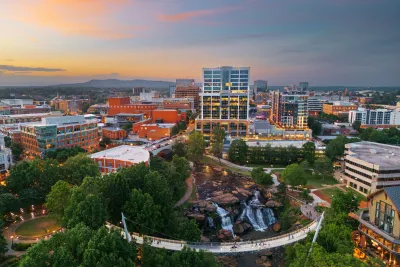
The city of Greenville, South Carolina is exploring ways to support missing middle housing to grow the city's housing supply and improve affordability.
According to an article by Megan Fitzgerald in Greenville Journal, "Mary Douglas Hirsch, the city’s director of planning and development, said missing middle housing is 'gentle density' that can be used for infill development within the city."
After commissioning a study of regulatory barriers to housing production in Greenville city and county, the city and county councils adopted the GVL2040 Comprehensive Plan, which "promotes missing middle housing strategies and outlines areas within the city suitable for this housing type, such as around downtown Greenville, Augusta Street and the Village of West Greenville."
In 2023, the city overhauled its zoning and land use regulations to remove barriers to missing middle housing and create a new Neighborhood-Scale Zoning Districts designation. "Neighborhood-Scale Zoning Districts allow low-intensity housing options ranging from 2.5 to 3 stories tall. These buildings can accommodate between 4 and 12 residential units, with a 16-unit max when the development bonus is applied."
City officials are looking for ways to eliminate other barriers to middle housing production such as financing issues and utility fees. "Planning staff is also interested in completing a pilot project for missing middle housing on city-owned land in partnership with a home builder."
FULL STORY: ‘Missing middle’ momentum: Greenville pushes for attainable urban housing to handle growth

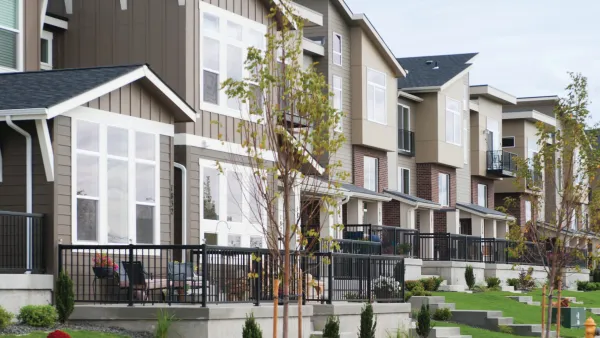
'Missing middle housing' accounted for nearly 20% of Spokane permits in 2025
Recent laws making it easier and less costly to build smaller residential buildings are having their intended effect.

Salt Lake City Slashes Lot Size, Parking Requirements for Middle Housing Zones
A new ordinance alters regulations for middle housing zones, removing barriers that made multifamily development impractical or too expensive.
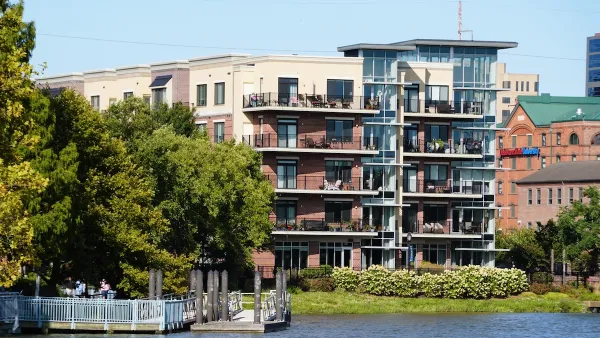
Delaware Governor Could Force Cities to Upzone
Gov. Meyer says the state will work with cities to encourage land use reforms that make room for more affordable housing types, but could take stricter measures if jurisdictions don’t comply.

The state-sanctioned urbicide of Austin
People don’t kill cities. Freeways do.

US to reduce Colorado River water deliveries to Mexico
A new Colorado Treaty amendment reduces Mexico’s Colorado River water allocation by 250,000 acre feet.

New Jersey’s second-largest city bans standalone data centers
Jersey City will continue to allow co-location facilities, such as those meant for research institutions that store their own data.

Amtrak not solely to blame for New Jersey commuter rail's unreliability, report finds
A new study from the Garden State Initiative found that NJ Transit’s budget grew 20% across a 4 year period, but reliability declined significantly over the same period.

EPA erases limits on planet-warming pollution from power plants
Under Monday’s plan, power plants would still have some limits on how much mercury, arsenic and other contaminants they can emit.

Phoenix announces new on-demand transit service, more frequent RAPID buses
Both new services will launch in October, and are part of Phoenix's Project Effective Access Solutions for Easing Congestion.

FREE Course: Walkable City 1: Why Walkability?
After describing his path towards focusing on walkability as the essence of good planning, Jeff Speck marches through his five principal reasons for making more walkable places.
Reinventing Malls: Planning Alchemy—Turning Gray Fields Into Gold
The course focuses on the opportunities and imperatives that shape reinvention of mall sites.

Eagle County Government
Harvard University Graduate School of Design
Nashville Planning Department
The Architects Foundation
University of Cincinnati Online
The Pocatello Development Authority
The Urban Renewal Agency of the City of Pocatello
Journal of the American Planning Association