Can accepting eminent domain lead to accepting the loss of other, more foundational rights?



In a piece for Fast Company, Andy Boenau makes the case against eminent domain, writing, “If you shrug at a government having the power to take stuff just because, then all your other rights and protections are up for grabs.”
Boenau describes the history of eminent domain in the United States, beginning with a Supreme Court decision in the early 19th century that allowed for government taking of property “for public use and with just compensation.” Other decisions reinforced and expanded on this idea, allowing eminent domain of private property in a variety of cases, including ones that transferred property to other private, corporate hands.
For Boenau, “taking property by force—is a power move.” Far from being a right-wing issue, property rights, Boenau asserts, should be everyone’s concern. “My most left-wing friend should be a staunch property rights advocate to hold big corporate power at bay.”
FULL STORY: The case against eminent domain


Property Owners Sue Miami for Unlawfully Taking Property via Permit Applications
The suit claims the city is using unrelated permit applications to unlawfully gain right-of-way.

TxDOT Wages Quiet Battle to Acquire Properties for I-35 Expansion
TxDOT has filed “takings lawsuits” against holdout property owners along the eight-mile stretch of I-35 slated for widening in Austin, but property owners say the agency isn't offering just compensation.
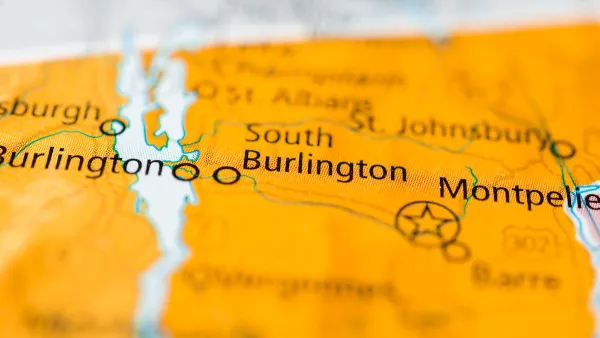
Vermont Land Use Case Could Go to Supreme Court
Property owners argue that a new law protecting wildlife corridors amounts to an unconstitutional taking of property.

The state-sanctioned urbicide of Austin
People don’t kill cities. Freeways do.

US to reduce Colorado River water deliveries to Mexico
A new Colorado Treaty amendment reduces Mexico’s Colorado River water allocation by 250,000 acre feet.

New Jersey’s second-largest city bans standalone data centers
Jersey City will continue to allow co-location facilities, such as those meant for research institutions that store their own data.

Amtrak not solely to blame for New Jersey commuter rail's unreliability, report finds
A new study from the Garden State Initiative found that NJ Transit’s budget grew 20% across a 4 year period, but reliability declined significantly over the same period.

EPA erases limits on planet-warming pollution from power plants
Under Monday’s plan, power plants would still have some limits on how much mercury, arsenic and other contaminants they can emit.

Phoenix announces new on-demand transit service, more frequent RAPID buses
Both new services will launch in October, and are part of Phoenix's Project Effective Access Solutions for Easing Congestion.

FREE Course: Walkable City 1: Why Walkability?
After describing his path towards focusing on walkability as the essence of good planning, Jeff Speck marches through his five principal reasons for making more walkable places.
Reinventing Malls: Planning Alchemy—Turning Gray Fields Into Gold
The course focuses on the opportunities and imperatives that shape reinvention of mall sites.

Eagle County Government
Harvard University Graduate School of Design
Nashville Planning Department
The Architects Foundation
University of Cincinnati Online
The Pocatello Development Authority
The Urban Renewal Agency of the City of Pocatello
Journal of the American Planning Association