The suit claims the city is using unrelated permit applications to unlawfully gain right-of-way.


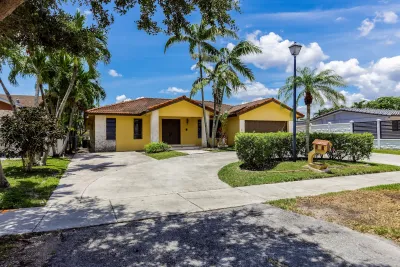
The Institute for Justice is suing the city of Miami over what it calls an unconstitutional taking of homeowner property, according to a press release from the Institute.
The suit stems from an incident in which the city requested 500 square feet of a homeowner’s front yard to expand public right-of-way after the homeowner applied for an unrelated permit to build an addition on his property.
“The city adopted a policy of demanding this expanded right-of-way from all land use permit applicants, whenever the public right-of-way over their parcel is less than the base building line. Someone might need a permit for bathroom remodeling, for a kitchen expansion, or an accessory dwelling unit. In any case, applicants must give up their land.”
The city is collecting these parcels to be able to eventually widen roads. IJ claims it has identified 66 streets with over 1,000 homes that are potentially subject to this practice. IJ claims that although cities can impose land use permitting conditions related to public safety, a city cannot legally “require that the property owner do work unrelated to safety, like giving up half their front yard.”

'Takings' Case Challenges Govt. Rights Over Federal Lands
A case over land rights in the West going back decades has been awarded to the estate of a deceased property rights activist, who contended that the Forest Service deprived his ranch of water.

Commentary: Eminent Domain is a Slippery Slope
Can accepting eminent domain lead to accepting the loss of other, more foundational rights?
Vermont Land Use Case Could Go to Supreme Court
Property owners argue that a new law protecting wildlife corridors amounts to an unconstitutional taking of property.

Planetizen Federal Action Tracker
A weekly monitor of how Trump’s orders and actions are impacting planners and planning in America.

The state-sanctioned urbicide of Austin
People don’t kill cities. Freeways do.

US to reduce Colorado River water deliveries to Mexico
A new Colorado Treaty amendment reduces Mexico’s Colorado River water allocation by 250,000 acre feet.

5 New England states march closer to 800 megawatt wind energy project
Securing federal approval for the project may be complicated under the Trump administration, which has historically been hostile towards domestic wind power.

Baltimore to break ground on $50 million Transit Priority Project
The project will bring faster bus trips, safer streets and better bike connections to Baltimore.

Airbnb launches $250 million 'last-dollar financing' housing accelerator, makes first investment in Austin
The company will put $6.4 million towards affordable housing development in Texas’ capital.

FREE Course: Walkable City 1: Why Walkability?
After describing his path towards focusing on walkability as the essence of good planning, Jeff Speck marches through his five principal reasons for making more walkable places.
Reinventing Malls: Planning Alchemy—Turning Gray Fields Into Gold
The course focuses on the opportunities and imperatives that shape reinvention of mall sites.

Eagle County Government
Harvard University Graduate School of Design
Nashville Planning Department
The Architects Foundation
University of Cincinnati Online
The Pocatello Development Authority
The Urban Renewal Agency of the City of Pocatello
Journal of the American Planning Association