The outgoing mayor claims credit for hundreds of thousands of new homes. The truth is more complicated.


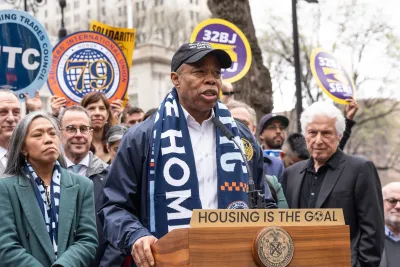
Outgoing New York City Mayor Eric Adams claims his administration “created, preserved, or planned” over 400,000 new homes, writes Christopher Bonanos in Curbed. What actually got built?
According to Bonanos, “the short answer is: Less than you’d hope, but more than you might think.”
Bonanos outlines the administration’s successes in trash containerization and reform around scaffolding, but says it fell short when it came to streetscape building and road safety interventions. The new rules on outdoor dining setups practically decimated the successful pandemic-era program.
As far as housing, “The actual number of homes produced in these years via the Department of Housing Preservation and Development is, per City Hall, nearly 86,000 — certainly not nothing, especially if you are one of those 86,000 families.” And while City of Yes legalized ADUs, just 98 of them are currently under construction.
Bonanos points out that it’s difficult for any mayor to get much housing built in one term, so the true impact of City of Yes will likely be visible several years down the line.
Read the full story: What Did Eric Adams Build?


Lawsuit Aims to Stop NYC’s ‘City of Yes’ Zoning Reforms
A lawsuit brought by local lawmakers and community groups claims the plan failed to conduct a comprehensive environmental review.

NYC Council Approves Brooklyn Rezoning Plan
The Atlantic Avenue Mixed Use Plan includes infrastructure investments and could bring 4,600 new housing units to parts of Brooklyn.

Will New York ‘City of Yes’ Proposal Make an Impact?
Some housing experts say the rezoning plan is not nearly ambitious enough to make a dent in the city’s housing crisis.

Planetizen Federal Action Tracker
A weekly monitor of how Trump’s orders and actions are impacting planners and planning in America.

California plans to bury El Niño’s downpour
If the state plays its cards right, it may be able to store a billion acre-feet of El Niño’s water in aquifers.

Chicago breaks ground on $3 billion megadevelopment
The new neighborhood, titled Foundry Park, will one day host 3,700 residences.

California High-Speed Rail Authority CEO resigns after $600,000 scandal
Under Ian Choudri, the authority used taxpayer dollars to fund first class flights and trips to nightclubs.

Want to study the Missouri River? Soon, you may need unanimous approval from 10 states
Legislation would require 10 governors’ permission to study or build projects moving water outside the basin.

Desperate measures: Advocates weigh draining Lake Powell to fill Colorado River
Draining the reservoir could reduce evaporation losses by a couple hundred thousand acre-feet.

FREE Course: Walkable City 1: Why Walkability?
After describing his path towards focusing on walkability as the essence of good planning, Jeff Speck marches through his five principal reasons for making more walkable places.
Reinventing Malls: Planning Alchemy—Turning Gray Fields Into Gold
The course focuses on the opportunities and imperatives that shape reinvention of mall sites.

City of Rosemead
Rutgers University, Edward J. Bloustein School of Planning and Public Policy
One Hundred Miles
Hunter College, City University of New York (CUNY)
The Architects Foundation
University of Cincinnati Online
City of Cambridge
Montrose County
The Pocatello Development Authority