The agency’s efforts to repair its Silverliner fleet is being hampered by supply chain delays.


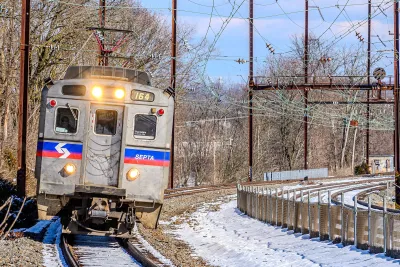
The Southeastern Pennsylvania Transportation Authority (SEPTA) is borrowing 10 train cars from the Maryland Area Regional Commuter Rail (MARC) as it manages delays in repairs on its Silverliner IV fleet, whose vehicles were involved in five fires, reports Molly McVety for PhillyVoice.
“The transit authority said this week that it will not meet a federally-mandated deadline to add thermal sensors to its Silverliner IV cars, because there is a shortage of wire needed to complete the repairs.” It will use MARC cars “where needed” on its Regional Rail lines, where reliability should “gradually improve.”
SEPTA is using funding from a $220 allocation from the state’s Public Transit Trust Fund to lease the cars and add capacity while the SEPTA fleet undergoes repairs. “SEPTA needed 39,000 feet of wire for the entire fleet and as of Friday morning, 7,000 is still needed to complete the project.” The agency expects to restore full service by Christmas.
Read the full story: SEPTA receives MARC cars to ease Regional Rail disruptions, but a supply shortage is delaying Silverliner repairs

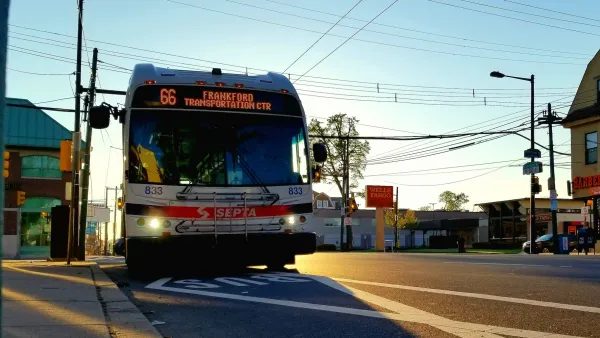
SEPTA's bus-mounted lane enforcement cameras cut travel times by up to 6%
The AI-assisted cameras have issued nearly 200,000 citations to drivers blocking bus lanes.
SEPTA Narrowly Avoids Strike, Walkout Still Possible
Negotiations continue this week between SEPTA officials and union leaders.
Lawsuit Challenges SEPTA Fare Hikes
A class action suit calls fare raises an “arbitrary and capricious action” that required public hearings.

Planetizen Federal Action Tracker
A weekly monitor of how Trump’s orders and actions are impacting planners and planning in America.

California plans to bury El Niño’s downpour
If the state plays its cards right, it may be able to store a billion acre-feet of El Niño’s water in aquifers.

Chicago breaks ground on $3 billion megadevelopment
The new neighborhood, titled Foundry Park, will one day host 3,700 residences.

Satanic place names
From streams and lakes to valleys and canyons, I mapped more than 1,000 places named after the Devil.

California High-Speed Rail Authority CEO resigns after $600,000 scandal
Under Ian Choudri, the authority used taxpayer dollars to fund first class flights and trips to nightclubs.

Want to study the Missouri River? Soon, you may need unanimous approval from 10 states
Legislation would require 10 governors’ permission to study or build projects moving water outside the basin.

FREE Course: Walkable City 1: Why Walkability?
After describing his path towards focusing on walkability as the essence of good planning, Jeff Speck marches through his five principal reasons for making more walkable places.
Reinventing Malls: Planning Alchemy—Turning Gray Fields Into Gold
The course focuses on the opportunities and imperatives that shape reinvention of mall sites.

City of Rosemead
Rutgers University, Edward J. Bloustein School of Planning and Public Policy
One Hundred Miles
Hunter College, City University of New York (CUNY)
The Architects Foundation
University of Cincinnati Online
City of Cambridge
Montrose County
The Pocatello Development Authority