AI promises more engagement more efficiently and, finally, a solution to those empty consultation rooms. The reality is a little more nuanced.



This article is part of an ongoing column on AI and planning by urban planner and AI expert, Tom Sanchez. Learn more about Tom and read more installments of his column.
ALSO: Tom’s new book Artificial Intelligence for Urban Planning was recently published by Routledge. The book discusses how planners can effectively use AI in their daily practices, engage constructively with technical specialists, and critically assess the appropriateness of these technologies in different planning contexts. Check it out.
Ask any urban planner what part of the job is hardest, and you’ll often hear the same answer: engaging the community. Not because planners don’t want to, but because our traditional methods make it difficult. The evening meetings, the long surveys, the endless emails, all tend to attract the same few voices while leaving many unheard.
For decades, planners have tried to fix this. We’ve held neighborhood workshops, posted notices online, and set up booths at farmers' markets. Still, participation often skews toward the well-connected and the already-engaged. Now that AI is entering the planning world, a new question has surfaced: Can AI help planners connect better with communities, or will it make things worse? I received a question about this from Charles Montgomery, author of Happy City, and I’ve also been thinking about this topic over the past several years. And as usual, the answer is that it all depends.
The Promise: A New Way to Listen
The best-case scenario is that AI works like a powerful microphone for planners, amplifying voices we might otherwise miss and helping us hear more people, in more ways, than ever before.
Cities are already experimenting with this idea. A few are using tools like Zencity and Polis to sort through huge numbers of public comments, including emails, online surveys, and neighborhood Facebook posts, and then pull out the main themes people keep talking about. This used to take staff weeks. Now it can happen in minutes.
Take Long Beach, California. The city has used Zencity, which is an AI-supported “sentiment analysis” tool, to understand what people think about issues such as COVID policies, the census, and other city programs. Instead of reading through thousands of social media posts and survey responses one by one, staff can see patterns in what residents are talking about and how they feel. For example, Zencity reports have helped the city understand how residents respond to public health measures and where there is confusion or resistance, which has shaped how Long Beach communicates and adjusts its outreach.
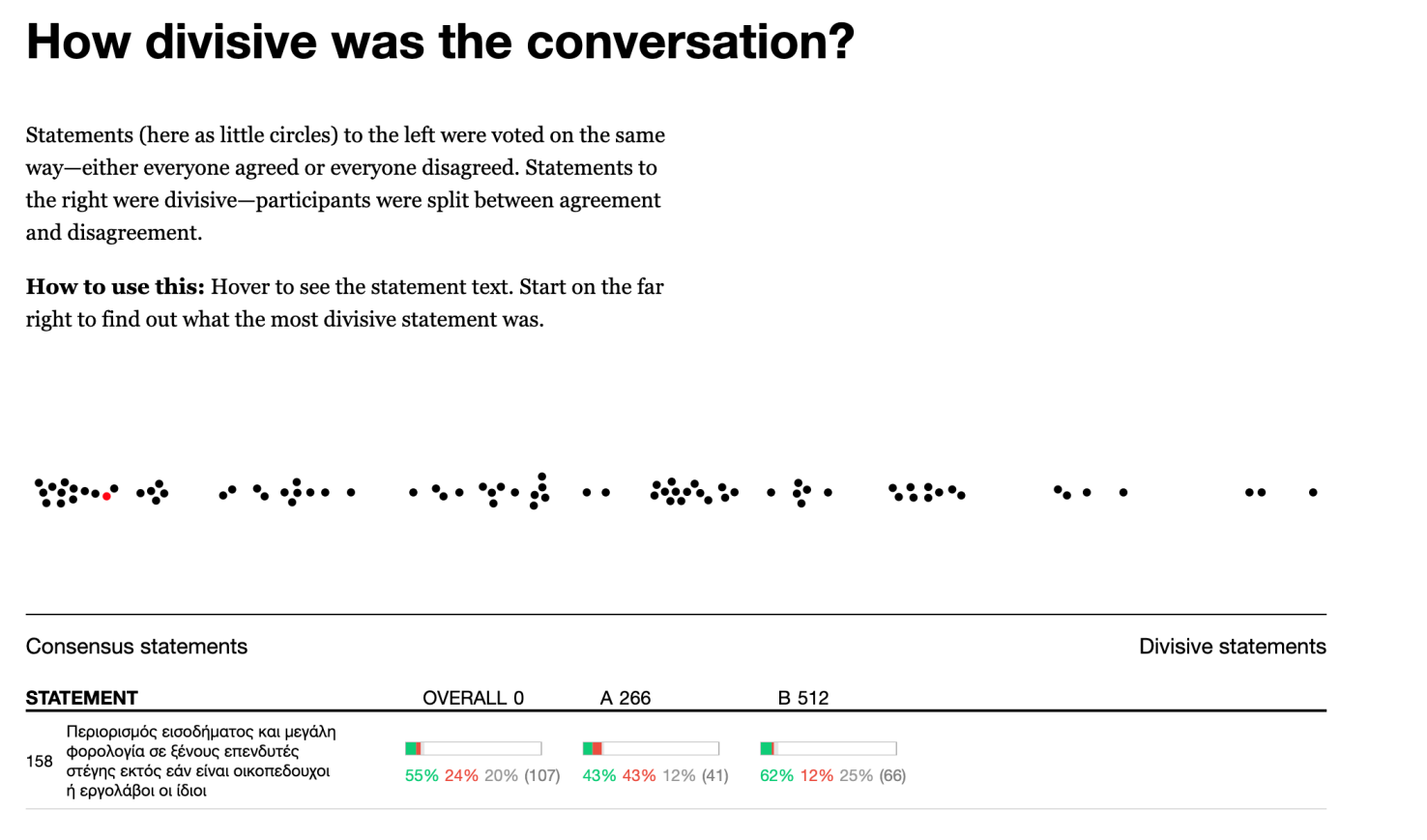
In the Grecian cities of Athens and Thessaloniki, city leaders worked with a civic tech group called AstyLab to use Polis to bring residents into the conversation about the rapid spread of Airbnb-style rentals. People were invited through workshops and online messages to talk about how short-term rentals were affecting everyday life, including rising housing costs, noise issues, building security, and the overall feel of their neighborhoods. Polis did more than simply count responses. It grouped comments to reveal where people agreed and where they held different views. It also helped highlight concerns that many residents shared, such as the pressure on rents and the worry that neighborhoods were losing their long-term sense of community. This gave local officials a clearer and more balanced picture of how people were experiencing the issue and what types of regulations might be appropriate. The example is documented by the Computational Democracy Project through AstyLab’s case study of Airbnb discussions in Greek cities.
In both examples, AI did not replace public engagement. It helped make sense of it. Instead of wading through scattered comments, planners could more easily see the larger patterns in what people were saying and thinking. This leads to better conversations, better decisions, and a better understanding of what communities truly want.

Other cities are trying out chatbots like Citibot, which can answer residents’ questions in plain language at any time. In Arlington, Texas, for example, the city launched Citibot so people can text questions or use a web chat to get quick answers about services. The city explains that residents can “report issues and ask a question to get a quick and accurate response using the city website and a mobile device.” Citibot also supports more than 70 languages, which Arlington notes helps residents “access assistance in the language they are most comfortable using.” This same approach can be used for planning and development matters where you could text a city chatbot at midnight to ask, “What is being built near my block?” and get an answer within seconds. Tools like this are making it possible for planners to listen more widely, respond more quickly, and show people that their questions matter.
The Reality: New Risks, Old Problems
However, we’ve seen where technology can solve one problem while creating another. AI is no different.
The first problem is bias (which I also touch upon in my October 30th column). AI tools learn from the data they’re given, and if that data overrepresents certain groups, like people who post online more frequently, then the model’s conclusions will be skewed. If the loudest voices dominate the digital conversation, AI may reinforce existing inequalities rather than reduce them. Recent research on “smart engagement” in five small U.S. cities found that digital tools such as online surveys and web-based outreach drew much higher participation from non-Hispanic White residents than from racial and ethnic minority communities. In other words, the cities collected plenty of input, but it reflected a narrow slice of who actually lives there. Suppose an AI system is trained on this kind of imbalanced input. In that case, it is much more likely to reinforce existing inequalities than to help planners bring quieter or historically underrepresented voices into the conversation.
Privacy is another major concern. Many AI-enabled engagement tools collect or analyze data from public platforms or public participation processes, yet people are not always aware of how their input might be used. A well-known example comes from the Sidewalk Toronto project on the city’s waterfront. During the planning phase, residents learned that data collected through public engagement, open houses, kiosks, and even sensors in public space could be fed into algorithms used to shape the district’s design. Privacy advocates argued that participants never expected their comments or behaviors to become part of a large-scale data system. The resulting backlash was so strong that several oversight commissioners resigned, and the project was eventually canceled, in part due to unresolved concerns about data use and consent. This case shows how easily trust can erode when residents do not fully understand how their information might be analyzed or repurposed.
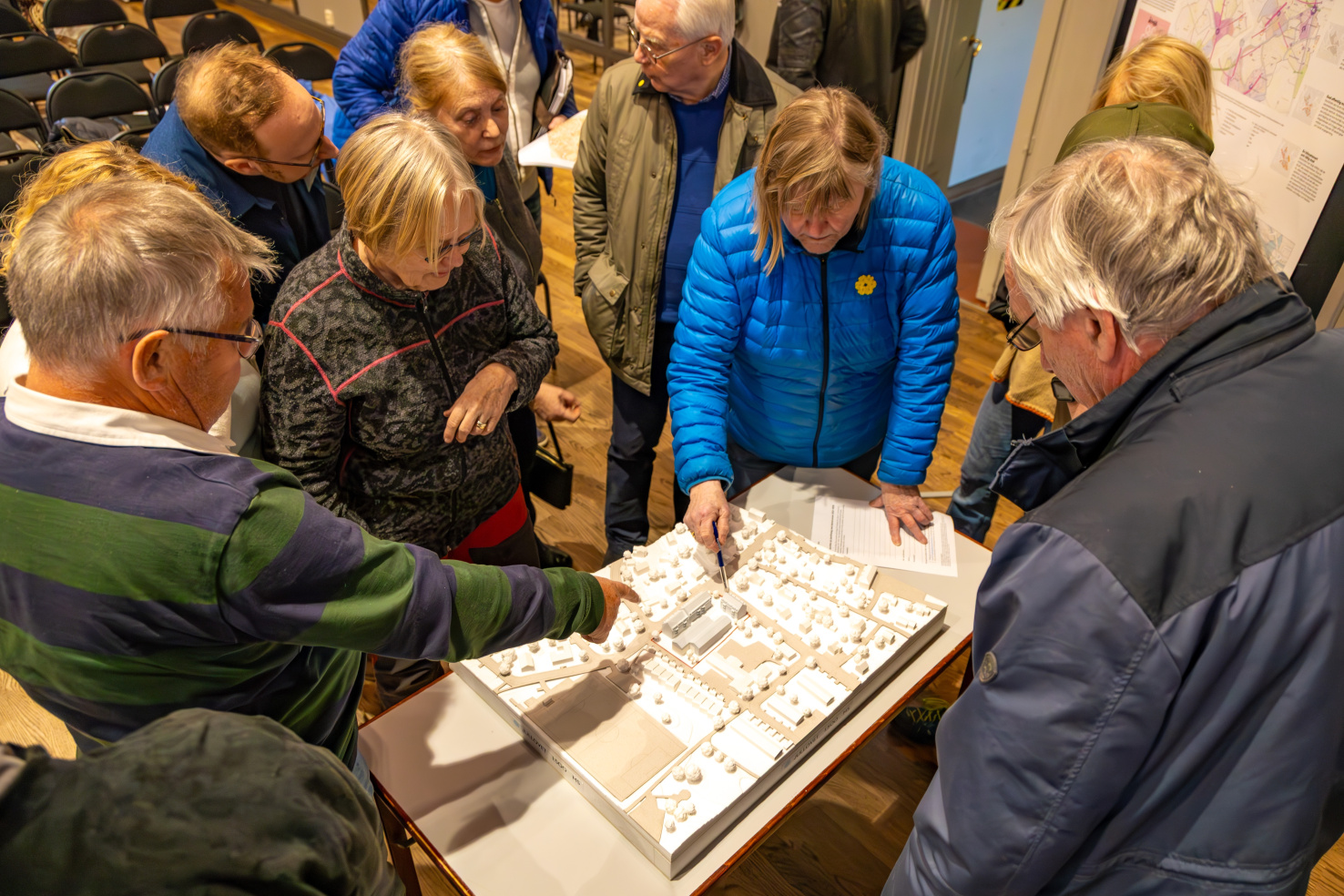
And finally, there is the human factor. Engagement is not just about collecting words on a screen. It is also about empathy, tone, body language, and the shared experience of talking with someone who is genuinely listening. At a public meeting, planners notice things that no algorithm can capture. A resident might pause before answering, or gesture toward a map with hesitation, or glance at a neighbor for reassurance before speaking. These small signals often reveal more about someone’s concerns than the actual words they use. A chatbot cannot nod to show understanding, cannot soften its voice when the conversation turns emotional, and cannot sense the frustration or fear that may lie beneath a simple question. The risk is that planners may start leaning too heavily on automated tools because they are fast and efficient, and gradually lose the human trust-building that comes from being present with people. When engagement becomes too automated, residents may feel like they are talking to a system rather than a person, which can erode the very relationships that planning depends on.
Listening Better, Not Less
When it comes to AI and community engagement, it’s easy to get stuck in extremes by either fearing a dystopian future where algorithms replace public meetings, or embracing a tech utopia where machines magically fix participation. Reality is obviously much more nuanced.
I think AI has the potential to make planning more inclusive, transparent, and responsive, but only if we design it with care. That means asking hard questions like, Who’s represented in the data? Who’s missing? How are we communicating what the tools are doing? And are we using this technology to deepen engagement or simply to check a box? The same questions we should already be asking. I suggest using these same “smart” tools to help us improve, advance, and innovate our processes.
The irony is that the loudest critics of AI in planning are pointing us in the right direction. Their concerns, about bias, distance, and empathy are exactly what planners should focus on. If we take those warnings seriously, we can use AI to close the gap between planners and the people they serve, not widen it.
As this column discusses, AI can help to connect more community voices, make it easier to spot patterns in huge amounts of feedback, and give people better access to information. But it also comes with some real risks, such as repeating old biases, leaving people unsure about how their input is being used, or taking some of the human connection out of engagement. With that in mind, here are some practical do’s and don’ts for using AI tools that I suggest:
Dos
- Use AI to hear from more people, not just to go faster.
- Pay attention to who’s actually showing up in the data, especially when comments come from social media or online platforms.
- Be upfront about how people’s input will be collected, analyzed, and used.
- Combine AI insights with real conversations so you don’t lose the tone, emotion, or context behind what people are saying.
- Think of AI as one more way to understand what the community cares about, not a replacement for your own judgment.
Don’ts
- Don’t assume online feedback represents everyone, especially if certain groups are more likely to participate.
- Don’t depend only on automated summaries without asking whose voices are missing.
- Don’t collect or use people’s input in ways they wouldn’t expect. This is a quick way to lose trust.
- Don’t let chatbots or automated tools handle complicated or sensitive questions on their own.
- Don’t let efficiency take priority over empathy; fast responses aren’t the same as real listening.
AI can help planners hear from more residents and understand what really matters to them, but only if we use it thoughtfully. These tools should make public engagement clearer, easier, and more inclusive, without replacing the real conversations that build trust. When used well, AI should strengthen connections between planners and stakeholders in shaping community futures.


Planetizen Federal Action Tracker
A weekly monitor of how Trump’s orders and actions are impacting planners and planning in America.

Data reveals that NYC’s bet on congestion pricing has paid off
After almost two years of the program, reports show positive impacts on traffic and air quality and no disruptions to parking.

Denver is solving homelessness. Why aren't the rest of us?
Since 2023, Denver's street homeless population has decreased by 64%, proving that effective tools exist to support those in need of housing.

In California, electric school buses are powering 1,000 homes — and turning a profit
Tellus Power, the charging equipment manufacturer behind the project, is also helping school buses connect to the power grid in Vermont, Illinois and San Francisco.

‘No state has sacrificed more:’ Arizona joins Nevada, sues feds over Colorado River plan
The Arizona Department of Water Resources' motion claims that the state's cities, tribes and farmers can't survive without sufficient water from the Colorado River.

Permits for single-family homes have nosedived, along with investor confidence
Permits to build new single-family homes also hit a 3.5 year low in September.

FREE Course: Walkable City 1: Why Walkability?
After describing his path towards focusing on walkability as the essence of good planning, Jeff Speck marches through his five principal reasons for making more walkable places.
Reinventing Malls: Planning Alchemy—Turning Gray Fields Into Gold
The course focuses on the opportunities and imperatives that shape reinvention of mall sites.

City of Rosemead
Rutgers University, Edward J. Bloustein School of Planning and Public Policy
One Hundred Miles
The Architects Foundation
University of Cincinnati Online
Montrose County
Northern Illinois Transit Authority (NITA)
The Pocatello Development Authority

