Will the blue state starter home ever return?


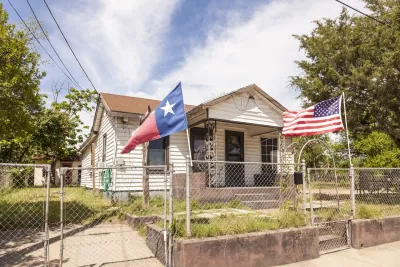
Demand for housing, a clinical term for people needing a place to live, doesn’t just disappear when supply is inadequate. It morphs and it moves. Some people endure the consequences and crowd into cramped quarters. Others simply stay put: A lack of affordable housing options is a major reason why mobility has steadily declined over time. In the 1960s, about one fifth of Americans moved homes in any given year. By 2023, just one in 13 moved.
When people do seek a new home, they tend to migrate to the places where they can afford to live. In 21st century America, that usually means the Sunbelt: the arc of high-growth cities stretching across Nevada, Arizona, Texas, Florida, Georgia and the Carolinas.
Some hold up this migration as a failure of blue state governance and a triumph of red state governance. But that’s only true across one dimension: Housing. Not everyone who moves to the Sunbelt is thrilled by the politics. Many women, queer people, immigrants and their loved ones are terrified of the policies of some of these states. Yet they migrate anyway, because the housing is affordable.
This is the great irony of American mobility in the 21st century: The most welcoming states, in practice, are those with some of the cruelest policies for marginalized groups. The most exclusionary states, in practice, are the ones with the most welcoming rhetoric. As Sunbelt states grow bigger and more diverse, some are gradually turning purple. It’s possible that their openness to new housing construction might eventually yield a politics of greater compassion. But that’s a big if.
The more likely scenario is that Republicans will gain strength at the expense of Democrats. If current demographic trends hold, blue states are set to lose 12 electoral college votes to red states by the 2032 election. Democrats have dug themselves into a deep hole with the housing policies in the states they govern.
Expensive blue states could learn from the Sunbelt’s generally pro-housing approach, but not their urban planning principles. Most of the development happening in states like Texas is of the sprawl variety: large, energy inefficient homes accessible only by car.
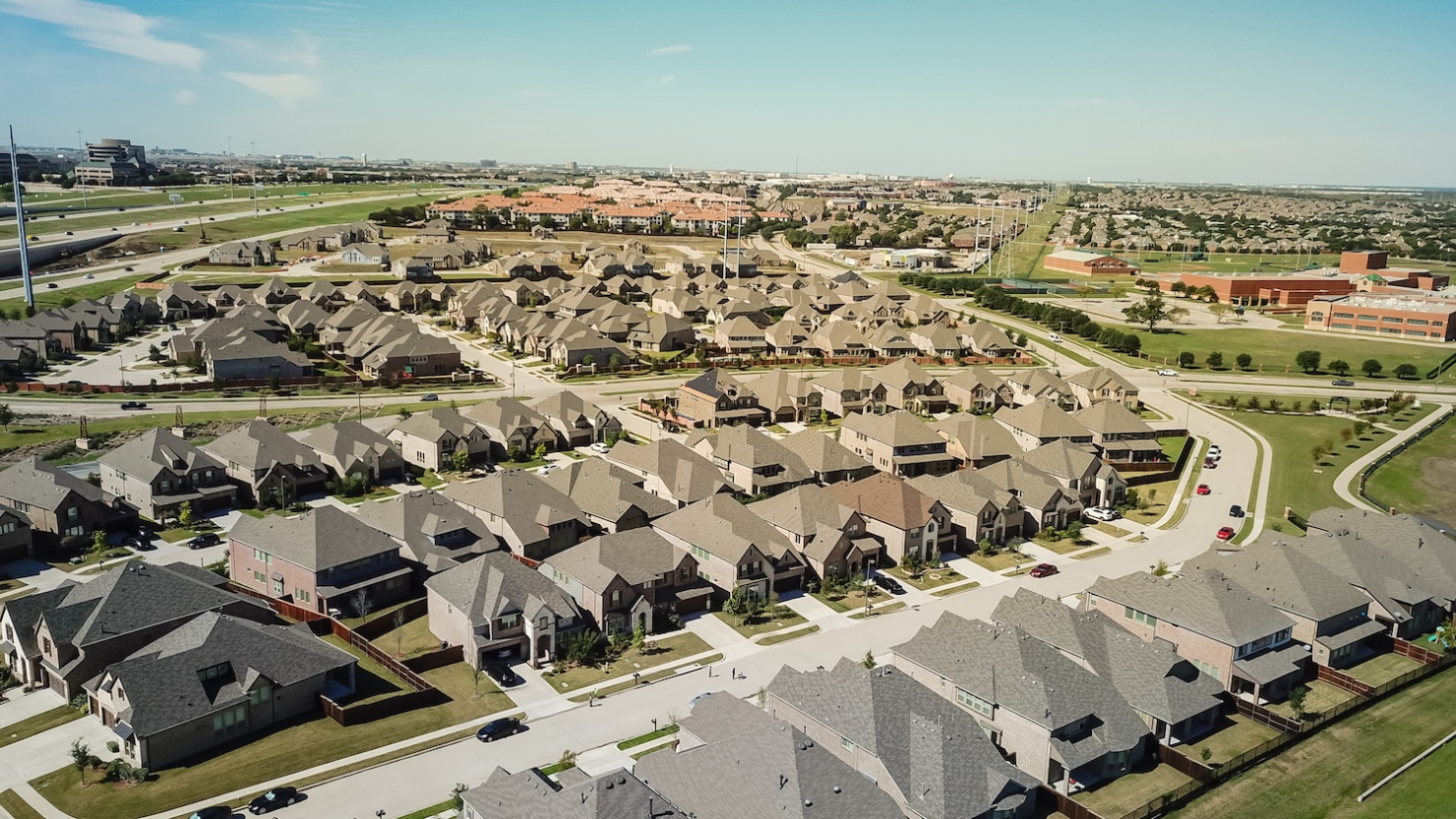
Affordability is also relative. Any given home in Charlotte or Phoenix is going to be much more affordable than the equivalent home in coastal California or the Boston suburbs. But even in America’s more affordable regions, there remains a shortage of homes that are priced and sized for the broad diversity of today’s households. That’s in large part because of the types of homes that zoning allows.
The Sunbelt is the land of the McMansion, the dominant architectural style of single-family homes over the past thirty years. Architecture critic Kate Wagner sparked a renewed popular interest in this form of housing with her blog “McMansion Hell.” Her lexicon perfectly captures the McMansion vibe: an over-wide turret is a “Pringles can of shame,” a multi-vehicle garage is a “car shrine.”
According to Wagner, true McMansions are Big Mac-sized, with at least five bedrooms and 3,000 square feet of living space. But the same general design principles apply to slightly more modest recently-built houses. Slightly is the operative word here: The average size of a newly constructed single-family home is now well over 2,000 square feet, up from around 1,200 square feet in 1950. These are nothing like the modest Federal Housing Administration-subsidized ranch houses that put working class people on the fast-track to the middle class in the 1950s and 60s.
With such large floorplans and lot sizes, few new-construction single-family homes can be called starter homes anymore. Where they’re permitted, condominiums are usually much closer to the starter home cost bracket than nearby single-family homes, even if they’re marketed as “luxury.”

Another marginalized starter home typology is pre-fabricated, manufactured houses, which tend to predominate in smaller cities and rural areas. But even these homes, which currently house 22 million Americans and are half as expensive to construct as ground-up single-family homes, are increasingly subject to strict zoning rules or even outright bans.
There was a time before zoning was so widespread when single-family homes were not seen as the settled state of urban development. In fact, the single-family home was not such a distinct, rigidly policed concept. In the late 19th and early 20th centuries, a sort of reverse-gentrification process was common.
As demand for housing in a neighborhood increased, older, larger houses would be converted into rooming houses or subdivided into small apartments. Carriage houses and back-alley dwellings would be converted into cheap units, as well. Because these properties were more valuable as multi-family housing than as single-family housing, a group of poor residents could, in effect, outbid a single wealthy family.
These converted single-family homes, still visible in many century-old neighborhoods, became what planners call naturally occurring affordable housing: Homes that are affordable because they are small and modest, not because they’re subsidized. This kind of housing never fully served the needs of the working class, but it helped.
By the 21st century, this process of reverse gentrification was replaced by its opposite. There is no more vivid and unambiguous form of gentrification than neighborhoods where small houses are regularly torn down and converted into larger houses. This peculiar urban redevelopment process is impossible to miss in desirable, single-family home neighborhoods from Los Angeles to Atlanta.
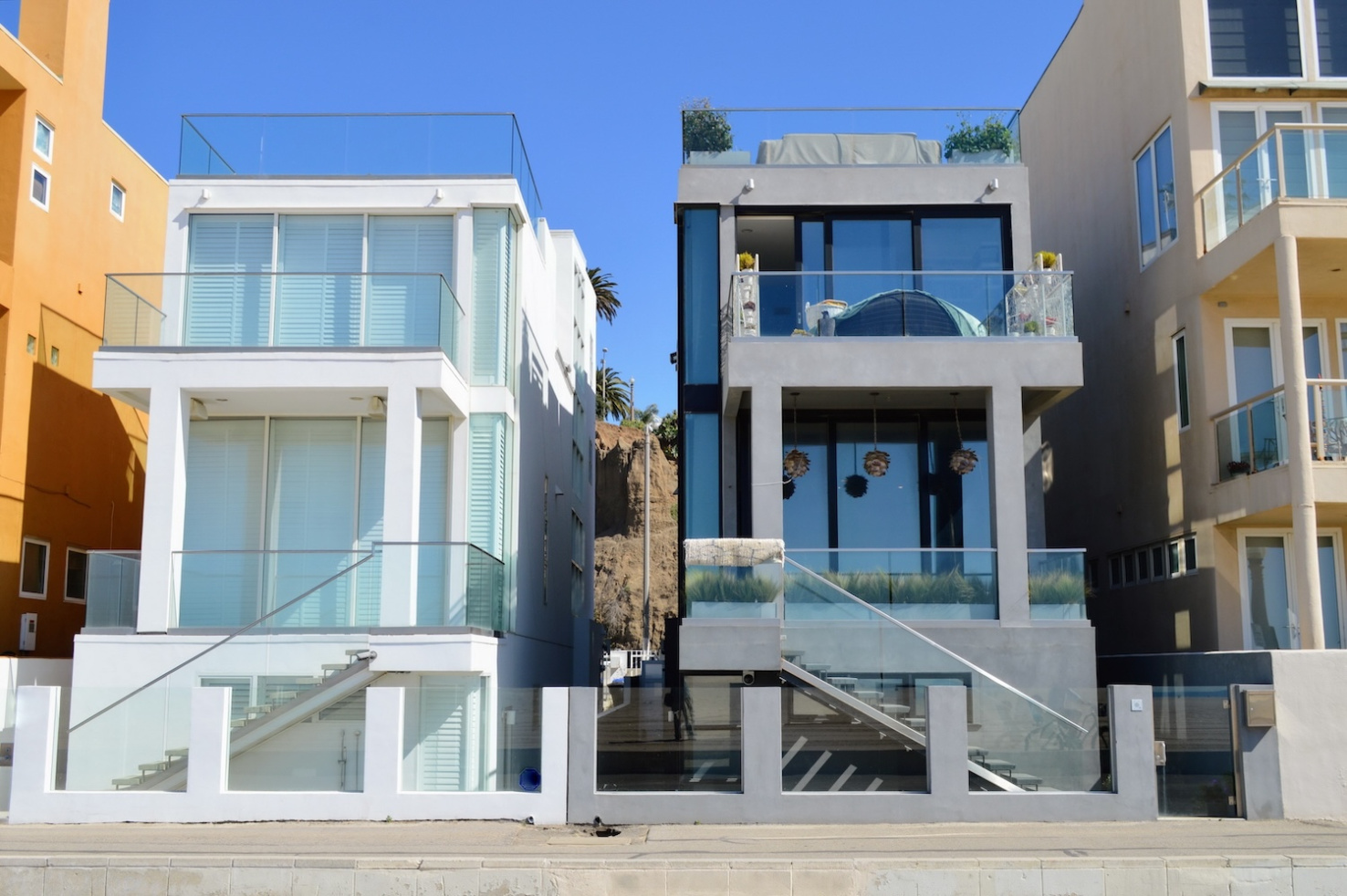
These new urban houses are typically designed in the “contemporary” style, with white walls, exposed concrete and big windows, rather than the neo-traditional styles of McMansions. But from a socio-economic perspective, they represent the same phenomenon: housing that is unaffordable by design. Within the very same 5,000 square foot structure, five or more middle-class families could live. But under the yoke of single-family zoning that would be illegal.
Over the past few years, the illogic of this urban development regime has become too egregious to ignore. If neighborhoods are already being transformed by new development — ice cube mansions replacing ramshackle ranch houses — shouldn’t that development serve the many, rather than the few?
This piece is an excerpt from The Unfinished Metropolis, Ben Schneider’s new book exploring how America’s favorite things to build — freeways, single-family homes, malls, and downtown office towers — are keeping us stuck in the past. In The Unfinished Metropolis, Schneider argues for the reclamation of the lost art of city-building in the modern day.
From The Unfinished Metropolis: Igniting the City-Building Revolution Copyright © 2025 by Benjamin Schneider by permission of Island Press, Washington, D.C.

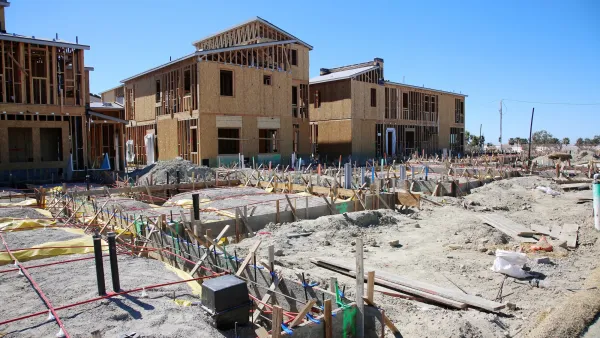
Less than 6% of California cities are building enough housing for very low-income households
Only five jurisdictions are on track to meet their housing goals for all income brackets.
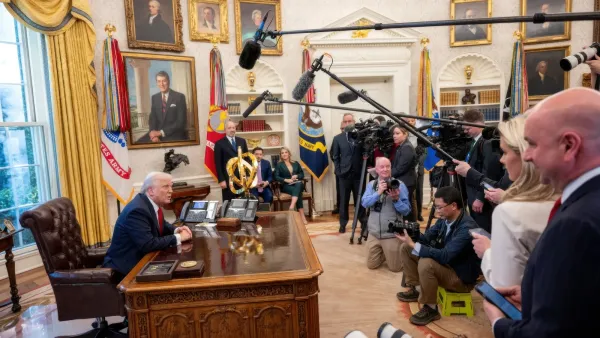
Trump refuses to sign housing bill, throwing bipartisan agreement into limbo
The president's cancellation of the bill signing came as a shock to both sides of the political aisle.
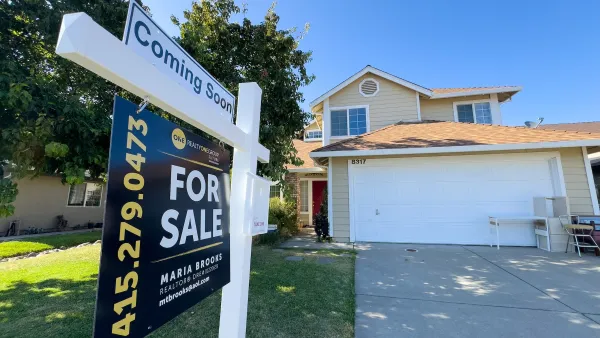
'Starter' homes cost over $1M in 242 US cities
Once concentrated in coastal regions, cities with starter homes valued at over $1 million are now spread across 26 states.

The state-sanctioned urbicide of Austin
People don’t kill cities. Freeways do.

US to reduce Colorado River water deliveries to Mexico
A new Colorado Treaty amendment reduces Mexico’s Colorado River water allocation by 250,000 acre feet.

New Jersey’s second-largest city bans standalone data centers
Jersey City will continue to allow co-location facilities, such as those meant for research institutions that store their own data.

Amtrak not solely to blame for New Jersey commuter rail's unreliability, report finds
A new study from the Garden State Initiative found that NJ Transit’s budget grew 20% across a 4 year period, but reliability declined significantly over the same period.

EPA erases limits on planet-warming pollution from power plants
Under Monday’s plan, power plants would still have some limits on how much mercury, arsenic and other contaminants they can emit.

Phoenix announces new on-demand transit service, more frequent RAPID buses
Both new services will launch in October, and are part of Phoenix's Project Effective Access Solutions for Easing Congestion.

FREE Course: Walkable City 1: Why Walkability?
After describing his path towards focusing on walkability as the essence of good planning, Jeff Speck marches through his five principal reasons for making more walkable places.
Reinventing Malls: Planning Alchemy—Turning Gray Fields Into Gold
The course focuses on the opportunities and imperatives that shape reinvention of mall sites.

Eagle County Government
Harvard University Graduate School of Design
Nashville Planning Department
The Architects Foundation
University of Cincinnati Online
The Pocatello Development Authority
The Urban Renewal Agency of the City of Pocatello
Journal of the American Planning Association

