Henrico County’s innovative approach uses tax revenue from data centers to fund affordable housing.



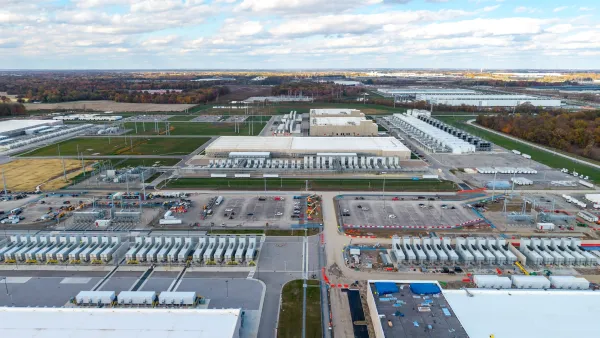
Henrico County, Virginia, home to the Richmond metro area and an epicenter for new data centers, is using the growth of data centers to fund affordable housing.
As Christina Plerhoples Stacy explains in a piece for the Urban Institute’s Urban Wire, “Using tax revenue from data centers, Henrico County seeded a new affordable housing trust fund to fuel homeownership and long-term housing affordability. This financing means developers don’t need to rely on federal programs with long processes and complex compliance hurdles.” The program also shores up funding in a time when federal housing assistance is in jeopardy.
By leveraging the success of data centers in the region, Henrico County offers a unique funding model for affordable housing that turns a potential liability into a community asset, helping to prevent displacement and a steep increase in housing costs.
According to Stacy, “The fund is projected to support the construction of roughly 150 homes per year for moderate-income buyers earning between 60 and 120 percent of the area median income, allocated over the next five years.” This approach increases affordability for residents and reduces red tape for developers, giving the county a more sustainable form of revenue that doesn’t depend on federal dollars.
The article also outlines how federal policy can support programs like Henrico County’s affordable housing trust fund by creating tax incentives for land sales to mission-driven organizations, modernizing requirements for federal programs, and allowing innovative revenue stream to contribute to matching federal funds.
FULL STORY: Turning Data Center Revenues into Affordable Homes


Richmond's new 'stadium district' will include hundreds of homes, offices, jobs
The city is planning for a neighborhood revival in the area around a new baseball stadium.
After the servers go dark
The rise and fall of communities with decommissioned nuclear facilities hold critical lessons for those considering hosting data centers.

What data center host communities can learn from former nuclear hubs
The sometimes painful process of decommissioning former nuclear facilities offers useful lessons for communities planning to host data centers.

Planetizen Federal Action Tracker
A weekly monitor of how Trump’s orders and actions are impacting planners and planning in America.

The state-sanctioned urbicide of Austin
People don’t kill cities. Freeways do.

US to reduce Colorado River water deliveries to Mexico
A new Colorado Treaty amendment reduces Mexico’s Colorado River water allocation by 250,000 acre feet.

Mamdani overhauls NYC's Vision Zero plan with 100 new policy goals
The overhaul aims to reduce traffic deaths and make streets safer for pedestrians, cyclists and drivers through lower speed limits, new safety infrastructure and more.

Amtrak not solely to blame for New Jersey commuter rail's unreliability, report finds
A new study from the Garden State Initiative found that NJ Transit’s budget grew 20% across a 4 year period, but reliability declined significantly over the same period.

EPA erases limits on planet-warming pollution from power plants
Under Monday’s plan, power plants would still have some limits on how much mercury, arsenic and other contaminants they can emit.

FREE Course: Walkable City 1: Why Walkability?
After describing his path towards focusing on walkability as the essence of good planning, Jeff Speck marches through his five principal reasons for making more walkable places.
Reinventing Malls: Planning Alchemy—Turning Gray Fields Into Gold
The course focuses on the opportunities and imperatives that shape reinvention of mall sites.

Eagle County Government
Harvard University Graduate School of Design
Nashville Planning Department
The Architects Foundation
University of Cincinnati Online
The Pocatello Development Authority
The Urban Renewal Agency of the City of Pocatello
Journal of the American Planning Association