The new station will serve intercity buses and offer connections to Amtrak service.


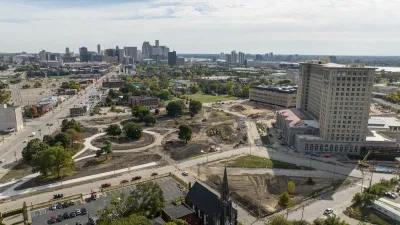
Detroit has partnered with the Michigan Department of Transportation and Michigan Central, a technology hub anchored by a former train station, on a plan for a new multimodal transit hub next to the historic station, which is considered beyond its useful life as a train station.
As Dan Zukowski explains in Smart Cities Dive, “The formerly derelict train station reopened as a technology hub in 2024, surrounded by a 30-acre campus that houses some 250 companies and startups.”
The new, $40 million hub would serve intercity buses and a potential extension of Amtrak service to Canada. In a statement, Amtrak said, “The development of an intermodal station on the Michigan Central campus aligns with long-term Amtrak goals to expand service with our partners at the Michigan Department of Transportation, including our work with VIA Rail and Transport Canada to restore an international connection between Chicago and Toronto through Detroit and Windsor.”
FULL STORY: Detroit to build new multimodal transportation hub

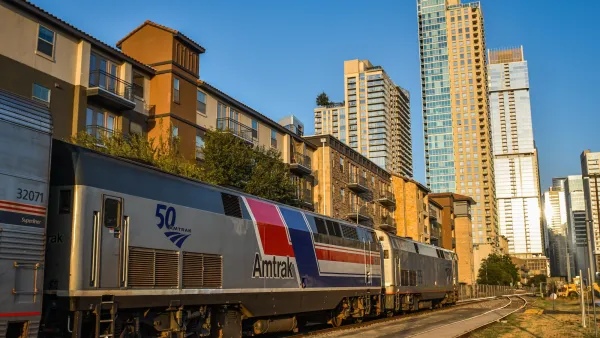
Texas DOT report outlines options for commuter rail between Austin and San Antonio
Amtrak currently operates just one trip per day between the two cities.
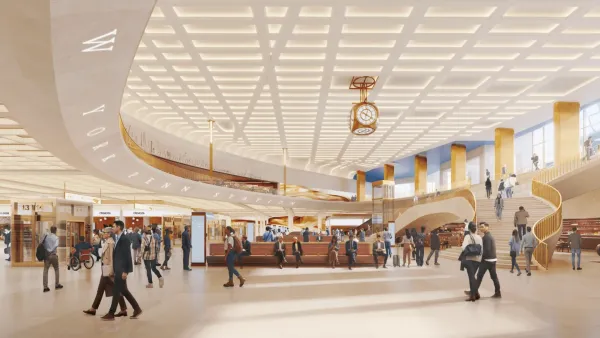
New Penn Station design calls for ample public seating — a rare commodity in US public spaces
Amtrak's renderings show benches throughout the station.
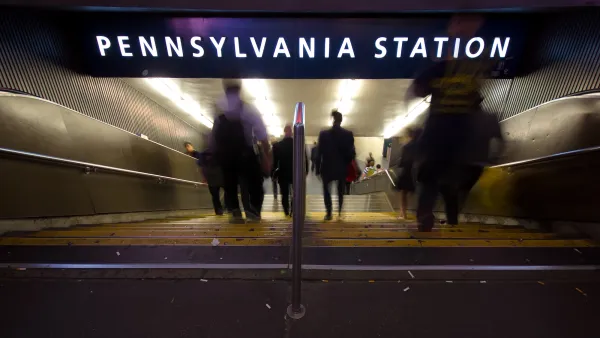
New Penn Station design won't move Madison Square Garden
Amtrak and federal officials agreed on a new plan for the station's redesign that may be largely funded by the federal government.

Planetizen Federal Action Tracker
A weekly monitor of how Trump’s orders and actions are impacting planners and planning in America.

The state-sanctioned urbicide of Austin
People don’t kill cities. Freeways do.

US to reduce Colorado River water deliveries to Mexico
A new Colorado Treaty amendment reduces Mexico’s Colorado River water allocation by 250,000 acre feet.

5 New England states march closer to 800 megawatt wind energy project
Securing federal approval for the project may be complicated under the Trump administration, which has historically been hostile towards domestic wind power.

Baltimore to break ground on $50 million Transit Priority Project
The project will bring faster bus trips, safer streets and better bike connections to Baltimore.

Airbnb launches $250 million 'last-dollar financing' housing accelerator, makes first investment in Austin
The company will put $6.4 million towards affordable housing development in Texas’ capital.

FREE Course: Walkable City 1: Why Walkability?
After describing his path towards focusing on walkability as the essence of good planning, Jeff Speck marches through his five principal reasons for making more walkable places.
Reinventing Malls: Planning Alchemy—Turning Gray Fields Into Gold
The course focuses on the opportunities and imperatives that shape reinvention of mall sites.

Eagle County Government
Harvard University Graduate School of Design
Nashville Planning Department
The Architects Foundation
University of Cincinnati Online
The Pocatello Development Authority
The Urban Renewal Agency of the City of Pocatello
Journal of the American Planning Association