A zoning reform proposal would update the city’s code to ensure health clinics are more equitably distributed in all neighborhoods.


A proposed Baltimore city bill would make it easier to site health care clinics in neighborhoods that don’t have enough access to health facilities, reports Christian Olaniran for CBS News.
Council bill 25-0097, introduced by City Councilmember Phylicia Porter, would “amend Article 32 of the Baltimore City Code to better align zoning practices with long-term community planning goals.” According to Porter, “ the proposal is about ensuring that treatment options are more evenly distributed and better regulated.”
The bill stems from concerns that some parts of the city do not have equal access to healthcare facilities as the city faces a deepening opioid crisis. The Baltimore City Overdose Response Needs Assessment notes that about 14 percent of Baltimore adults lack reliable transportation, which can prevent people from accessing lifesaving services. “In the assessment, the city also said that residents can have difficulty finding health care providers, causing them to delay primary care.”
Read the full story: Zoning bill seeks to improve access to health care clinics across Baltimore


A South Dakota hospital is funding a new subdivision for its employees
Some employees see investing in housing as the only way to stem the loss of workers moving away due to high housing costs.

Half of Rural Texas Hospitals Could Close
Texas has lost 25 rural hospitals in the last two decades, more than any other state.
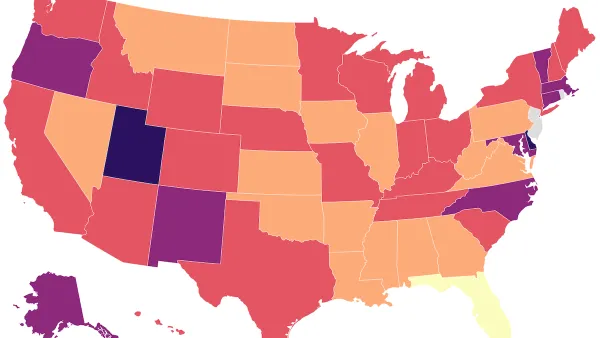
The States Losing Rural Delivery Rooms at an Alarming Pace
In some states, as few as 9% of rural hospitals still deliver babies. As a result, rising pre-term births, no adequate pre-term care and "harrowing" close calls are a growing reality.

Planetizen Federal Action Tracker
A weekly monitor of how Trump’s orders and actions are impacting planners and planning in America.

California plans to bury El Niño’s downpour
If the state plays its cards right, it may be able to store a billion acre-feet of El Niño’s water in aquifers.

Chicago breaks ground on $3 billion megadevelopment
The new neighborhood, titled Foundry Park, will one day host 3,700 residences.

California High-Speed Rail Authority CEO resigns after $600,000 scandal
Under Ian Choudri, the authority used taxpayer dollars to fund first class flights and trips to nightclubs.

Want to study the Missouri River? Soon, you may need unanimous approval from 10 states
Legislation would require 10 governors’ permission to study or build projects moving water outside the basin.

Desperate measures: Advocates weigh draining Lake Powell to fill Colorado River
Draining the reservoir could reduce evaporation losses by a couple hundred thousand acre-feet.

FREE Course: Walkable City 1: Why Walkability?
After describing his path towards focusing on walkability as the essence of good planning, Jeff Speck marches through his five principal reasons for making more walkable places.
Reinventing Malls: Planning Alchemy—Turning Gray Fields Into Gold
The course focuses on the opportunities and imperatives that shape reinvention of mall sites.


City of Rosemead
Rutgers University, Edward J. Bloustein School of Planning and Public Policy
One Hundred Miles
Hunter College, City University of New York (CUNY)
The Architects Foundation
University of Cincinnati Online
City of Cambridge
Montrose County
The Pocatello Development Authority