After residents protested the closing of six Throne restrooms, the District is creating a position to manage public bathrooms and plans to fund 10 bathrooms in the next year.


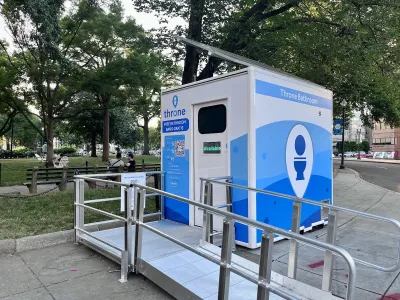
Writing in Greater Greater Washington, Jonathan Katz-Ouziel describes the furor around Washington, D.C.’s Throne public bathrooms, a set of six modular restrooms installed around the District. “At the beginning of July, a budget lapse meant that the Thrones lost funding and were closed off to public access. In DC, where we already suffer from a chronic shortage of public restrooms, the closure, though only of six facilities, struck a nerve.”
For Katz-Ouziel, the conversation around public bathrooms should go beyond availability to also include accessibility and usability. Restrooms should be available in convenient locations, free, and without burdensome requirements such as using an app to open it (or, in the case of Throne, having to text a number). They should have accessibility features that are regularly maintained, and stalls that are sized comfortably for people in wheelchairs or with mobility issues.
Katz-Ouziel writes that Throne shouldn’t be the only restroom provider in D.C. “Other long-term solutions may include expanding restroom availability in parks, adding additional restrooms in libraries and municipal facilities, or providing funding for public restroom construction and provision on private land.”
D.C. has allocated $1 million in FY 2026 to fund 10 public restrooms and a permanent city position in charge of public bathrooms.
Read the full story: Thrones for everyone: What makes a restroom available, accessible, and usable?

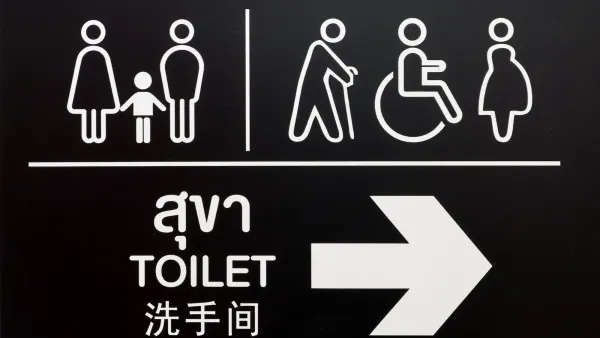
This Thai city is the 'global capital of toilet access'
The Global Public Toilet Index ranks cities by per capita public restrooms.
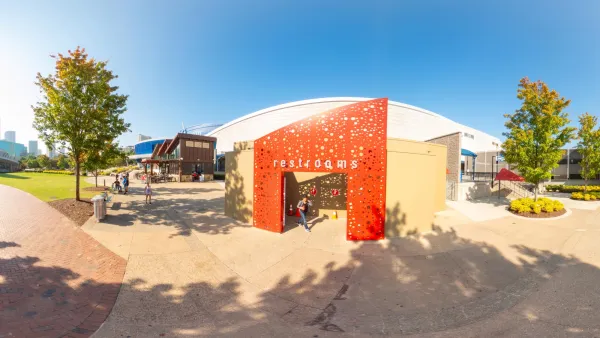
Study: 55% of Atlanta restrooms are inaccessible to the public
More than half of bathrooms that should be publicly accessible are not available, according to a study from Georgia State University.
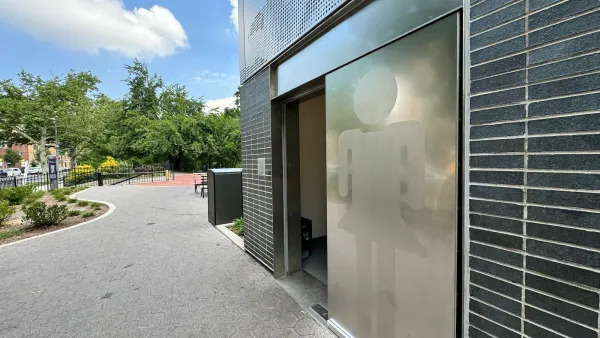
Mamdani Administration Promises 20-30 New Public Bathrooms by End of Summer
Of the city’s 1,000 public restrooms, just 30 percent are located outside of parks.

Planetizen Federal Action Tracker
A weekly monitor of how Trump’s orders and actions are impacting planners and planning in America.

California plans to bury El Niño’s downpour
If the state plays its cards right, it may be able to store a billion acre-feet of El Niño’s water in aquifers.

Desperate measures: Advocates weigh draining Lake Powell to fill Colorado River
Draining the reservoir could reduce evaporation losses by a couple hundred thousand acre-feet.

NYC bus network redesign speeds up Queens buses
Rush routes have seen a 4.6% speed increase after the redesign.

California High-Speed Rail Authority picks trainset manufacturer
The California High-Speed Rail Authority aims to start servicing passengers by 2033.

LA may place emergency ban on karaoke room permits
If Councilwoman Heather Hutt’s proposal passes, the moratorium would last between 45 days and one year.

FREE Course: Walkable City 1: Why Walkability?
After describing his path towards focusing on walkability as the essence of good planning, Jeff Speck marches through his five principal reasons for making more walkable places.
Reinventing Malls: Planning Alchemy—Turning Gray Fields Into Gold
The course focuses on the opportunities and imperatives that shape reinvention of mall sites.

City of Rosemead
Rutgers University, Edward J. Bloustein School of Planning and Public Policy
One Hundred Miles
Hunter College, City University of New York (CUNY)
The Architects Foundation
University of Cincinnati Online
City of Cambridge
Montrose County
The Pocatello Development Authority