Research shows that punitive measures that criminalized unhoused people don’t help reduce homelessness.


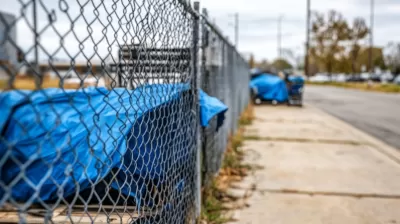
A new analysis of encampment bans and punitive anti-homelessness measures shows that they do not help decrease actual homelessness — a fact housing advocates have been pointing out for years as the debate over the criminalization of homelessness continues to rage around the country.
As Roshan Abraham explains in Next City, “The study examined the effect of ordinances enacted between 2000 and 2021 across the 100 most populous U.S. cities, using data pulled from Continuums of Care — local entities that administer federal homelessness funding from the Department of Housing and Urban Development.”
The study, which went beyond camping bans to include other laws against public drunkenness and other actions criminalized in public but not private, found that in some cases, “a quick dip in visible homelessness when laws were passed followed by a surge in homelessness that exceeded prior levels.”
According to the study, cities that criminalized homelessness saw a 2.2 percent increase in unsheltered homelessness. “The authors did look into whether criminalization ordinances could decrease unsheltered homelessness at the local level by pushing unhoused people into neighboring cities and counties without sanctions, but didn’t find any evidence to support this.”
FULL STORY: A New Study Proves Criminalizing Homelessness Doesn’t Reduce Homelessness

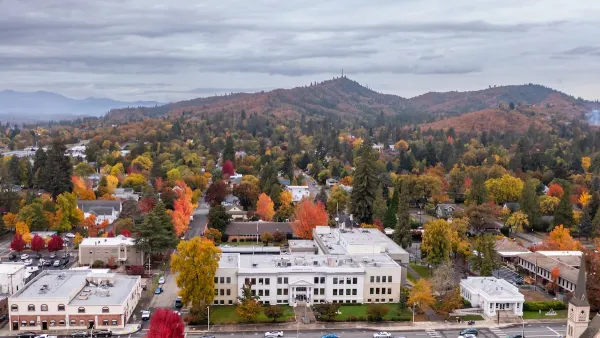
Grants Pass to Provide 150 Camping Spaces, $60k in Services After Disability Rights Suit
The city previously made headlines for the U.S. Supreme Court case allowing penalties for camping prohibited by local ordinances.
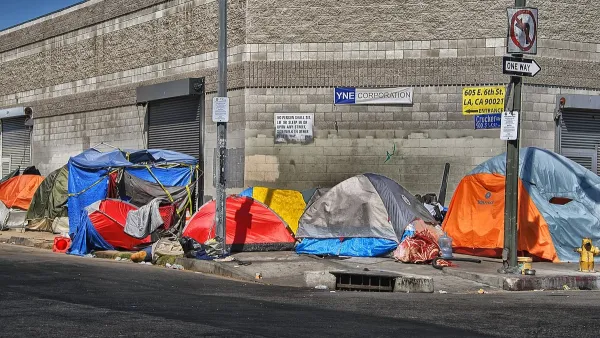
California Homeless Arrests, Citations Spike After Ruling
An investigation reveals that anti-homeless actions increased up to 500% after Grants Pass v. Johnson — even in cities claiming no policy change.
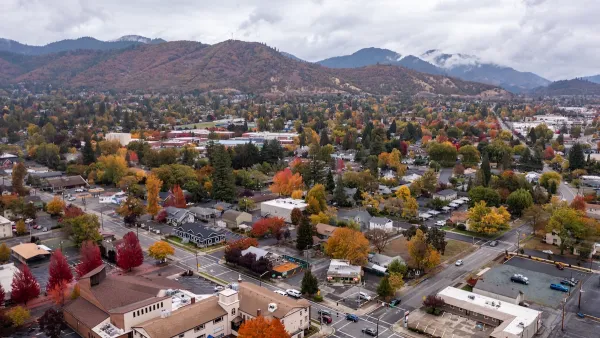
Judge Halts Enforcement of Anti-Homeless Laws in Grants Pass
The Oregon city will be barred from enforcing two ordinances that prosecute unhoused residents until it increases capacity and accessibility at designated camping sites.

Planetizen Federal Action Tracker
A weekly monitor of how Trump’s orders and actions are impacting planners and planning in America.

The state-sanctioned urbicide of Austin
People don’t kill cities. Freeways do.

US to reduce Colorado River water deliveries to Mexico
A new Colorado Treaty amendment reduces Mexico’s Colorado River water allocation by 250,000 acre feet.

Colorado’s Largest Data Center Could Rise Next to Homes — Without a Public Hearing
The proposed campus would consume 11 times the power of Denver International Airport; as it has across the country, opposition mounts.

5 New England states march closer to 800 megawatt wind energy project
Securing federal approval for the project may be complicated under the Trump administration, which has historically been hostile towards domestic wind power.

Baltimore to break ground on $50 million Transit Priority Project
The project will bring faster bus trips, safer streets and better bike connections to Baltimore.

FREE Course: Walkable City 1: Why Walkability?
After describing his path towards focusing on walkability as the essence of good planning, Jeff Speck marches through his five principal reasons for making more walkable places.
Reinventing Malls: Planning Alchemy—Turning Gray Fields Into Gold
The course focuses on the opportunities and imperatives that shape reinvention of mall sites.

Eagle County Government
Harvard University Graduate School of Design
Nashville Planning Department
The Architects Foundation
University of Cincinnati Online
The Pocatello Development Authority
The Urban Renewal Agency of the City of Pocatello
Journal of the American Planning Association