The city previously made headlines for the U.S. Supreme Court case allowing penalties for camping prohibited by local ordinances.


This story by Shaanth Nanguneri was originally published in Oregon Capital Chronicle. It has been shortened.
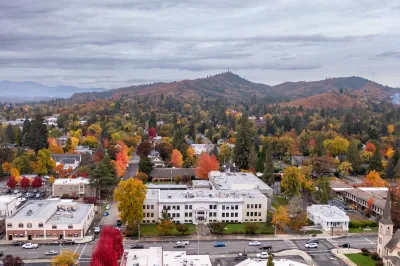
A southern Oregon city that gained national attention for its practice of punishing homeless people for camping outside has agreed to provide at least 150 spaces for individuals to do so after a lawsuit alleged its practices discriminated against disabled individuals.
That Supreme Court ruling cleared the way for more stringent restrictions on homeless individuals in the West, but in Oregon, a state law only allows cities to regulate sleeping outside if those regulations are “objectively reasonable” to time, place and manner. Grants Pass responded by passing ordinances that allow people to stay in designated areas only between 5 p.m. and 7 a.m. and to remove tents or other supplies each morning or face a $75 citation.
Disability rights advocates and five homeless individuals sued, and the city reached a settlement this month. The settlement says the city will offer at least 150 units of camping spaces for homeless individuals. The city must also provide drinking water at any approved camping sites, and the property must be in compliance with the Americans with Disabilities Act for the next year.
The city had limited homeless people to stay and sleep in just one site with about 30 tents at any given time, prompting concerns about overcrowding and a lack of drinking water. In January, local officials closed another site with space for about 120 tents.
Since then, Circuit Court Judge Sarah E. McGlaughlin has ordered the city to halt enforcement of its ordinances against homeless encampments until the city restored capacity for 150 tents, exempting several parks from her mandate. The city and plaintiffs have agreed that the additional capacity for campaign will be on property owned by the city or operated by a third-party city contractor, according to the settlement.
The city will also install shade at drinking facilities and award a $60,000 grant to a local nonprofit to provide services for homeless residents. The facility receiving the money must have bathrooms.
FULL STORY: Grants Pass to provide 150 camping spaces, $60k in services after disability rights suit

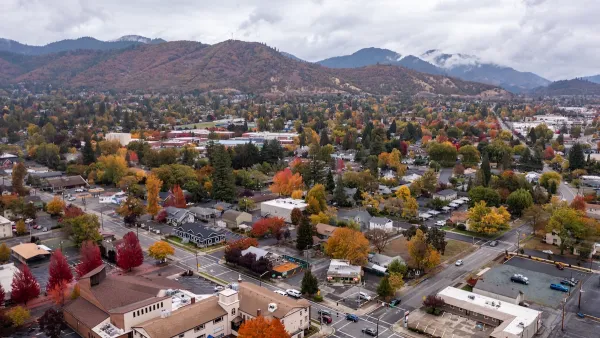
Judge Halts Enforcement of Anti-Homeless Laws in Grants Pass
The Oregon city will be barred from enforcing two ordinances that prosecute unhoused residents until it increases capacity and accessibility at designated camping sites.
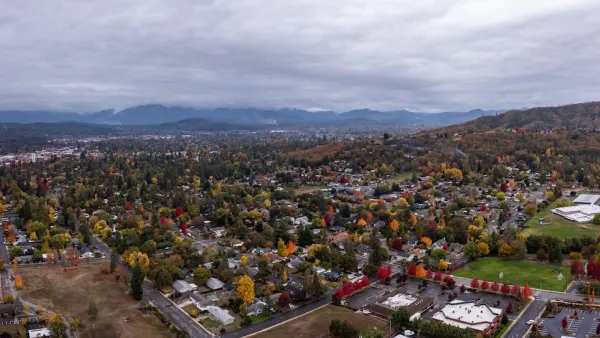
Grants Pass Bans Outdoor Sleeping, Creates Designated Camping Areas
The Oregon city was at the heart of a controversial Supreme Court case that paves the way for the criminalization of homelessness.
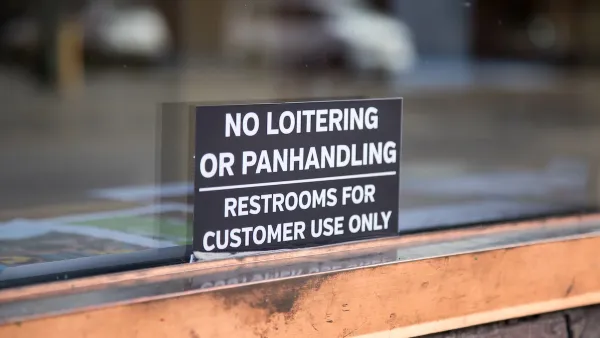
Opinion: Criminalizing Homelessness Is ‘Expensive and Shortsighted’
Policies that punish and fine unhoused people for sheltering outdoors, even when other shelter is not available, are the most visible but least efficient ways to reduce homelessness.

Planetizen Federal Action Tracker
A weekly monitor of how Trump’s orders and actions are impacting planners and planning in America.

The state-sanctioned urbicide of Austin
People don’t kill cities. Freeways do.

US to reduce Colorado River water deliveries to Mexico
A new Colorado Treaty amendment reduces Mexico’s Colorado River water allocation by 250,000 acre feet.

5 New England states march closer to 800 megawatt wind energy project
Securing federal approval for the project may be complicated under the Trump administration, which has historically been hostile towards domestic wind power.

Baltimore to break ground on $50 million Transit Priority Project
The project will bring faster bus trips, safer streets and better bike connections to Baltimore.

Airbnb launches $250 million 'last-dollar financing' housing accelerator, makes first investment in Austin
The company will put $6.4 million towards affordable housing development in Texas’ capital.

FREE Course: Walkable City 1: Why Walkability?
After describing his path towards focusing on walkability as the essence of good planning, Jeff Speck marches through his five principal reasons for making more walkable places.
Reinventing Malls: Planning Alchemy—Turning Gray Fields Into Gold
The course focuses on the opportunities and imperatives that shape reinvention of mall sites.

Eagle County Government
Harvard University Graduate School of Design
Nashville Planning Department
The Architects Foundation
University of Cincinnati Online
The Pocatello Development Authority
The Urban Renewal Agency of the City of Pocatello
Journal of the American Planning Association