City council voted to limit the number of units in accessory buildings to six — after confronting backyard developments of up to 100 units behind a single family home.


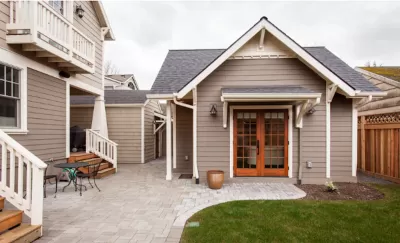
The San Diego City Council approved a set of changes to the city’s accessory dwelling unit (ADU) regulations after strong pushback from residents.
As Omari Fleming explains for NBC San Diego, residents opposed the city’s ADU bonus policies, which allowed developers to, in some cases, build projects of 100 units or more under a policy designed to promote ‘gentle density’ and backyard cottages. Although most applications are for additions of 4 to 7 units, by the end of 2023, at least one application had 148 proposed units.
The council ultimately voted to restrict ADUs to a maximum of six units and two stories, depending on lot size. “Another big change that some homeowners are happy about is no ADUs in cul-de-sacs in high-fire areas. They'll also be required to have parking if they're not near public transportation.”
The changes will require a second approval by the council as well as the mayor to pass.
Read the full story: City Council votes to change ADU policy, restricting how many units can be built

ADUs for Sale? San Diego Could Legalize Backyard Condos
As one of 25 proposed amendments, San Diego may soon allow accessory dwelling units to be bought and sold as individual homes.
San Diego Sees Continued Growth in ADU Permits
Recent changes to regulations have made it easier and more affordable for homeowners to build ‘granny flats,’ and San Diego’s housing stock is benefiting.
San Diegans at Odds Over ‘Granny Towers’
A provision in the city’s ADU ordinance allows developers to build an essentially unlimited number of units on single-family lots.

Planetizen Federal Action Tracker
A weekly monitor of how Trump’s orders and actions are impacting planners and planning in America.

California plans to bury El Niño’s downpour
If the state plays its cards right, it may be able to store a billion acre-feet of El Niño’s water in aquifers.

Chicago breaks ground on $3 billion megadevelopment
The new neighborhood, titled Foundry Park, will one day host 3,700 residences.

California High-Speed Rail Authority CEO resigns after $600,000 scandal
Under Ian Choudri, the authority used taxpayer dollars to fund first class flights and trips to nightclubs.

Want to study the Missouri River? Soon, you may need unanimous approval from 10 states
Legislation would require 10 governors’ permission to study or build projects moving water outside the basin.

Desperate measures: Advocates weigh draining Lake Powell to fill Colorado River
Draining the reservoir could reduce evaporation losses by a couple hundred thousand acre-feet.

FREE Course: Walkable City 1: Why Walkability?
After describing his path towards focusing on walkability as the essence of good planning, Jeff Speck marches through his five principal reasons for making more walkable places.
Reinventing Malls: Planning Alchemy—Turning Gray Fields Into Gold
The course focuses on the opportunities and imperatives that shape reinvention of mall sites.

City of Rosemead
Rutgers University, Edward J. Bloustein School of Planning and Public Policy
One Hundred Miles
Hunter College, City University of New York (CUNY)
The Architects Foundation
University of Cincinnati Online
City of Cambridge
Montrose County
The Pocatello Development Authority