The Tulsa Remote program generated more than $4 in local economic benefits for every dollar spent.



Tulsa’s bet on remote workers is paying off — fourfold. As Rthvika Suvarna and Fola Akinnibi explain in an article for Bloomberg CityLab, the Oklahoma city offered $10,000 to remote workers who moved there.
Roughly 3,400 people participated in the Tulsa Remote program and, according to a new study, each $1 invested in the new residents brought a $4 return in local economic benefits. “That’s far more than the typical 2-to-1 ratio for traditional incentive programs to attract large employers, according to the study from senior economist Timothy Bartik at the W.E. Upjohn Institute for Employment Research.”
Almost seven years into the program, 96 percent of participants stayed through the first year, and 70 percent have stuck around longer. “One emphasis of Tulsa’s program that experts consider crucial to its retention is the social infrastructure it offers, including networking, social events and coworking space to help acclimate them to the city.”
The program creates multiplier effects, generating new jobs and boosting demand for existing services. “Because the program targets high-skilled, high-income workers, increases in tax revenue can help pay for additional public services,” the authors explain. Meanwhile, targeting remote workers with existing jobs means the city could focus on attracting people rather than corporations.

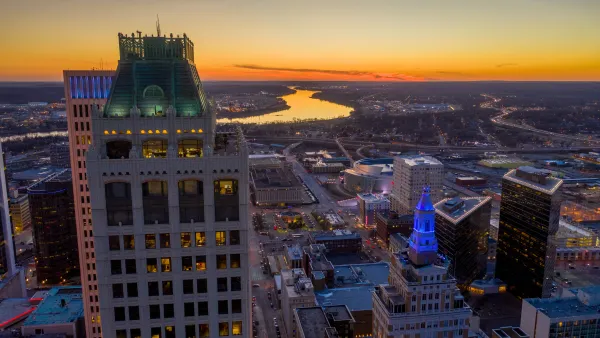
Tulsa’s Cash Incentive Drives Real Community
Thousands of remote workers moved to Tulsa to take advantage of a $10,000 incentive program. The vast majority of them stayed.
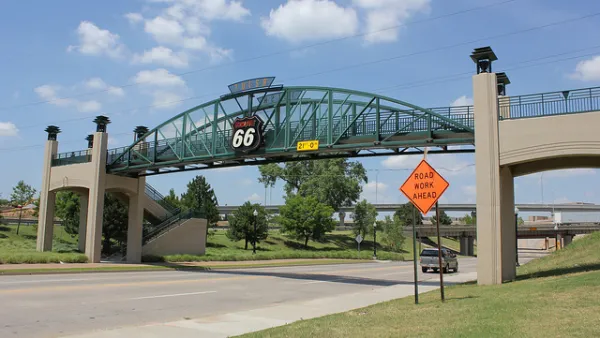
Towns Offering Cash to Lure Remote Workers
Smaller cities are luring newly untethered workers with cash incentives, bikes, and other local perks.

Office Space: So Last Year?
Did coronavirus bring certain death to the traditional concept of the office, or is it only a matter of time until we return to business as usual?

The state-sanctioned urbicide of Austin
People don’t kill cities. Freeways do.

US to reduce Colorado River water deliveries to Mexico
A new Colorado Treaty amendment reduces Mexico’s Colorado River water allocation by 250,000 acre feet.

New Jersey’s second-largest city bans standalone data centers
Jersey City will continue to allow co-location facilities, such as those meant for research institutions that store their own data.

Amtrak not solely to blame for New Jersey commuter rail's unreliability, report finds
A new study from the Garden State Initiative found that NJ Transit’s budget grew 20% across a 4 year period, but reliability declined significantly over the same period.

EPA erases limits on planet-warming pollution from power plants
Under Monday’s plan, power plants would still have some limits on how much mercury, arsenic and other contaminants they can emit.

Phoenix announces new on-demand transit service, more frequent RAPID buses
Both new services will launch in October, and are part of Phoenix's Project Effective Access Solutions for Easing Congestion.

FREE Course: Walkable City 1: Why Walkability?
After describing his path towards focusing on walkability as the essence of good planning, Jeff Speck marches through his five principal reasons for making more walkable places.
Reinventing Malls: Planning Alchemy—Turning Gray Fields Into Gold
The course focuses on the opportunities and imperatives that shape reinvention of mall sites.

Eagle County Government
Harvard University Graduate School of Design
Nashville Planning Department
The Architects Foundation
University of Cincinnati Online
The Pocatello Development Authority
The Urban Renewal Agency of the City of Pocatello
Journal of the American Planning Association