The $700 million ‘stormwater subway’ is designed to handle overflows during storms, which contain toxic runoff from roadways and vehicles.


A new, $700 million Seattle tunnel with a diameter large enough to fit a single track train is actually designed solely for wastewater, writes Joe Cortright in City Commentary.
As Cortright explains, “The reason for this tunnel—as in many cities in the US—is to deal with periodic sewer overflows when it rains. Seattle has a system of combined storm and sanitary sewers–so stormwater mixes with domestic wastewater, which is a problem during heavy rains. The system is sized to avoid overflows when its just handling domestic sewage, but the water flows during the rainy season exceed the capacity of the system.”
Cortright notes that half of stormwater comes from parking lots and roadways, “and much of the toxicity of stormwater is from cars and trucks (oil, tire debris, brake dust and precipitated air pollution)” — so transportation is directly responsible for added costs for sewer and stormwater infrastructure, but drivers do not contribute directly to costs. “Instead, the cost of sewage subways gets build to urban households, many of whom don’t even drive.”
According to Cortright, the city’s approach to water pollution is “both inefficient and inequitable: inefficient because we’re not sending any incentives to people to drive less, and inequitable because we’re not asking the people causing much or most of the pollution to pay for the solution.” In this way, “Not asking road users to pay for the cost of the subway built to handle their toxic runoff, and instead loading it on to the bills of households or businesses, makes driving artificially cheap, and city-living artificially expensive.”
Read the full story: Seattle’s new subway!

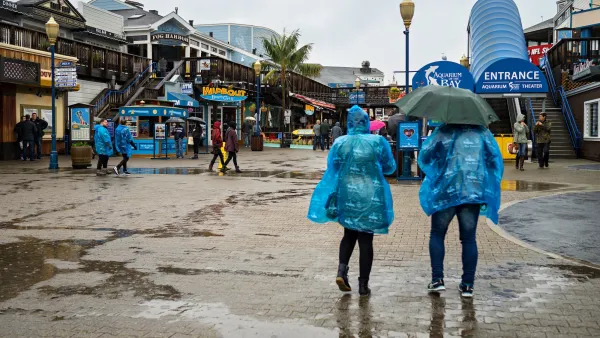
Rain gardens keep up to 99% of pollutants out of San Francisco Bay
The city's roadside rain gardens soak up stormwater and filter out dozens of harmful micropollutants.
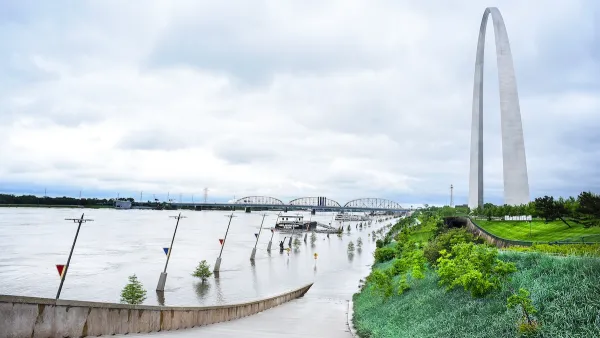
St. Louis has a Secret Stormwater Weapon Saving 100 Million Gallons from the Mississippi
The city reimburses residents who install gardens, rain barrels, and other methods that retain stormwater and decrease the risk of flooding.
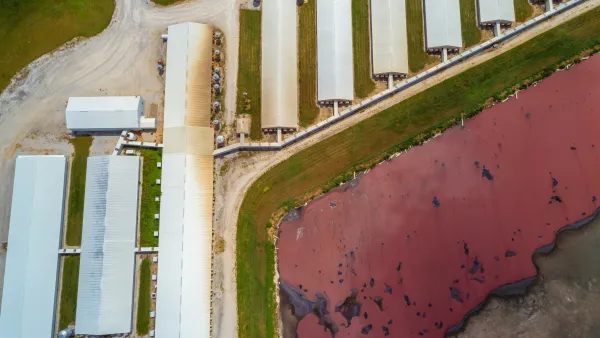
Michigan Court Green-Lights State Regulation of Livestock Manure
A recent court decision has granted Michigan regulators full authority to hold animal agriculture accountable for manure runoff into waterways.

Planetizen Federal Action Tracker
A weekly monitor of how Trump’s orders and actions are impacting planners and planning in America.

California plans to bury El Niño’s downpour
If the state plays its cards right, it may be able to store a billion acre-feet of El Niño’s water in aquifers.

Chicago breaks ground on $3 billion megadevelopment
The new neighborhood, titled Foundry Park, will one day host 3,700 residences.

Move over, LA: St. Louis gears up for Olympics, invests millions in downtown redevelopment
The Missouri city will host the 2028 Olympic soccer group stage and knockout matches.

Satanic place names
From streams and lakes to valleys and canyons, I mapped more than 1,000 places named after the Devil.

California High-Speed Rail Authority CEO resigns after $600,000 scandal
Under Ian Choudri, the authority used taxpayer dollars to fund first class flights and trips to nightclubs.

FREE Course: Walkable City 1: Why Walkability?
After describing his path towards focusing on walkability as the essence of good planning, Jeff Speck marches through his five principal reasons for making more walkable places.
Reinventing Malls: Planning Alchemy—Turning Gray Fields Into Gold
The course focuses on the opportunities and imperatives that shape reinvention of mall sites.


City of Rosemead
Rutgers University, Edward J. Bloustein School of Planning and Public Policy
One Hundred Miles
Hunter College, City University of New York (CUNY)
The Architects Foundation
University of Cincinnati Online
City of Cambridge
Montrose County
The Pocatello Development Authority