Honolulu Community College’s Architecture, Engineering & Construction Technologies program highlights the role of community colleges in preparing nontraditional students for careers in architectural and construction technologies.


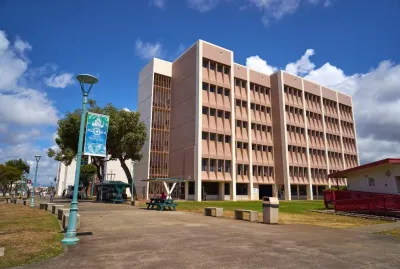
Honolulu Community College (HCC) continues to demonstrate the role of community colleges in supporting nontraditional students seeking new career paths. One recent example is a student who, after earning a degree in fashion, returned to HCC to pursue an associate degree in architectural technologies, aligning creative experience with hands-on training in design and construction.
HCC’s Architecture, Engineering & Construction Technologies (AEC) program emphasizes applied learning while integrating students’ diverse perspectives — such as those rooted in art, culture, and lived experience — into spatial design thinking. Supportive faculty and initiatives like Poʻi Nā Nalu, which provides culturally responsive guidance for Native Hawaiian students, have been key in fostering student success and retention.
The story reflects how HCC and similar institutions can expand access to workforce-relevant, equity-centered education, particularly for returning adult learners preparing for roles in architecture, engineering, and the built environment.
FULL STORY: Honolulu CC rekindles student’s design future

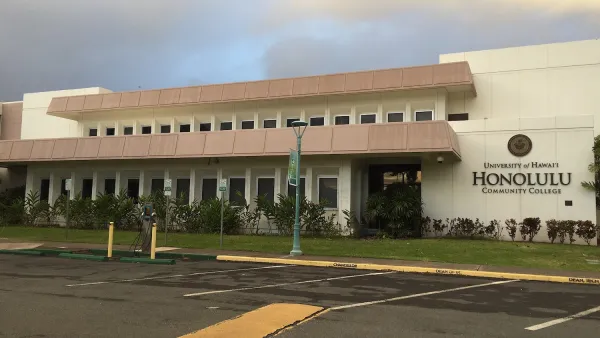
Honolulu Community College Celebrates Culture and Sustainability
Honolulu Community College brought together more than 320 students, staff, and community members for a day of Hawaiian cultural activities, music, and sustainability-focused learning at its annual Hoʻolauleʻa celebration.
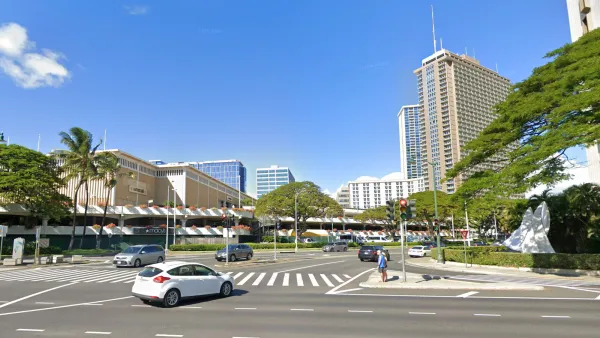
Hawaii DOT takes action after reporters call attention to dangerous crosswalk
The state made changes to a treacherous intersection after reporting revealed that traffic light timing was posting a threat to pedestrians.

Honolulu lowers speed limits near schools — but doesn't change the signs
A year and a half after changing the legal speed limit in school zones, the city has yet to update street signs — meaning police can't cite speeders.

Planetizen Federal Action Tracker
A weekly monitor of how Trump’s orders and actions are impacting planners and planning in America.

The state-sanctioned urbicide of Austin
People don’t kill cities. Freeways do.

US to reduce Colorado River water deliveries to Mexico
A new Colorado Treaty amendment reduces Mexico’s Colorado River water allocation by 250,000 acre feet.

5 New England states march closer to 800 megawatt wind energy project
Securing federal approval for the project may be complicated under the Trump administration, which has historically been hostile towards domestic wind power.

Baltimore to break ground on $50 million Transit Priority Project
The project will bring faster bus trips, safer streets and better bike connections to Baltimore.

Airbnb launches $250 million 'last-dollar financing' housing accelerator, makes first investment in Austin
The company will put $6.4 million towards affordable housing development in Texas’ capital.

FREE Course: Walkable City 1: Why Walkability?
After describing his path towards focusing on walkability as the essence of good planning, Jeff Speck marches through his five principal reasons for making more walkable places.
Reinventing Malls: Planning Alchemy—Turning Gray Fields Into Gold
The course focuses on the opportunities and imperatives that shape reinvention of mall sites.

Eagle County Government
Harvard University Graduate School of Design
Nashville Planning Department
The Architects Foundation
University of Cincinnati Online
The Pocatello Development Authority
The Urban Renewal Agency of the City of Pocatello
Journal of the American Planning Association