The rule was designed to prevent the rebuilding of government-funded projects in areas prone to repeated floods.


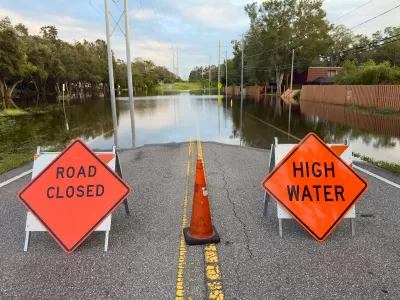
The Federal Emergency Management Agency (FEMA) will stop enforcing a rule finalized last year that requires buildings receiving public assistance to be built to withstand future flood risk, whether that means relocating or elevating the building or otherwise mitigating the risk.
The Federal Flood Risk Management Standard is designed to discourage construction in areas at risk for repeated flooding, explains Robert Freedman in Smart Cities Dive. According to FEMA, “it requires agencies to determine specific federal building or project dimensions – that is, how high and how wide and how expansive a building or project should be – in order to manage and mitigate any current or potential flood risks.”
The rule is suspended while the new department leadership decides whether it should be revoked or amended. “Legal scholars say FEMA is inviting a challenge on whether it has the authority not to enforce the rule while it’s under review.”
FULL STORY: FEMA halts enforcement of flood rebuild rule, New York Times reports

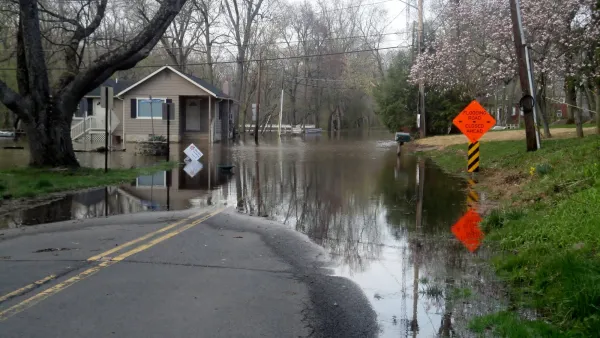
Moving People Out of Flood Zones Is a Win-Win Strategy
As the threat of flooding increases, buyout programs to relocate homeowners are a better alternative to rebuilding—for cities and residents.
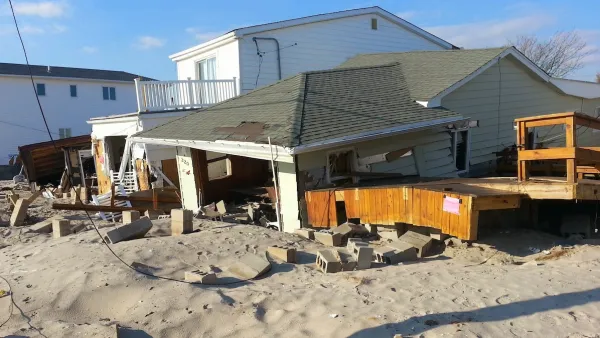
FEMA Rule Calls for Updated Flood Modeling
Agency-funded projects will be required to be elevated at least 2 feet above the projected local flood level.
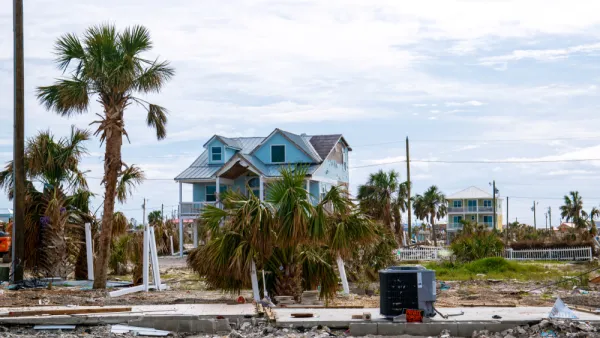
FEMA Flood Insurance Updates Reflect Actual Risk to Each Home
Changes to how FEMA calculates flood risk will assess risk at a home-by-home level, rather than estimating the same risk to all homes in the same floodplain.

The state-sanctioned urbicide of Austin
People don’t kill cities. Freeways do.

US to reduce Colorado River water deliveries to Mexico
A new Colorado Treaty amendment reduces Mexico’s Colorado River water allocation by 250,000 acre feet.

New Jersey’s second-largest city bans standalone data centers
Jersey City will continue to allow co-location facilities, such as those meant for research institutions that store their own data.

Amtrak not solely to blame for New Jersey commuter rail's unreliability, report finds
A new study from the Garden State Initiative found that NJ Transit’s budget grew 20% across a 4 year period, but reliability declined significantly over the same period.

EPA erases limits on planet-warming pollution from power plants
Under Monday’s plan, power plants would still have some limits on how much mercury, arsenic and other contaminants they can emit.

Phoenix announces new on-demand transit service, more frequent RAPID buses
Both new services will launch in October, and are part of Phoenix's Project Effective Access Solutions for Easing Congestion.

FREE Course: Walkable City 1: Why Walkability?
After describing his path towards focusing on walkability as the essence of good planning, Jeff Speck marches through his five principal reasons for making more walkable places.
Reinventing Malls: Planning Alchemy—Turning Gray Fields Into Gold
The course focuses on the opportunities and imperatives that shape reinvention of mall sites.

Eagle County Government
Harvard University Graduate School of Design
Nashville Planning Department
The Architects Foundation
University of Cincinnati Online
The Pocatello Development Authority
The Urban Renewal Agency of the City of Pocatello
Journal of the American Planning Association