Urban forestry job training programs are creating economic opportunities for underrepresented individuals while addressing workforce shortages and advancing tree equity in communities most impacted by environmental disparities.


Kris Cameron’s story exemplifies how urban forestry job training programs can provide life-changing opportunities for formerly incarcerated individuals. After struggling to secure stable employment, he joined the Green Reentry Job Training program at Garden Time, a Rhode Island nonprofit dedicated to preparing individuals for careers in tree care. The program gave him technical skills in arboriculture, professional support, and essential life skills, leading to his promotion as a foreman at Groundwork Rhode Island. His journey reflects the broader impact of these programs, which not only help participants rebuild their lives but also address workforce shortages in the green industry.
As rising temperatures and environmental challenges heighten the need for tree cover in underserved communities and older professionals retire from the field, urban forestry faces a labor gap that organizations like American Forests are working to fill. Through its Tree Equity Workforce Network, American Forests funds training initiatives like Garden Time, The Works in Memphis, and Tucson Clean and Beautiful, helping underrepresented individuals enter the tree-care profession. These programs provide technical education alongside wraparound services such as transportation, housing support, and mentorship, ensuring that trainees have the resources to succeed in their new careers.
As reported by Nicole Greenfield, tree equity is about more than planting trees — it is about creating economic opportunities for those most affected by environmental disparities. Programs like The Works’ Tree CPR train residents in communities with low tree canopy, equipping them with skills to improve their neighborhoods while securing stable employment. By expanding these initiatives, American Forests and its partners are not only greening cities but also fostering economic mobility and social justice. As participants plant and maintain trees that will outlive them, they are creating lasting legacies of resilience, opportunity, and environmental stewardship.
Read the full story: Branching out: Growing careers and spreading equity through urban forestry

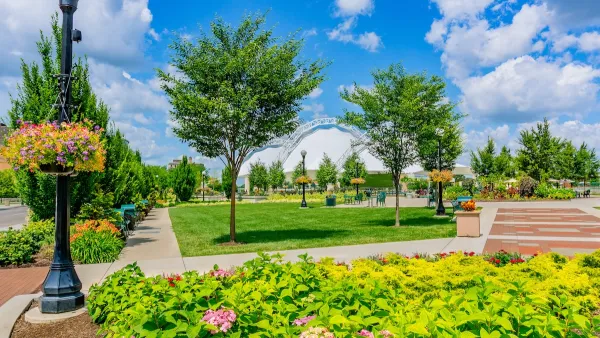
A Plan to Expand Tree Canopy Across Dayton
Dayton is developing an urban forest master plan, using a $2 million grant to expand its tree canopy, address decades of tree loss, and enhance environmental equity across the city.
Global Report Shows Urban Forests Failing to Meet Vital Standards
The study reveals significant gaps in urban forestry, emphasizing the urgent need for reforms, innovative planting solutions, and expanded tree canopy to combat climate change and improve urban health.
Mapping a Greener Future: Cal Poly Tackles Urban Canopy Challenges
Cal Poly, in partnership with Cal Fire, is leading the development of California’s new Strategic Plan for Urban Forestry, combining advanced data tools and interdisciplinary collaboration to expand tree canopy cover.

Planetizen Federal Action Tracker
A weekly monitor of how Trump’s orders and actions are impacting planners and planning in America.

California plans to bury El Niño’s downpour
If the state plays its cards right, it may be able to store a billion acre-feet of El Niño’s water in aquifers.

Desperate measures: Advocates weigh draining Lake Powell to fill Colorado River
Draining the reservoir could reduce evaporation losses by a couple hundred thousand acre-feet.

40 years after approval, Chicago breaks ground on new park
The park honors Jean Baptiste Point du Sable, the city’s first permanent non-native settler.

‘Hoodwinked:’ New Mexico bill aimed at microgrids paves way for data center development
In an interview with High Country News, Padilla said the legislation “ignited” New Mexico's economy.

California’s ‘unrecognizable’ water plan may go down the drain
After four years of regulatory processes, water agencies say the plan to overhaul how cities and farms take water from the Sacramento-San Joaquin Delta has changed dramatically.

FREE Course: Walkable City 1: Why Walkability?
After describing his path towards focusing on walkability as the essence of good planning, Jeff Speck marches through his five principal reasons for making more walkable places.
Reinventing Malls: Planning Alchemy—Turning Gray Fields Into Gold
The course focuses on the opportunities and imperatives that shape reinvention of mall sites.

City of Rosemead
Rutgers University, Edward J. Bloustein School of Planning and Public Policy
One Hundred Miles
Hunter College, City University of New York (CUNY)
The Architects Foundation
University of Cincinnati Online
City of Cambridge
Montrose County
The Pocatello Development Authority