The agency awarded $1.32 billion in funds to transportation infrastructure projects aimed at road safety and mobility.



The U.S. Department of Transportation (USDOT) awarded $1.32 billion in Rebuilding American Infrastructure with Sustainability and Equity (RAISE) grants, reports Liz Carey for Transportation Today.
The grants were awarded to 109 projects aimed at repairing and rebuilding “critical infrastructure in areas of local or regional significance.”
According to Transportation Secretary Pete Buttigieg, the projects will “make roads safer, help mitigate the impact of climate change, and ensure that people in communities of all sizes can get where they need to go safely and efficiently.” Recipient projects include multimodal improvements and rail line repairs.
According to USDOT, “Funding is split equally between urban and rural areas, and a large percentage of grants, selected in this first round of FY 2025, support urban and rural regions defined as historically disadvantaged or areas of persistent poverty.”
The department also announced $635 million in grants for electric vehicle charging infrastructure around the country that will expand community charging networks and fast-charging projects along key corridors.
Read the full story: U.S. Department of Transportation announces $1.32B in RAISE grants

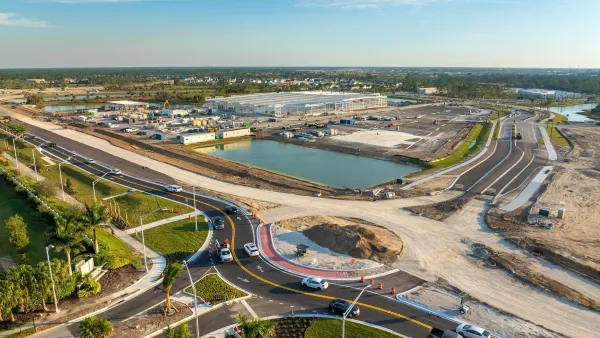
Analysis: What does America want from surface transportation reauthorization?
Over 13,000 comments were submitted in the federal Request for Information on surface transportation reauthorization. We analyzed all of them.
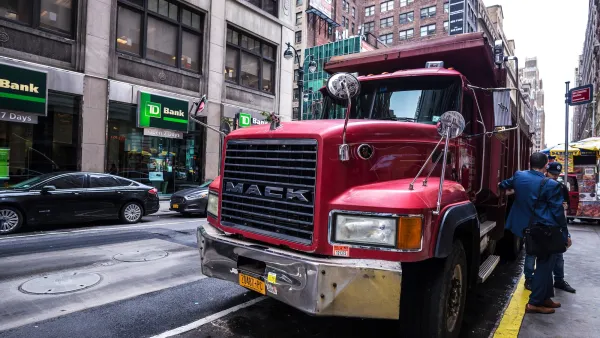
DOT withholds $73M from New York over immigrant trucking licenses
The Trump administration is requiring states to revoke the CDLs of non-domiciled drivers without proof of citizenship or risk losing federal funds.
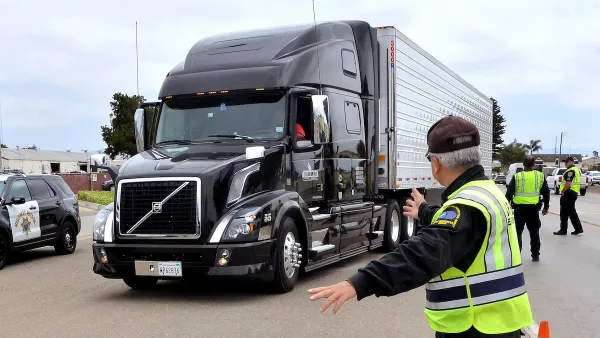
USDOT Threatens to Bar California From Issuing Trucking Licenses
In the wake of three fatal crashes involving immigrant truck drivers, Transportation Secretary Duffy says the department could pull $160 million in funding and bar the state from issuing new licenses.

Planetizen Federal Action Tracker
A weekly monitor of how Trump’s orders and actions are impacting planners and planning in America.

California plans to bury El Niño’s downpour
If the state plays its cards right, it may be able to store a billion acre-feet of El Niño’s water in aquifers.

Chicago breaks ground on $3 billion megadevelopment
The new neighborhood, titled Foundry Park, will one day host 3,700 residences.

California High-Speed Rail Authority CEO resigns after $600,000 scandal
Under Ian Choudri, the authority used taxpayer dollars to fund first class flights and trips to nightclubs.

Want to study the Missouri River? Soon, you may need unanimous approval from 10 states
Legislation would require 10 governors’ permission to study or build projects moving water outside the basin.

Desperate measures: Advocates weigh draining Lake Powell to fill Colorado River
Draining the reservoir could reduce evaporation losses by a couple hundred thousand acre-feet.

FREE Course: Walkable City 1: Why Walkability?
After describing his path towards focusing on walkability as the essence of good planning, Jeff Speck marches through his five principal reasons for making more walkable places.
Reinventing Malls: Planning Alchemy—Turning Gray Fields Into Gold
The course focuses on the opportunities and imperatives that shape reinvention of mall sites.

City of Rosemead
Rutgers University, Edward J. Bloustein School of Planning and Public Policy
One Hundred Miles
Hunter College, City University of New York (CUNY)
The Architects Foundation
University of Cincinnati Online
City of Cambridge
Montrose County
The Pocatello Development Authority