Can St. Louis survive in the Post-Industrial era?


"St. Louis was planned as the great metropolis of the American Midwest. It didn't turn out that way, but it wasn't for lack of qualifications. The city is perfectly located in the center of the nation on the banks of its largest river, in a region that experienced unabated growth for much of the 19th century. Its rise was, for lack of a better term, meteoric. Few cities were built as purely for the Industrial Age as St. Louis. That has made its fall equally meteoric... For the time being, smaller cities offer the advantages of cheaper rents and home prices, fewer work hours, less travel time, and the ability to become almost immediately involved in meaningful civic affairs. Perhaps they are on to something. A new 2003 report by the U.S. Census Bureau shows the St. Louis metropolitan area is attracting a growing number of people who are age 25 to 39, single, and possess at least a bachelor's degree, even as Missouri as a whole has seen a net exodus in this category."
Thanks to Chris Steins
Read the full story: Gateway Bypass


Planetizen Federal Action Tracker
A weekly monitor of how Trump’s orders and actions are impacting planners and planning in America.

‘Going backwards:’ Baltimore mayor, students rally against state's transit funding plan
Maryland's proposed six-year plan provides no funding for Baltimore’s BMORE bus program and reduces its road maintenance funding.
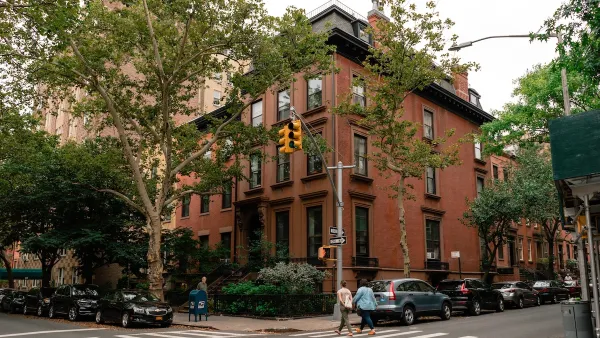
Mamdani sent nearly 6,000 pied-à-terre tax warnings to homes that didn’t qualify
A judge has ordered the administration to cancel thousands of pied-à-terre tax notices after it sent 35% of them erroneously.

Mamdani sent nearly 6,000 pied-à-terre tax warnings to homes that didn’t qualify
A judge has ordered the administration to cancel thousands of pied-à-terre tax notices after it sent 35% of them erroneously.

Detroit to transform waterfront with $2.2 billion investment
Developers will convert about 18 acres of unused parking lot space into civic spaces.

‘Going backwards:’ Baltimore mayor, students rally against state's transit funding plan
Maryland's proposed six-year plan provides no funding for Baltimore’s BMORE bus program and reduces its road maintenance funding.

FREE Course: Walkable City 1: Why Walkability?
After describing his path towards focusing on walkability as the essence of good planning, Jeff Speck marches through his five principal reasons for making more walkable places.
Reinventing Malls: Planning Alchemy—Turning Gray Fields Into Gold
The course focuses on the opportunities and imperatives that shape reinvention of mall sites.

City of Thousand Oaks
City of Wisconsin Rapids
Harvard University Graduate School of Design
The Architects Foundation
University of Cincinnati Online
Northern Illinois Transit Authority (NITA)
The Pocatello Development Authority
The Urban Renewal Agency of the City of Pocatello