A new law strengthens local governments’ ability to regulate and limit fossil fuel production in their jurisdictions.


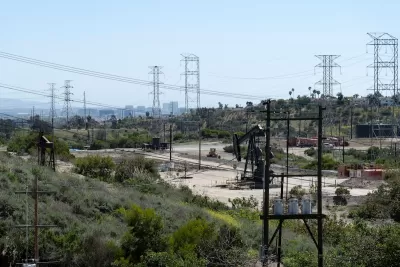
In the wake of a court ruling that invalidated a Los Angeles law that would have phased out oil production in the city, California Governor Gavin Newsom signed a trio of state laws that clarify local governments’ ability to regulate and prohibit oil extraction. The law, AB3233, “the law acknowledges the traditional role of local governments in exercising land use controls to protect the public health and safety of their residents.”
According to an article by Julia Smith on Legal Planet, “The other two laws in this package will have important effects as well, most especially for disadvantaged communities that are overburdened by pollution from oil and gas production activities.”
Assembly Bill 1866 increases fees on idle wells — uncapped wells that are not producing oil or gas but emit harmful pollutants into the surrounding air and soil — and calls on producers to cap these wells. AB 2716 requires the operator of the Inglewood Oil Field, California’s largest urban oilfield, to identify and cap low-producing wells by 2026 and shut down the entire field by 2030.
Read the full story: New Law Reaffirms Local Authority to Ban Oil Drilling

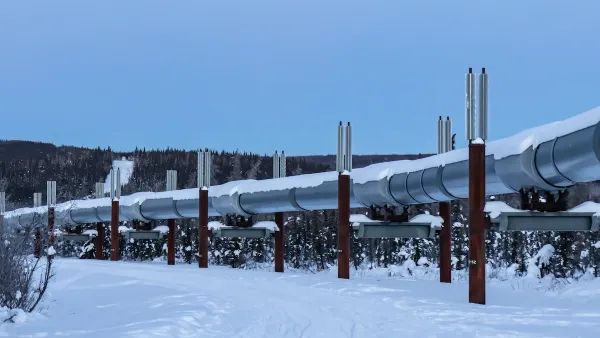
Trump Attacks Environmental Rules Amid Flurry of Executive Orders
Several executive orders signed on Monday seek to repeal Obama- and Biden-era environmental regulations and roll back goals to encourage the shift to electric vehicles.
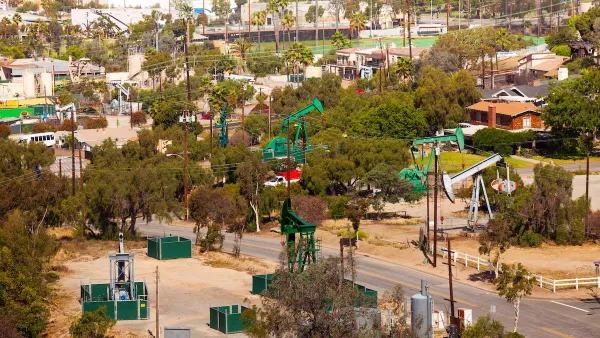
Judge Sides With Oil Companies Over LA Drilling Ban
The decision invalidates a law that would have eliminated oil drilling in the city over the next 20 years. A proposed state law could still let cities regulate extraction.
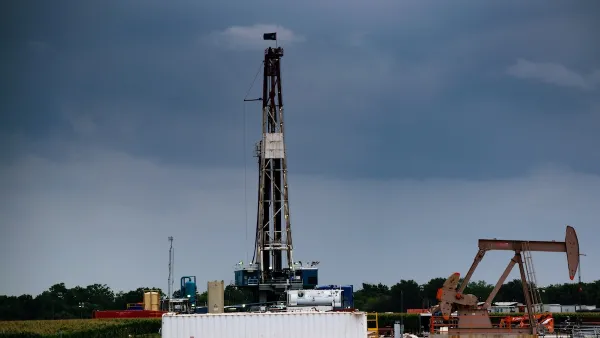
Texas Earthquakes Linked to Fracking
A new study reveals earthquakes that began at shallower depths than previously thought are associated with wastewater disposal sites from fracking operations.

Planetizen Federal Action Tracker
A weekly monitor of how Trump’s orders and actions are impacting planners and planning in America.

The state-sanctioned urbicide of Austin
People don’t kill cities. Freeways do.

US to reduce Colorado River water deliveries to Mexico
A new Colorado Treaty amendment reduces Mexico’s Colorado River water allocation by 250,000 acre feet.

Nation's most wind-powered state turns to coal as data centers increase energy demand
For the first time in decades, Iowa has increased its generation of coal power.

NYC cools commuters with city's first rain garden above a bus stop
New York City officials say the plants in the rain garden can absorb 16 gallons of rainwater during heavy storms.

Brightline West’s future may rely on $6 billion federal loan
The company has until Nov. 2 to make a $400 million equity investment into its proposed high-speed rail line.

FREE Course: Walkable City 1: Why Walkability?
After describing his path towards focusing on walkability as the essence of good planning, Jeff Speck marches through his five principal reasons for making more walkable places.
Reinventing Malls: Planning Alchemy—Turning Gray Fields Into Gold
The course focuses on the opportunities and imperatives that shape reinvention of mall sites.

Eagle County Government
Harvard University Graduate School of Design
Nashville Planning Department
The Architects Foundation
University of Cincinnati Online
The Pocatello Development Authority
The Urban Renewal Agency of the City of Pocatello
Journal of the American Planning Association