How a crew of hundreds maintains one of the world’s largest bike share systems.



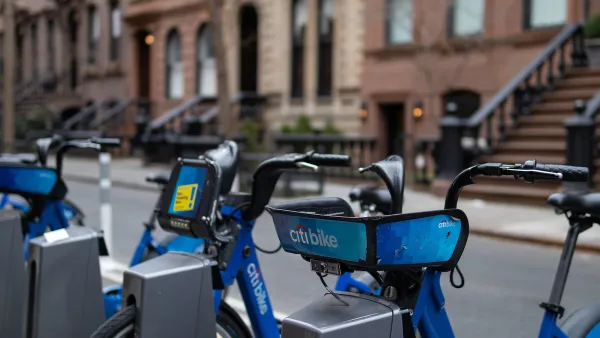
Writing in Curbed, John Surico highlights the more than 1,000 Citi Bike employees who keep the system running and e-bikes charged as the summer peak season kicks off.
“In June alone, the average is 165,000 rides a day, and the teams at Citi Bike and Lyft, which owns the bike-share system, believe it will hit 200,000 before the year is out.” The company attributes this success in part to its new fleet of 15,000 e-bikes, which make up 65 percent of trips in the system.
For now, charging the batteries requires taking dead batteries to a Long Island City warehouse, then returning them to the bikes. Soon, Lyft plans to install electrified charging docks to reduce the need for bringing batteries back to the warehouse. According to Surico, “The company has projected that doing so at just 20 percent of its stations would replace 90 percent of swaps.”
FULL STORY: The Citi Bike Battery Crew Racing to Keep 15,000 Bikes Online

Citi Bike’s New Contract: What You Need to Know
Double the e-bikes, but no system expansion: an outline of what riders can expect from Citi Bike’s new agreement with the city.

Why Can’t Citi Bike Keep its E-Bikes Running?
Citi Bike’s e-bikes are becoming too popular for their own good as Lyft struggles to keep up with maintenance and charging.

Op-Ed: New York Should Double Down on Micromobility
The growing popularity of Citi Bike, shared e-scooters, and other small devices signal a need for the city to quickly expand its support of new modes with safe roads, charging infrastructure, and secure parking options in all parts of the city.

The state-sanctioned urbicide of Austin
People don’t kill cities. Freeways do.

US to reduce Colorado River water deliveries to Mexico
A new Colorado Treaty amendment reduces Mexico’s Colorado River water allocation by 250,000 acre feet.

New Jersey’s second-largest city bans standalone data centers
Jersey City will continue to allow co-location facilities, such as those meant for research institutions that store their own data.

Amtrak not solely to blame for New Jersey commuter rail's unreliability, report finds
A new study from the Garden State Initiative found that NJ Transit’s budget grew 20% across a 4 year period, but reliability declined significantly over the same period.

EPA erases limits on planet-warming pollution from power plants
Under Monday’s plan, power plants would still have some limits on how much mercury, arsenic and other contaminants they can emit.

Phoenix announces new on-demand transit service, more frequent RAPID buses
Both new services will launch in October, and are part of Phoenix's Project Effective Access Solutions for Easing Congestion.

FREE Course: Walkable City 1: Why Walkability?
After describing his path towards focusing on walkability as the essence of good planning, Jeff Speck marches through his five principal reasons for making more walkable places.
Reinventing Malls: Planning Alchemy—Turning Gray Fields Into Gold
The course focuses on the opportunities and imperatives that shape reinvention of mall sites.

Eagle County Government
Harvard University Graduate School of Design
Nashville Planning Department
The Architects Foundation
University of Cincinnati Online
The Pocatello Development Authority
The Urban Renewal Agency of the City of Pocatello
Journal of the American Planning Association