Despite closures and delays on major lines, passenger rail travel is set to break pre-pandemic records.


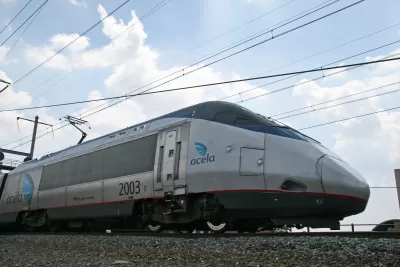
Amtrak is on track to top its 2019 ridership levels for the first time, reports David Shepardson for Reuters, despite its trains having lower capacity than before the pandemic.
“Ridership was 20% higher in the first seven months of Amtrak's budget year that began Oct. 1, and ticket revenue was up 10% versus the same period in 2023, according to written testimony by Amtrak CEO Stephen Gardner to be presented at a hearing of a U.S. House of Representative subcommittee on Wednesday.” Ridership in 2019 was 32.9 million passengers.
The agency says its revenue, while higher, has also been impacted by a reduction in business travel, as well as by closures and delays on some of its lines. “Amtrak in March said it was boosting passenger services on the East Coast as it aims to double ridership nationwide by 2040. It will boost service between Boston and Washington by as much as 20% on weekdays and will add 1 million additional seats over the next year.”
Read the full story: US railroad Amtrak on track to break passenger records in 2024
Op-Ed: Why an Effective Passenger Rail Network Needs Government Involvement
An outdated rail network that privileges freight won’t be fixed by privatizing Amtrak.
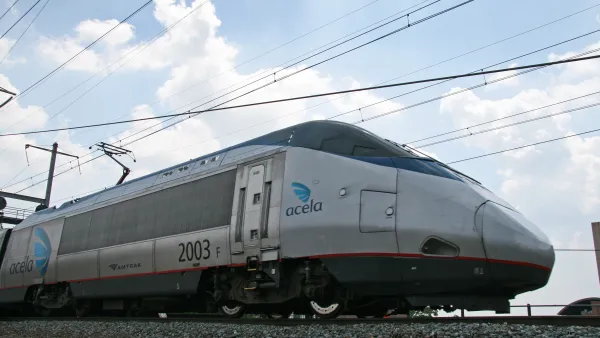
How to Make US Trains Faster
Changes to boarding platforms and a switch to electric trains could improve U.S. passenger rail service without the added cost of high-speed rail.
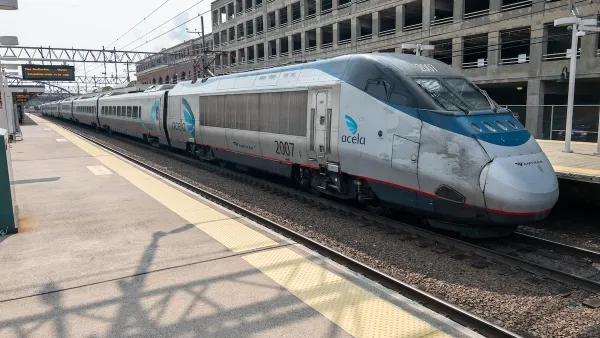
Amtrak Breaks Ridership Record in FY 2024
More Americans than ever rode the rails last year, also bringing the agency its highest ticket revenue.

Planetizen Federal Action Tracker
A weekly monitor of how Trump’s orders and actions are impacting planners and planning in America.

California plans to bury El Niño’s downpour
If the state plays its cards right, it may be able to store a billion acre-feet of El Niño’s water in aquifers.

Desperate measures: Advocates weigh draining Lake Powell to fill Colorado River
Draining the reservoir could reduce evaporation losses by a couple hundred thousand acre-feet.

Mamdani’s pied-à-terre tax survives legal challenge
A panel of judges found that the plaintiffs failed to demonstrate injury as a result of New York City's implementation of the tax.

Eastern Nebraska is running out of electricity
Data centers and electrification are straining eastern Nebraska’s grid, throttling economic development.

Seattle passes record-breaking transit services expansion
Proposition 1 will double the city’s transit tax to add 95,000 more bus trips and preserve 180,000 bus trips annually.

FREE Course: Walkable City 1: Why Walkability?
After describing his path towards focusing on walkability as the essence of good planning, Jeff Speck marches through his five principal reasons for making more walkable places.
Reinventing Malls: Planning Alchemy—Turning Gray Fields Into Gold
The course focuses on the opportunities and imperatives that shape reinvention of mall sites.

City of Rosemead
Rutgers University, Edward J. Bloustein School of Planning and Public Policy
One Hundred Miles
University of Michigan School for Environment and Sustainability (SEAS)
Hunter College, City University of New York (CUNY)
The Architects Foundation
City of Cambridge
Montrose County
The Pocatello Development Authority