On-site parking requirements need to be relaxed before Toronto's main streets can intensify.


Interviewing Toronto architect David Oleson and city councillor Joe Pantalone, Christopher Hume argues that local by-laws should be amended to require fewer parking spaces for smaller-scale developments where underground garages would not be feasible. This is particularly important if the City intends to achieve its policy goals for main-street housing, he says. Hume argues that public transit infrastructure in many areas is currently underutilized and can handle the increase in residential population, thereby providing housing opportunities for people who consciously choose not to drive cars. He also suggests that Toronto look to creative solutions employed in other cities such as on-site automobile sharing in Vancouver and stacked parking in New York City. Unfortunately, the issue is not currently on the political radar given the myriad of other challenges the city is facing, he concludes.
Thanks to Geoffrey Singer
Read the full story: Parking rules choke growth of apartments


Planetizen Federal Action Tracker
A weekly monitor of how Trump’s orders and actions are impacting planners and planning in America.

‘Going backwards:’ Baltimore mayor, students rally against state's transit funding plan
Maryland's proposed six-year plan provides no funding for Baltimore’s BMORE bus program and reduces its road maintenance funding.
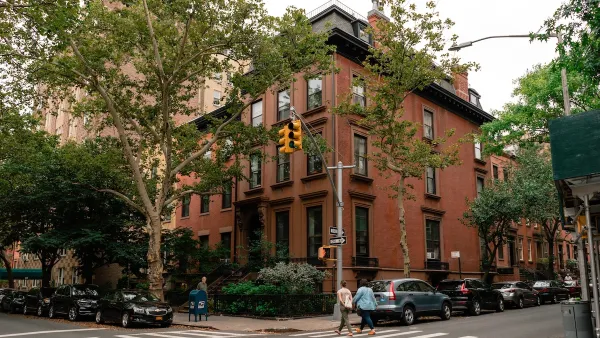
Mamdani sent nearly 6,000 pied-à-terre tax warnings to homes that didn’t qualify
A judge has ordered the administration to cancel thousands of pied-à-terre tax notices after it sent 35% of them erroneously.

Mamdani sent nearly 6,000 pied-à-terre tax warnings to homes that didn’t qualify
A judge has ordered the administration to cancel thousands of pied-à-terre tax notices after it sent 35% of them erroneously.

Detroit to transform waterfront with $2.2 billion investment
Developers will convert about 18 acres of unused parking lot space into civic spaces.

‘Going backwards:’ Baltimore mayor, students rally against state's transit funding plan
Maryland's proposed six-year plan provides no funding for Baltimore’s BMORE bus program and reduces its road maintenance funding.

FREE Course: Walkable City 1: Why Walkability?
After describing his path towards focusing on walkability as the essence of good planning, Jeff Speck marches through his five principal reasons for making more walkable places.
Reinventing Malls: Planning Alchemy—Turning Gray Fields Into Gold
The course focuses on the opportunities and imperatives that shape reinvention of mall sites.

City of Thousand Oaks
City of Wisconsin Rapids
Harvard University Graduate School of Design
The Architects Foundation
University of Cincinnati Online
Northern Illinois Transit Authority (NITA)
The Pocatello Development Authority
The Urban Renewal Agency of the City of Pocatello