A wealthy portion of Baton Rouge will split off and incorporate its own city in what proponents say is a bid for better schools and reduced crime, but critics say it will gut Baton Rouge’s tax base and result in a wealthy ‘white enclave.’


In what’s being called a landmark ruling, the Louisiana Supreme Court has authorized the incorporation of a new city called St. George in the suburbs of Baton Rouge, Louisiana. The New York Times reports that a 60-square-mile area in the southwest of East Baton Rouge Parish — and the 86,000 residents who live there — will be split off from the blended government that oversees both Baton Rouge and the broader parish and to form an independent city, complete with its own mayor, city council, and public services. The decision is making big waves throughout the region and beyond.
Rick Rojas of the NYT reports that plans started more than 10 years ago when the area’s predominantly wealthy, white residents tried and failed to start a school district spurred by concern that East Baton Rouge Parish schools were underperforming. That turned into an effort to collect enough signatures to form their own city, which they believe will solve their ongoing frustrations around not only schools but also crime, infrastructure, and allocation of resources under the existing city-parish government.
That proposal made it onto the ballot in 2019 and won the vote, which “spurred an immediate legal challenge as parish officials feared the consequences of losing $48 million in annual tax revenues. They argued that the new city could not operate with a balanced budget and the proposed budget for St. George was inaccurate,” NYT’s Rojas writes. The Louisiana Supreme Court overturned lower court rulings, finding that St. George could operate within its estimated tax revenues and provide public services within a reasonable period of time.
The decision has been met with disappointment, skepticism, and anger both locally and from across the country. Apart from what are sure to be massive logistical challenges of the separation and creation of St. George, “[critics] argue that the division may exacerbate racial and economic disparities within the region, calling it the creation of a ‘White enclave’ and claiming it would damage Baton Rouge’s predominantly Black communities and its school district,” writes Washington Times staff.
Land use regulations have a long history as tools for segregation and discrimination against Black people, indigenous people, and people of color in the United States. This decision could have huge implications for the people of Baton Rouge, the region, and beyond if communities elsewhere decide to take similar action. Whether or not St. George’s annexation of primarily affluent white areas is racially motivated — the group behind the new city’s formation says it’s not — its effects on the predominantly Black and low-income communities from which they’ve separated will remain the same. The legacy of similar land use decisions and policies that supported white flight throughout this country’s history are visible in the racial and economic disparities that exist in cities and towns to this day.
FULL STORY: Louisiana Will Get a New City After a Yearslong Court Battle


Study: FEMA Buyout Program Could be Accelerating Segregation
A new analysis of the relocation patterns of households that participate in FEMA’s flood buyout program reveals a pattern of increased racial segregation.
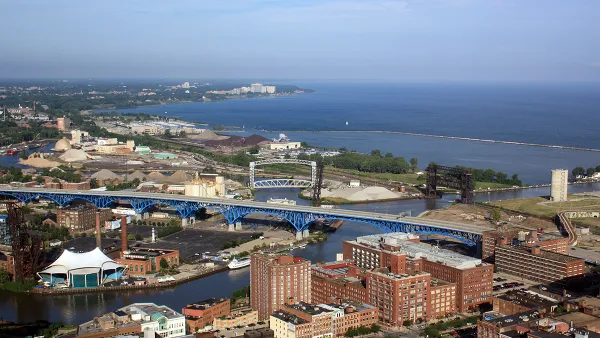
Cleveland Has Yet to Recover From the Last Recession
Decades of racist policy and a lack of critical resources have left Cleveland in a perpetual state of economic fragility. The city can't afford another recession.
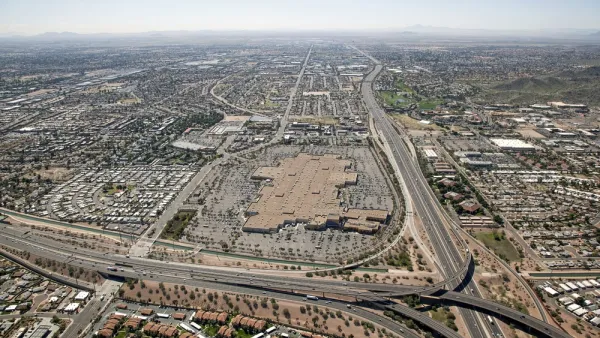
Outcomes of the Federal Highway Program: Inequality and Polarization
It's a vicious cycle: highways enable white flight, establishing a power base for a political party opposed to urban transportation systems.

The state-sanctioned urbicide of Austin
People don’t kill cities. Freeways do.

US to reduce Colorado River water deliveries to Mexico
A new Colorado Treaty amendment reduces Mexico’s Colorado River water allocation by 250,000 acre feet.

New Jersey’s second-largest city bans standalone data centers
Jersey City will continue to allow co-location facilities, such as those meant for research institutions that store their own data.

Amtrak not solely to blame for New Jersey commuter rail's unreliability, report finds
A new study from the Garden State Initiative found that NJ Transit’s budget grew 20% across a 4 year period, but reliability declined significantly over the same period.

EPA erases limits on planet-warming pollution from power plants
Under Monday’s plan, power plants would still have some limits on how much mercury, arsenic and other contaminants they can emit.

Phoenix announces new on-demand transit service, more frequent RAPID buses
Both new services will launch in October, and are part of Phoenix's Project Effective Access Solutions for Easing Congestion.

FREE Course: Walkable City 1: Why Walkability?
After describing his path towards focusing on walkability as the essence of good planning, Jeff Speck marches through his five principal reasons for making more walkable places.
Reinventing Malls: Planning Alchemy—Turning Gray Fields Into Gold
The course focuses on the opportunities and imperatives that shape reinvention of mall sites.

Eagle County Government
Harvard University Graduate School of Design
Nashville Planning Department
The Architects Foundation
University of Cincinnati Online
The Pocatello Development Authority
The Urban Renewal Agency of the City of Pocatello
Journal of the American Planning Association