Solar installations are causing soil erosion and raising concerns among farmers in some of the nation’s most productive agricultural regions.


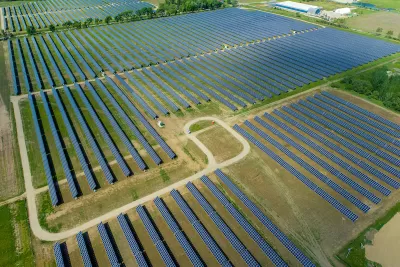
“A renewable energy boom risks damaging some of America's richest soils in key farming states like Indiana, according to a Reuters analysis of federal, state and local data; hundreds of pages of court records; and interviews with more than 100 energy and soil scientists, agricultural economists, farmers and farmland owners, and local, state and federal lawmakers.”
As P.j. Huffstutter and Christopher Walljasper explain, in addition to shifting thousands of acres from farming to solar production, “Common solar farm construction practices, including clearing and grading large sections of land, also can lead to significant erosion and major runoff of sediment into waterways without proper remediation, according to the U.S. Environmental Protection Agency and the Justice Department.”
These practices are putting productive areas of farmland out of commission, causing concern about the future of U.S. agriculture as the demand for solar energy grows, which is projected to require up to 5 percent of each state’s land area. “By 2050, to meet the Biden Administration's decarbonization targets, the U.S. will need up to 1,570 gigawatts of electric energy capacity from solar.”
FULL STORY: As solar capacity grows, some of America's most productive farmland is at risk

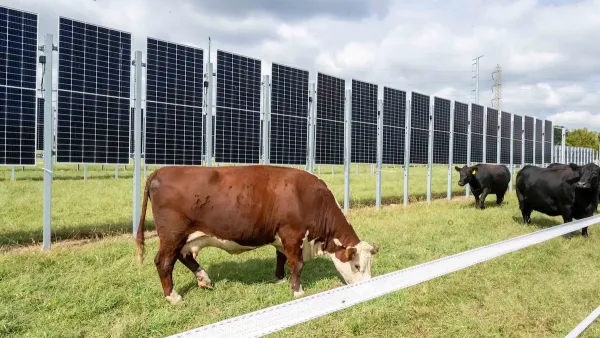
New Jersey Agrivoltaic Project Combines Solar Energy With Farming
A Rutgers University-New Brunswick demonstration farm will evaluate solar array designs to understand how they can best support grazing and agriculture on the same site.
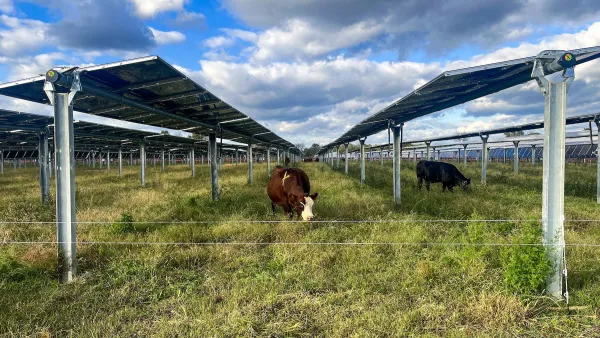
Cows at Tennessee's 'Silicon Ranch' graze under solar panels
The project aims to prove that agriculture and solar energy production can work in tandem.
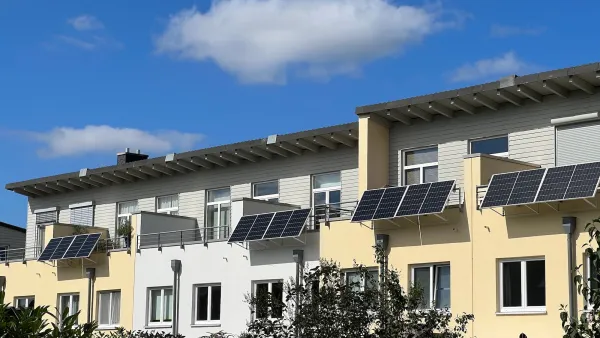
28 States and DC Could Legalize ‘Balcony Solar’
Plug-in solar panels, which are becoming popular across Europe, live in a regulatory gray area in the United States.

Planetizen Federal Action Tracker
A weekly monitor of how Trump’s orders and actions are impacting planners and planning in America.

The state-sanctioned urbicide of Austin
People don’t kill cities. Freeways do.

US to reduce Colorado River water deliveries to Mexico
A new Colorado Treaty amendment reduces Mexico’s Colorado River water allocation by 250,000 acre feet.

Mamdani overhauls NYC's Vision Zero plan with 100 new policy goals
The overhaul aims to reduce traffic deaths and make streets safer for pedestrians, cyclists and drivers through lower speed limits, new safety infrastructure and more.

Amtrak not solely to blame for New Jersey commuter rail's unreliability, report finds
A new study from the Garden State Initiative found that NJ Transit’s budget grew 20% across a 4 year period, but reliability declined significantly over the same period.

EPA erases limits on planet-warming pollution from power plants
Under Monday’s plan, power plants would still have some limits on how much mercury, arsenic and other contaminants they can emit.

FREE Course: Walkable City 1: Why Walkability?
After describing his path towards focusing on walkability as the essence of good planning, Jeff Speck marches through his five principal reasons for making more walkable places.
Reinventing Malls: Planning Alchemy—Turning Gray Fields Into Gold
The course focuses on the opportunities and imperatives that shape reinvention of mall sites.

Eagle County Government
Harvard University Graduate School of Design
Nashville Planning Department
The Architects Foundation
University of Cincinnati Online
The Pocatello Development Authority
The Urban Renewal Agency of the City of Pocatello
Journal of the American Planning Association